
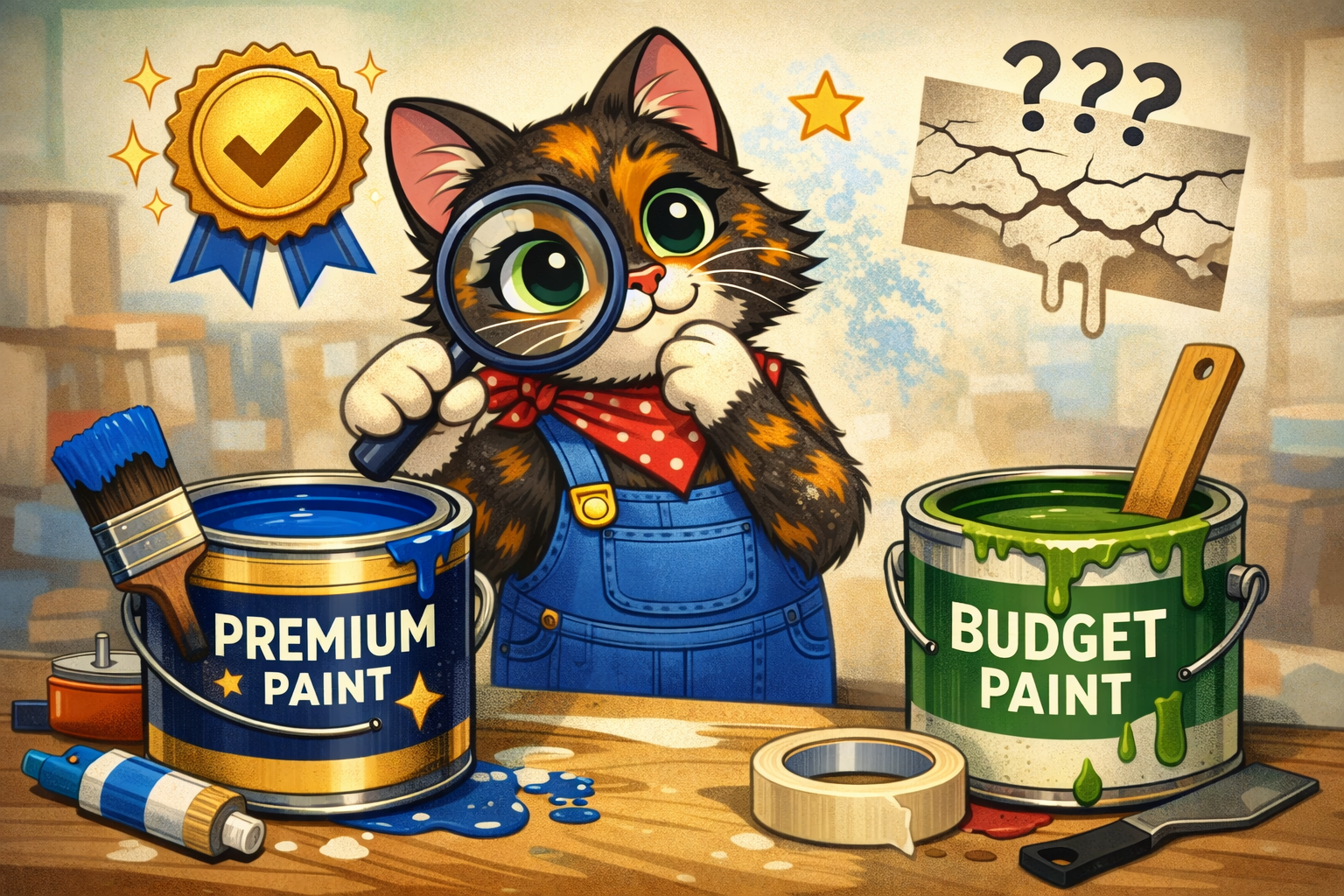
If you’ve ever stood in the paint aisle staring at a wall of cans with wildly different prices, you’ve probably wondered:
Is expensive paint actually better… or is it just marketing?
I used to think paint was paint. Same color, same job, right?
But once you start learning a little about how paint works, you realize there are some real differences — and they actually matter more than most beginners expect.
Let’s walk through it together in simple terms.
It’s Not Just About the Color
All paint changes color on a surface, but that’s just the surface-level job.
What really makes paint “better” or “worse” comes down to things like:
- How well it covers
- How long it lasts
- How easy it is to apply
- How durable it becomes
- How it looks after it dries and cures
And all of that comes from what’s inside the can.
The Quality of the Ingredients Matters
Remember how paint is made of pigment, binder, solvent, and additives?
The better the quality and balance of these ingredients, the better the paint usually performs.
Here’s how each one plays a role:
Pigment (the color part)
Higher-quality paint usually has more and better pigment.
This means:
- Better coverage (fewer coats)
- Richer color
- Less streaking
Cheap paint often has less pigment, so you end up needing more coats to get the same look.
Binder (the glue that holds paint together)
The binder is what makes paint stick to your wall and stay there.
Better binders mean:
- Stronger adhesion
- Less peeling and cracking
- Better durability over time
Lower-quality binders can lead to paint that chips or wears off faster.
Solvent (the liquid that makes paint spreadable)
This part affects:
- How smoothly paint goes on
- How quickly it dries
Better paints tend to flow more evenly and level out better, which means fewer brush marks and roller streaks.
Additives (the helpers)
These are small ingredients that improve things like:
- Mold resistance
- Drying time
- Smoothness
- Shelf life
Higher-quality paints usually include additives that make painting easier and the finished surface tougher.
Coverage Is a Big Deal for Beginners
One of the easiest ways to tell good paint from bad paint is how well it covers.
Better paint:
- Covers old colors faster
- Needs fewer coats
- Looks more even
Cheaper paint:
- Often looks thin
- Shows through underneath
- Requires extra coats (which means more time and money)
Sometimes paying a little more actually saves you money in the long run.
Durability Makes a Huge Difference Over Time
Some paints look great at first… but don’t hold up well.
Higher-quality paint usually:
- Resists scuffs and stains
- Cleans easier
- Doesn’t fade as quickly
Lower-quality paint can:
- Mark easily
- Peel sooner
- Lose color faster
This matters a lot in busy rooms like kitchens, hallways, and kids’ rooms.
Ease of Application (Yes, This Counts)
As a beginner, how easy paint is to work with is huge.
Better paint often:
- Goes on smoother
- Drips less
- Levels out better
That means:
- Less frustration
- Fewer streaks
- A more professional-looking result
Cheaper paint can feel thick, runny, or uneven.
So… Is Expensive Paint Always Better?
Not always — but very cheap paint usually shows its limits quickly.
In general:
$ Super cheap paint = harder to use, more coats, less durable
$$ Mid-range paint = great balance for most beginners
$$$ Premium paint = best performance, but not always necessary
For most DIY projects, a good mid-range paint is more than enough.
A Simple Way to Think About It
Better paint usually gives you:
- Better coverage
- Stronger adhesion
- Smoother application
- Longer-lasting results
Cheaper paint often costs less upfront but more in effort and extra coats.
Final Thoughts
When you’re new to painting, it’s totally normal to think all paint is basically the same.
But once you understand what’s inside the can and how it affects performance, those price differences start to make sense.
The “best” paint isn’t always the most expensive one — it’s the one that covers well, lasts long, and makes your project easier.
And for beginners?
Paint that’s easier to work with is usually worth every penny.
Leave a Reply