
If you’ve ever looked at a paint can and seen words like “low-VOC” or “zero-VOC,” you might’ve thought:
“Okay… but what does that actually mean?”
Same here.
When I first started painting, I had no idea what VOCs were — I just knew some paints smelled really strong and others didn’t. Turns out, there’s a reason for that, and it actually matters more than you might expect.
Let’s walk through it together in simple language.
First Things First: What Does VOC Mean?
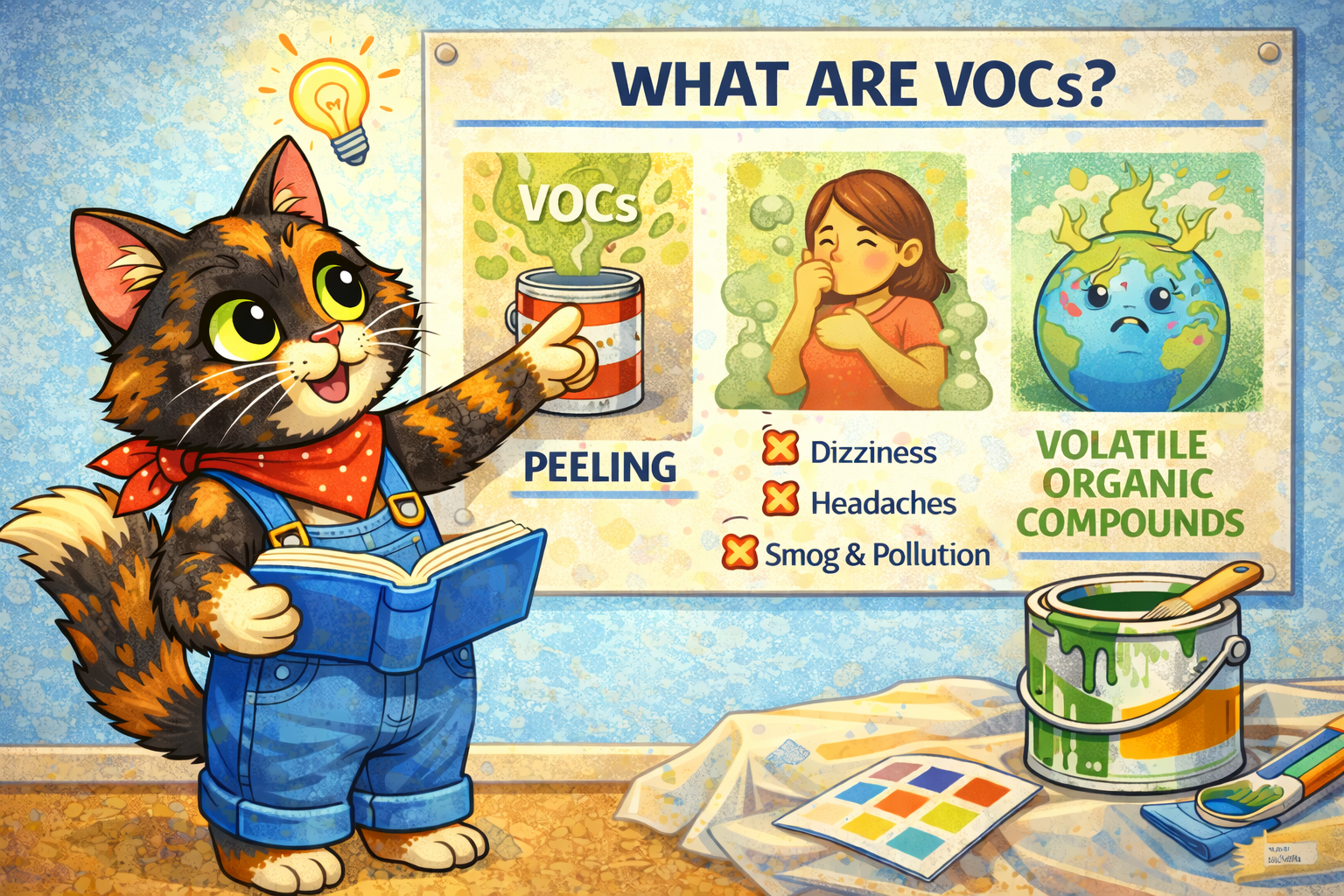
VOC stands for Volatile Organic Compounds.
That sounds super scientific, but here’s the easy version:
VOCs are chemicals in paint that turn into gas as the paint dries.
When you paint a wall, those chemicals slowly escape into the air — which is what causes that strong “fresh paint smell.”
So, if paint smells strong, it usually has more VOCs.
Why Are VOCs in Paint at All?
VOCs aren’t added just to be annoying.
They actually help paint:
- Spread smoothly
- Dry properly
- Last longer
In the past, most paints had high VOC levels because they made paint perform better.
The downside? Breathing in a lot of VOCs isn’t great for people (or pets).
Why VOCs Matter for Your Health
When VOCs float into the air, you breathe them in.
For some people, especially in closed spaces, this can cause:
- Headaches
- Dizziness
- Eye or throat irritation
- Nausea
For kids, pets, and people with asthma or allergies, it can be even more noticeable.
That’s why many modern paints are now made with low-VOC or zero-VOC formulas.
Why VOCs Matter for Your Home
VOCs don’t just disappear right away.
Some paints can release small amounts of VOCs for days — or even weeks — after painting.
Lower VOC paint helps:
- Keep indoor air cleaner
- Reduce lingering paint smells
- Make rooms safer to use sooner
This is especially important in bedrooms, nurseries, and living spaces.
What Is Low-VOC and Zero-VOC Paint?
You’ll often see labels like:
Low-VOC Paint
This means the paint has much fewer chemicals than traditional paint.
Zero-VOC Paint
This means it has little to no harmful VOCs added (though tiny trace amounts can still exist naturally).
Both options are much gentler on your air quality.
And the good news?
They work really well nowadays — way better than older versions did.
Does Low-VOC Paint Work as Well?
Years ago, low-VOC paint sometimes didn’t cover as nicely or last as long.
That’s not really the case anymore.
Most modern low-VOC paints:
- Cover great
- Last just as long
- Look just as good
For beginners especially, they’re usually the best choice.
How Can You Reduce VOC Exposure When Painting?
Here are a few easy beginner tips:
✔ Choose low-VOC or zero-VOC paint when possible
✔ Open windows and doors for ventilation
✔ Use fans to move fresh air through the room
✔ Avoid sleeping in freshly painted rooms right away
Simple steps make a big difference.
A Simple Way to Think About VOCs
Strong smell = usually higher VOCs
Low smell = usually lower VOCs
While smell isn’t a perfect test, it’s a helpful clue.
Final Thoughts
VOCs are just chemicals in paint that evaporate into the air as paint dries.
They help paint work well — but too many of them can affect air quality and comfort.
That’s why low-VOC and zero-VOC paints have become so popular, especially for homes.
For beginners, choosing lower VOC paint is usually healthier, easier, and just as effective.
And now when you see those labels in the store, you’ll actually know what they mean.
Leave a Reply