
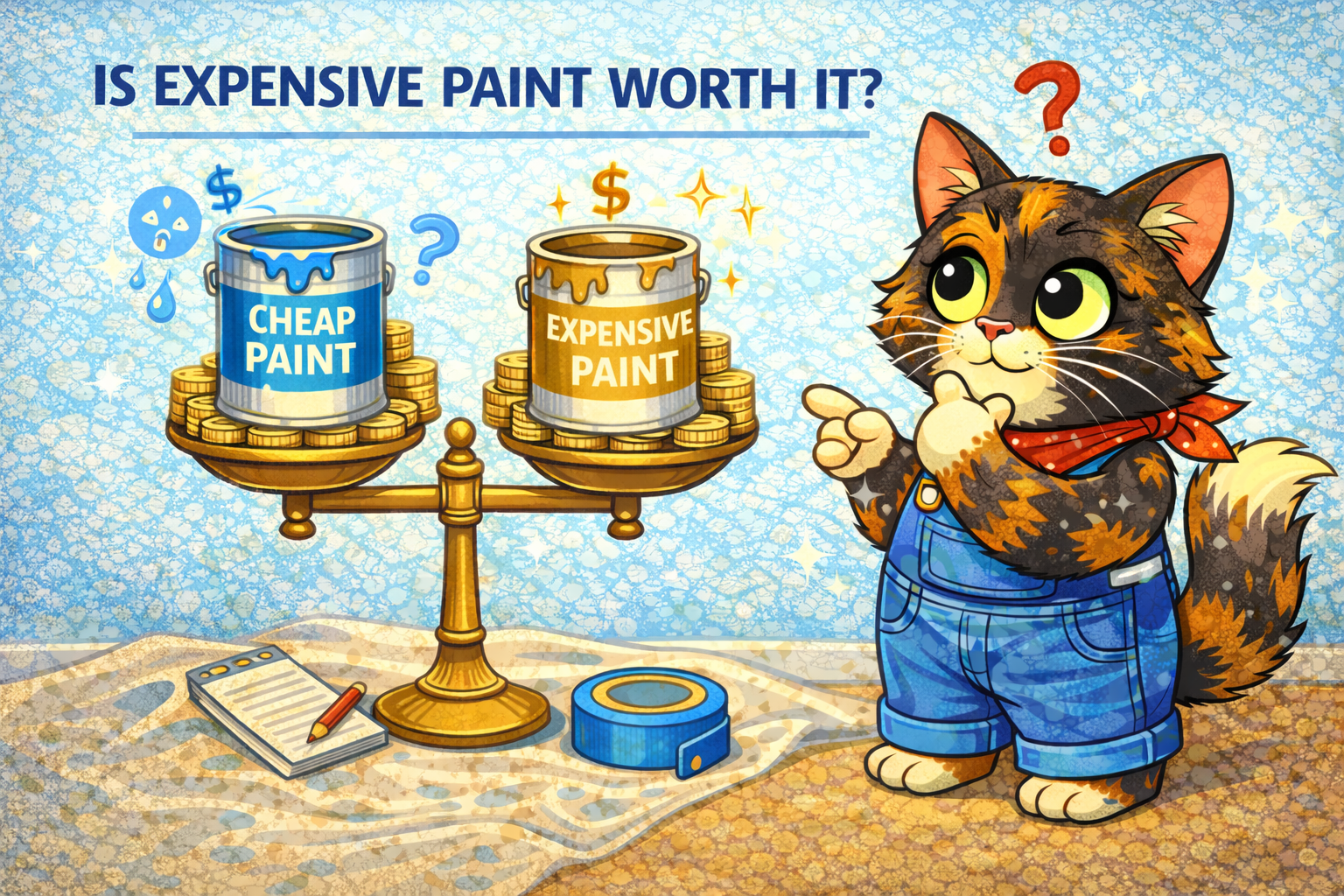
If you’ve ever wandered down the paint aisle, you’ve probably noticed one thing fast: some paint costs way more than others.
And you might have thought, “Do I really need the expensive stuff, or is cheap paint good enough?”
I had the same question when I first started painting. Let’s figure it out together.
What Makes Paint Expensive Anyway?
Paint price isn’t random. Higher-priced paints usually have:
- Better pigment – this means stronger, richer color and better coverage.
- Higher-quality binder – the stuff that holds the paint together and keeps it stuck to your walls.
- More durable additives – makes it resistant to scuffs, stains, and fading.
- Smoother consistency – easier to apply, fewer streaks or roller marks.
Basically, you’re paying for paint that performs better and lasts longer.
How Cheap Paint Can Hold You Back
Cheap paint isn’t necessarily “bad,” but it can create challenges for beginners:
- More coats – thin coverage means more layers and more time.
- Harder to apply evenly – streaks and patchy spots are more likely.
- Less durable – scratches, dents, and fading happen sooner.
So while it saves money upfront, it might cost more in effort and frustration.
When Expensive Paint Really Shines
There are situations where high-quality paint is worth the extra dollars:
- High-traffic areas – hallways, kitchens, kids’ rooms.
- Bold colors – bright reds, deep blues, or dark shades often need strong pigments to cover properly.
- Long-term projects – you don’t want to repaint a room every few years.
- Surfaces you clean often – washable paint is more durable.
In these cases, expensive paint can save time and look better over the long run.
When Cheap Paint Is Totally Fine
Not every project needs the premium stuff. Cheap paint works well for:
- Temporary spaces – rentals or short-term projects.
- Neutral colors – whites, light grays, and other easy-to-cover shades.
- Small or low-traffic rooms – closets, storage areas, or rarely used rooms.
The key is knowing what your project needs before splurging.
A Simple Way to Decide
Here’s a beginner-friendly rule of thumb:
$ Cheap paint = saves money upfront, more effort later
$$ Mid-range paint = great balance for most projects
$$$ Expensive paint = best performance for high-traffic, bold colors, or long-term use
Final Thoughts
Is expensive paint worth it? Sometimes yes, sometimes no. It depends on your room, the color, and how long you want the paint to last.
For beginners, it helps to think in terms of value, not price. Sometimes paying a little more makes your painting experience easier and the finished room look amazing — other times, a mid-range paint gets the job done perfectly.
At the end of the day, choosing paint is part of the adventure — and now you know how to make a choice that works for your project and your budget.
Leave a Reply