
Disclosure: Some links on this page are affiliate links, which means I may earn a small commission if you choose to make a purchase — at no extra cost to you. I only recommend products I believe are helpful for beginners.
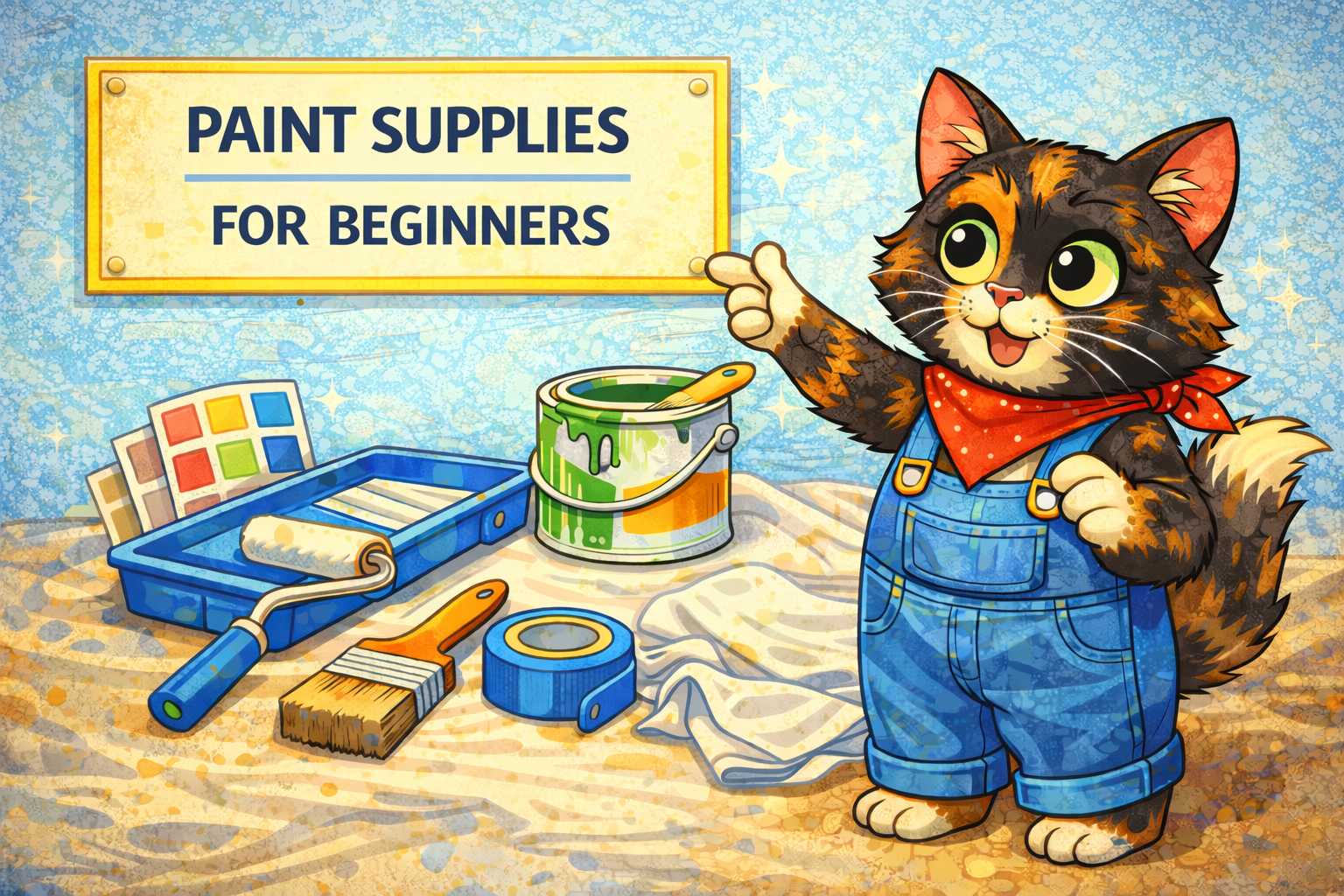
If you’re new to painting, it’s easy to feel overwhelmed by all the tools and gadgets in the store. I remember my first painting project — I stared at rollers, brushes, trays, tape, and drop cloths, thinking, “Do I really need all of this?”
The truth is, you don’t need everything to get started. Let’s break down the essentials so you can paint confidently without overthinking it.
1. Paint Brushes
Even if you use a roller for most walls, brushes are a must.
- Small angled brushes are perfect for cutting in along trim, corners, and edges.
- Flat brushes can help with touch-ups or smaller surfaces.
For beginners, one or two good-quality brushes can cover most needs.
Suggestion: Purdy XL Brush 3-Pack
2. Paint Rollers
Rollers make painting large areas faster and smoother.
- Standard 9-inch roller is great for most walls and ceilings.
- Mini rollers work well for small spaces or tight areas.
- Don’t forget a roller tray to hold and evenly load the paint.
Using the right roller nap (the fuzzy cover) depends on your wall texture — smooth walls = short nap, textured walls = medium or long nap.
Suggestion: Purdy White Dove Roller Cover 3-Pack
3. Painter’s Tape
Painter’s tape is your best friend for clean edges.
- Use it along baseboards, trim, windows, and ceilings.
- Press it down firmly and remove it carefully after painting.
It keeps lines crisp without needing a steady hand — especially handy for beginners.
Suggestion: Duck Brand Clean Release Painter’s Tape
4. Drop Cloths or Plastic Sheeting
Protecting your floors and furniture is way easier than cleaning up paint spills later.
- Heavy-duty canvas drop cloths are reusable.
- Plastic sheeting works for quick coverage or temporary projects.
Trust me, a few dollars spent on protection saves a lot of headaches.
Suggestions: Canvas – Trimaco SuperTuff Heavyweight Canvas Drop Cloth, Plastic – Ecotez 3-Pack Extra Large Painter’s Drop Cloth
5. Paint Trays and Liners
A paint tray holds your roller and helps distribute paint evenly.
- Disposable liners make cleanup faster and reduce waste.
- You can reuse trays, but liners save time and effort — perfect for beginners.
Suggestion: Bates Paint Tray Set
6. Stir Sticks and Paint Strainers
- Stir sticks ensure paint is mixed properly before applying.
- Paint strainers catch lumps or debris for a smooth finish.
These small tools make a big difference in the quality of your painting.
7. Optional but Helpful Extras
- Extension poles for high walls and ceilings
- Bucket hooks for easy roller dipping
- Sponges or rags for quick touch-ups
- Small putty knife for filling holes before painting
These aren’t strictly necessary for every project, but they make life easier.
A Beginner-Friendly Shortcut
If you want a simple starter kit, here’s what I’d recommend:
- 1–2 quality brushes (angled and flat)
- 1 standard roller + tray
- Painter’s tape
- Drop cloth
- Stir stick
That’s really all you need to get started confidently.
Suggestion: Pro Grade Paint Roller Kit
Final Thoughts
Painting isn’t about having every tool in the store — it’s about having the right essentials for the job.
With a few brushes, a roller, tape, and some protective gear, beginners can tackle walls, ceilings, and trim with confidence. Once you get comfortable, you can gradually add extras as needed, but the core kit is simple and effective.
Paint supplies don’t need to be complicated — and starting with the basics lets you focus on the fun part: bringing your walls to life.
FAQ
Quick answers to the most common beginner questions.
No. Beginners can get great results with basic, good-quality tools. Proper technique and prep matter more than professional-grade equipment.
A quality roller, a decent brush, painter’s tape, a drop cloth, and a sturdy paint tray or bucket are the most important starter tools.
You can usually skip specialty brushes, extension poles for small rooms, and advanced sprayers. These tools are helpful later but not necessary for first projects.
Individual tools are usually better. Kits often include items you won’t use or lower-quality pieces, while buying separately lets you choose what you actually need.
Most beginners can expect to spend around $50–$100 on basic supplies. This can vary depending on room size and how many tools you already have.
Leave a Reply