
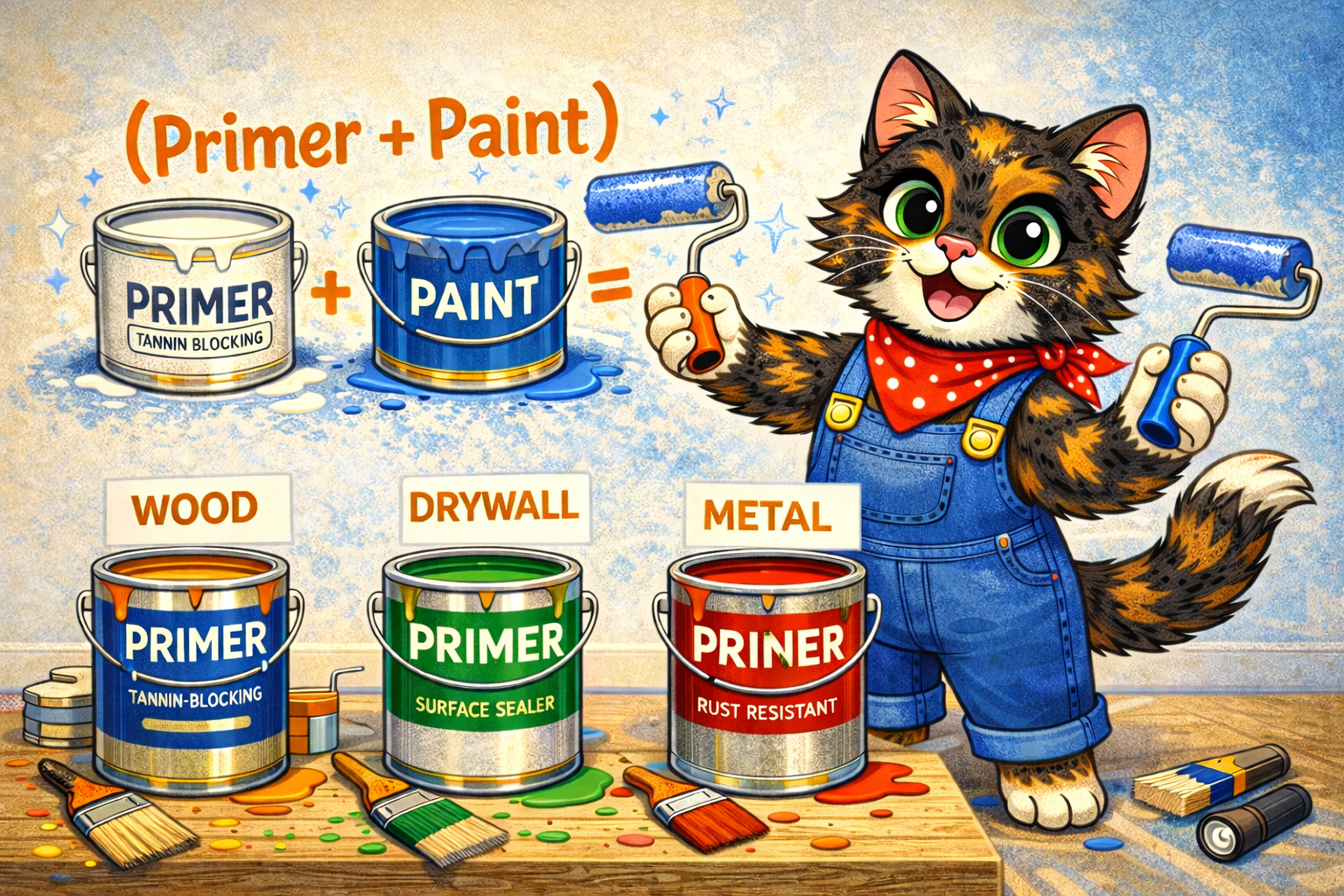
When I first learned about primer, I thought there was just one kind and you used it for everything. Then I walked into the paint store and saw shelves full of different primers — and got confused all over again.
Oil-based, latex, stain-blocking, bonding… what does it all mean?
The good news is: you don’t need to be an expert to choose the right one. Let’s walk through it together in a simple, beginner-friendly way.
First: Why Pairing Primer With Paint Matters
Primer and paint work as a team.
The right primer helps:
- Paint stick better
- Color look more even
- Surfaces last longer
Using the wrong primer (or skipping it) can lead to peeling, uneven coverage, and needing extra coats.
So matching primer to your surface is one of the easiest ways to improve your paint results.
Common Types of Primer (And When to Use Them)
Let’s break down the main ones you’ll see.
Latex (Water-Based) Primer – Great for Most Projects
This is the most beginner-friendly and commonly used primer.
Best for:
- Drywall
- Previously painted walls
- Soft woods
Why people like it:
- Dries fast
- Easy cleanup with water
- Low odor
If you’re painting a room’s walls, this is usually a great choice.
Oil-Based Primer – Best for Stains and Tough Surfaces
This one is stronger and better at blocking stains.
Best for:
- Wood (especially knots)
- Water stains
- Smoke damage
- Heavy discoloration
Why it helps:
- Seals stains really well
- Creates a strong base
It smells stronger and takes longer to dry, but works great when you need extra coverage.
Bonding Primer – For Slick or Shiny Surfaces
Some surfaces are too smooth for regular primer to grip.
Best for:
- Glossy paint
- Tile
- Glass
- Metal
- Plastic
Bonding primer is made to stick to tricky surfaces and give paint something to hold onto.
Shellac-Based Primer – For Serious Stains and Odors
This is more of a heavy-duty option.
Best for:
- Smoke stains
- Water damage
- Pet odors
It dries fast and blocks almost everything — but it’s usually only needed for tough problem areas.
Simple Surface + Primer Pairing Guide
Here’s an easy way to think about it:
• New drywall → Latex primer
• Painted walls → Latex primer
• Wood → Oil-based or latex primer
• Glossy surfaces → Bonding primer
• Stains/odors → Oil-based or shellac primer
• Metal → Bonding or rust-inhibiting primer
You don’t have to memorize — just match the primer to the surface type.
What About “Paint + Primer in One”?
You’ve probably seen paint cans labeled “Paint and Primer in One.”
So… do they really replace primer?
The short answer: Sometimes.
Paint + primer works best when:
✔ You’re painting over similar colors
✔ The surface is already in good shape
✔ There are no stains or damage
It’s great for:
- Quick refreshes
- Light color changes
When real primer is still better:
- Covering dark colors
- Painting bare wood or drywall
- Blocking stains
- Painting glossy surfaces
In these cases, separate primer usually gives better results.
Think of paint + primer as a convenience option — not a total replacement for primer in every situation.
What I’ve Learned Along the Way
Whenever I matched the right primer to the surface, painting felt easier and the finish looked smoother.
Whenever I skipped primer or used the wrong one… I usually ended up doing extra coats or fixing problems later.
A little prep with the right primer saves a lot of effort in the long run.
Final Thoughts
Choosing primer doesn’t have to be complicated.
Just remember:
- Match primer to the surface
- Use stronger primers for stains and slick areas
- Paint + primer works for simple projects, not big changes
Once you get the hang of pairing primer with paint, your projects will look better, last longer, and feel way less frustrating.
Leave a Reply