
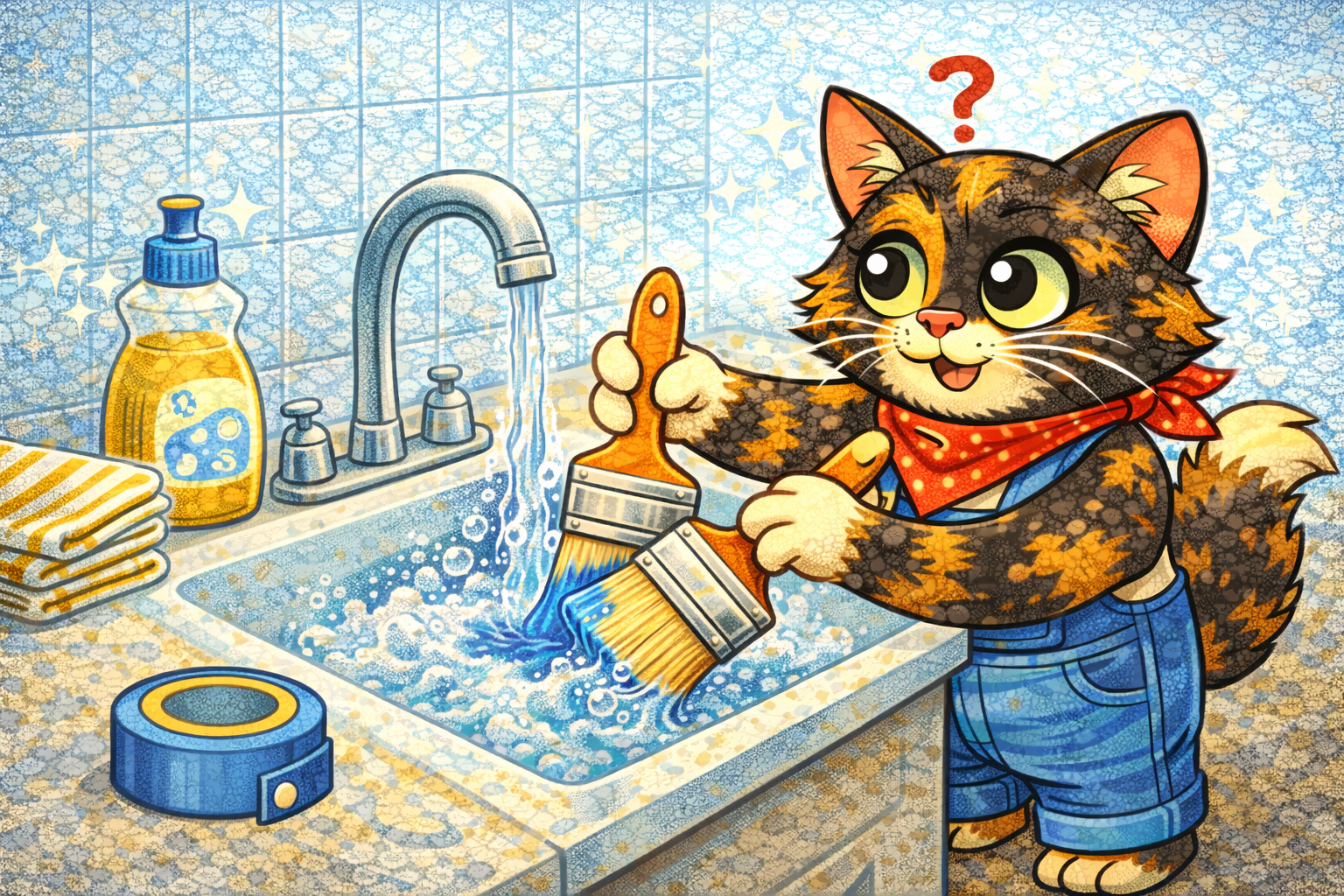
When I first started painting, I’ll admit it — I didn’t always clean my brushes right away. I figured I could “deal with it later.” Spoiler alert: dried-up, crusty brushes are no fun to use.
The good news? Cleaning paint brushes properly is actually easy once you know what kind of paint you’re using. Let’s walk through it together.
Why Cleaning Brushes Matters
Taking a few minutes to clean your brushes:
- Helps them last much longer
- Keeps bristles soft and in shape
- Prevents streaky or messy paint jobs next time
- Saves money (you won’t need to replace brushes as often)
Good brush care makes painting easier every time you pick one up.
First: Know What Paint You Used
How you clean your brush depends on the paint.
🎨 Latex (Water-Based) Paint
Most beginner projects use latex paint, and this is the easiest to clean.
You’ll need:
- Warm water
- Mild dish soap
🎨 Oil-Based Paint
Oil-based paint needs stronger cleaners.
You’ll need:
- Mineral spirits or paint thinner
- Soap and water (for final cleaning)
Always work in a well-ventilated area with oil-based paint.
How to Clean Brushes After Latex Paint
- Wipe off excess paint
Scrape paint back into the can or onto a rag. - Rinse with warm water
Hold the brush bristles-down under running water. - Add a little dish soap
Gently work the soap into the bristles with your fingers. - Rinse and repeat
Keep rinsing until the water runs clear. - Reshape the bristles
Use your fingers to straighten them. - Let dry properly
Lay flat or hang with bristles pointing down.
How to Clean Brushes After Oil-Based Paint
- Remove excess paint
Wipe as much off as possible first. - Dip in mineral spirits
Swirl gently — don’t mash the bristles. - Wipe and repeat
Use a rag to remove loosened paint. - Wash with soap and water
This removes leftover residue. - Rinse, reshape, and dry
Just like with latex brushes.
Common Beginner Mistakes to Avoid
- Letting paint dry on brushes
- Soaking brushes bristle-side down
- Using hot water (can loosen glue)
- Storing brushes without reshaping
These can permanently damage brushes.
How to Store Clean Brushes
- Let brushes fully dry
- Store flat or hanging
- Keep them away from heat
- Reuse the original cardboard sleeve if you have it
Proper storage helps brushes keep their shape.
A Simple Way to Remember
- Latex paint = soap and water
- Oil-based paint = mineral spirits + soap
- Clean right away
- Dry and store carefully
That’s it!
Final Thoughts
Cleaning paint brushes might feel like a chore, but it’s one of the easiest ways to improve your painting experience. Clean brushes work better, last longer, and make every future project easier.
Trust me — your future self (and your brushes) will thank you.
FAQ
Quick answers to the most common beginner questions.
Sometimes. If the paint is only partially dried, soaking and gently cleaning the brush may restore it. Fully hardened paint is much harder to remove and may permanently damage the bristles.
Most brushes only need a few minutes of soaking. Long soaks can loosen the glue holding the bristles and shorten the life of the brush.
Yes. Mild dish soap works well for cleaning water-based paint and helps break down leftover residue in the bristles.
After cleaning, gently reshape the bristles and let the brush dry flat or hanging with the bristles pointing down. Avoid drying brushes bristle-up while wet.
Not at first. A good-quality mid-range brush is usually enough for beginners and easier to learn with than very cheap brushes.
Leave a Reply