
Disclosure: Some links on this page are affiliate links, which means I may earn a small commission if you choose to make a purchase — at no extra cost to you. I only recommend products I believe are helpful for beginners.
When I first started painting, I thought all paint brushes were basically the same. If it had bristles and held paint, it should work… right?
Not exactly.
Different brushes are made for different jobs, and knowing why some brushes are stiff and others are soft makes painting a lot easier — and the results look better too. Let’s figure it out together.
Why Brush Type Matters
Paint brushes aren’t just different shapes — they’re designed to:
- Hold different amounts of paint
- Spread paint smoothly (or firmly)
- Work on different surfaces
Using the wrong brush can cause:
- Streaks
- Brush marks
- Poor coverage
- Frustration
The right brush makes painting feel smoother and more controlled.
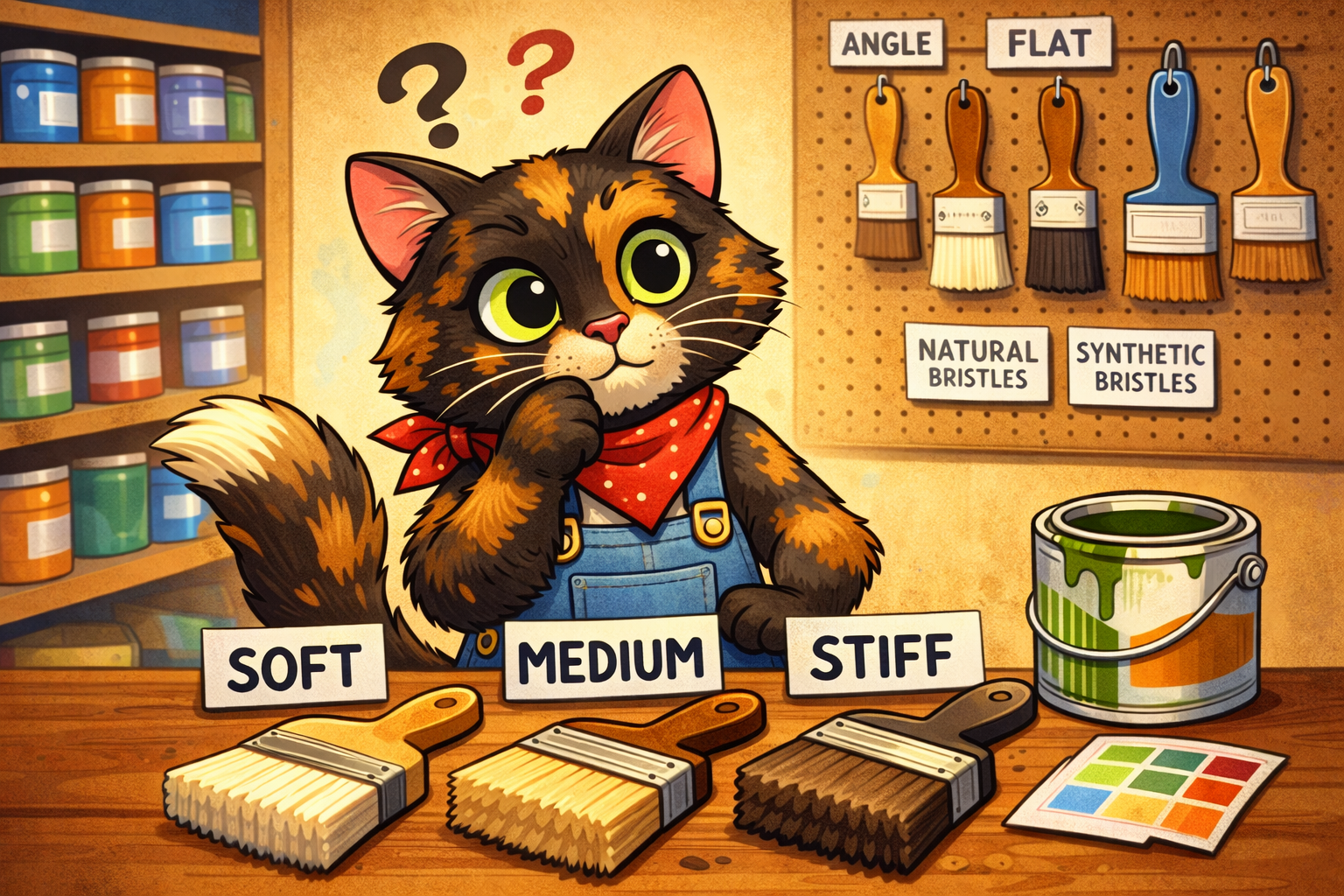
Soft Bristle Brushes
Soft bristle brushes have flexible, smooth bristles that bend easily.
Best for:
- Smooth walls
- Doors
- Cabinets
- Latex (water-based) paint
Why they work well:
- Create smooth finishes
- Reduce brush marks
- Spread paint evenly
Most synthetic brushes fall into this category, which is why they’re so popular with beginners.
Suggestion: Purdy Nylox Glide, 2.5″
Medium-Stiff Brushes
These brushes have some flexibility, but hold their shape better.
Best for:
- Trim and baseboards
- Lightly textured surfaces
- Cutting in around edges
Why they work well:
- Balance control and coverage
- Handle thicker paint better
- Still leave a fairly smooth finish
If you only buy a couple of brushes, this type is a great all-around option.
Suggestion: Purdy XL Brush 3-Pack
Stiff Bristle Brushes
Stiff brushes have firm bristles that don’t bend easily.
Best for:
- Rough or textured surfaces
- Masonry
- Brick
- Working paint into cracks or grooves
Why they work well:
- Push paint into uneven areas
- Handle thicker or heavier coatings
They’re less common for walls but great for tough surfaces.
Suggestion: Purdy ClearCut Series, 2.5″
Natural vs Synthetic Bristles (Quick Breakdown)
This part trips up a lot of beginners.
Natural Bristles
- Made from animal hair
- Best for oil-based paint
- Hold heavier paint well
Synthetic Bristles
- Made from nylon or polyester
- Best for latex paint
- Keep their shape in water
Since most beginners use latex paint, synthetic brushes are usually the best choice.
Angled vs Straight Brushes (Bonus Tip)
While we’re here, shape matters too.
- Angled brushes → great for cutting in and edges
- Straight (flat) brushes → better for trim and flat surfaces
An angled, medium-stiff synthetic brush is often a beginner favorite.
A Simple Way to Choose
Here’s a quick beginner shortcut:
- Smooth surface + latex paint → Soft synthetic brush
- Trim or edges → Medium-stiff angled brush
- Rough surface → Stiff brush
- Oil-based paint → Natural bristle brush
You don’t need every brush type — just the right ones for your project.
Final Thoughts
Brushes aren’t one-size-fits-all, but choosing the right type doesn’t have to be complicated. Once you understand how stiffness and bristle type affect paint, everything starts to make more sense.
And the best part? The right brush makes painting feel easier, cleaner, and way more enjoyable — especially when you’re just getting started.
Leave a Reply