
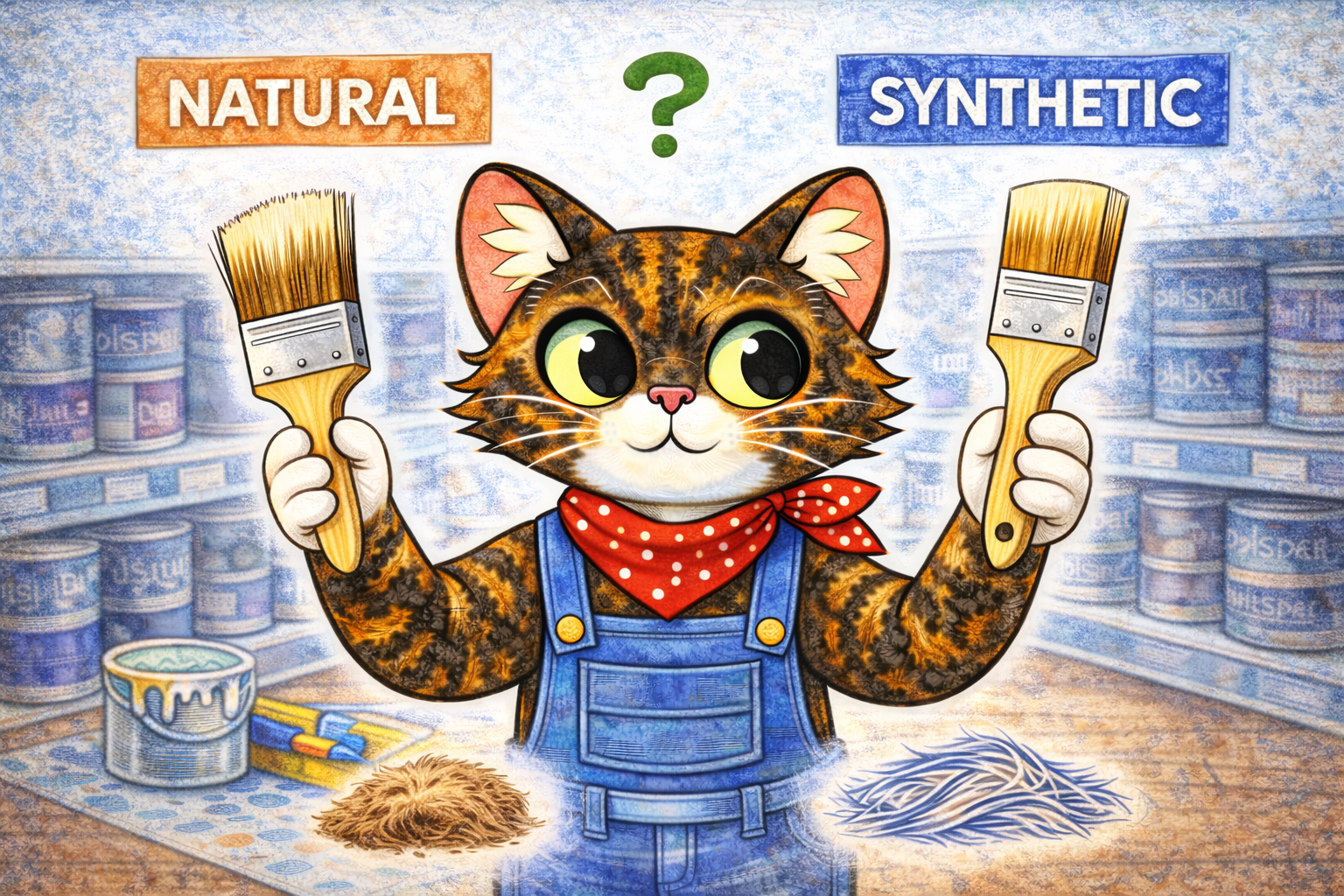
If you’ve ever stood in the paint aisle staring at rows of brushes and thought, “Why are there so many… and do these bristles actually matter?” — you’re not alone. I asked the same question when I started painting, and it turns out the answer is yes, bristles really do matter, especially depending on the type of paint you’re using.
Let’s break this down in a simple, no-stress way.
What Are Natural Bristle Brushes?
Natural bristle brushes are made from animal hair—most commonly hog or boar hair. If you look closely, the bristles tend to feel stiffer and have slightly rough, split ends.
What they’re good at
Natural bristles are fantastic at holding thicker, oil-based products. The rough texture grabs onto heavier paint and releases it smoothly.
Best used for:
- Oil-based paint
- Oil-based primers
- Varnishes and stains
- Enamels
Why they work well here
Oil-based paints don’t contain water, so natural bristles stay strong and flexible. They help create a smooth, even finish without streaks.
The downside
Natural bristle brushes do not play well with water. When used with latex or water-based paint, the bristles can:
- Absorb water
- Swell and lose their shape
- Feel floppy and hard to control
So while they’re great at one job, they’re very picky about it.
What Are Synthetic Bristle Brushes?
Synthetic brushes are made from nylon, polyester, or a blend of the two. These bristles are smoother, more flexible, and designed to handle moisture without breaking down.
What they’re good at
Synthetic brushes shine with water-based paints, especially latex.
Best used for:
- Latex (water-based) paint
- Water-based primers
- Acrylic paints
- Most interior wall painting projects
Why beginners love them
Synthetic brushes:
- Hold their shape better
- Are easier to clean
- Work well for everyday DIY painting
- Are more forgiving if your technique isn’t perfect (yet!)
If you’re painting walls, trim, or furniture with standard interior paint, synthetic brushes are usually the safest choice.
Why You Don’t Want to Mix These Up
This is one of those small details that can cause big frustration.
Using the wrong bristle type can lead to:
- Brush marks that won’t smooth out
- Uneven paint coverage
- A brush that feels hard to control
- A brush that wears out faster than it should
And none of that is your fault—it’s just the tool working against you.
Quick Cheat Sheet for Beginners
If you want the super simple version, here it is:
- Using latex or water-based paint? → Go with synthetic bristles
- Using oil-based paint or stain? → Choose natural bristles
When in doubt (and most beginners are using latex), synthetic brushes are usually the right answer.
The Good News
You don’t need to buy all the brushes. One or two good synthetic brushes can carry you through most beginner painting projects. Natural bristle brushes are great to add later when you start experimenting with stains or oil-based finishes.
Painting has a learning curve—but choosing the right brush makes that curve way less steep. And now you know one of the secrets the paint aisle doesn’t explain very well.
Leave a Reply