
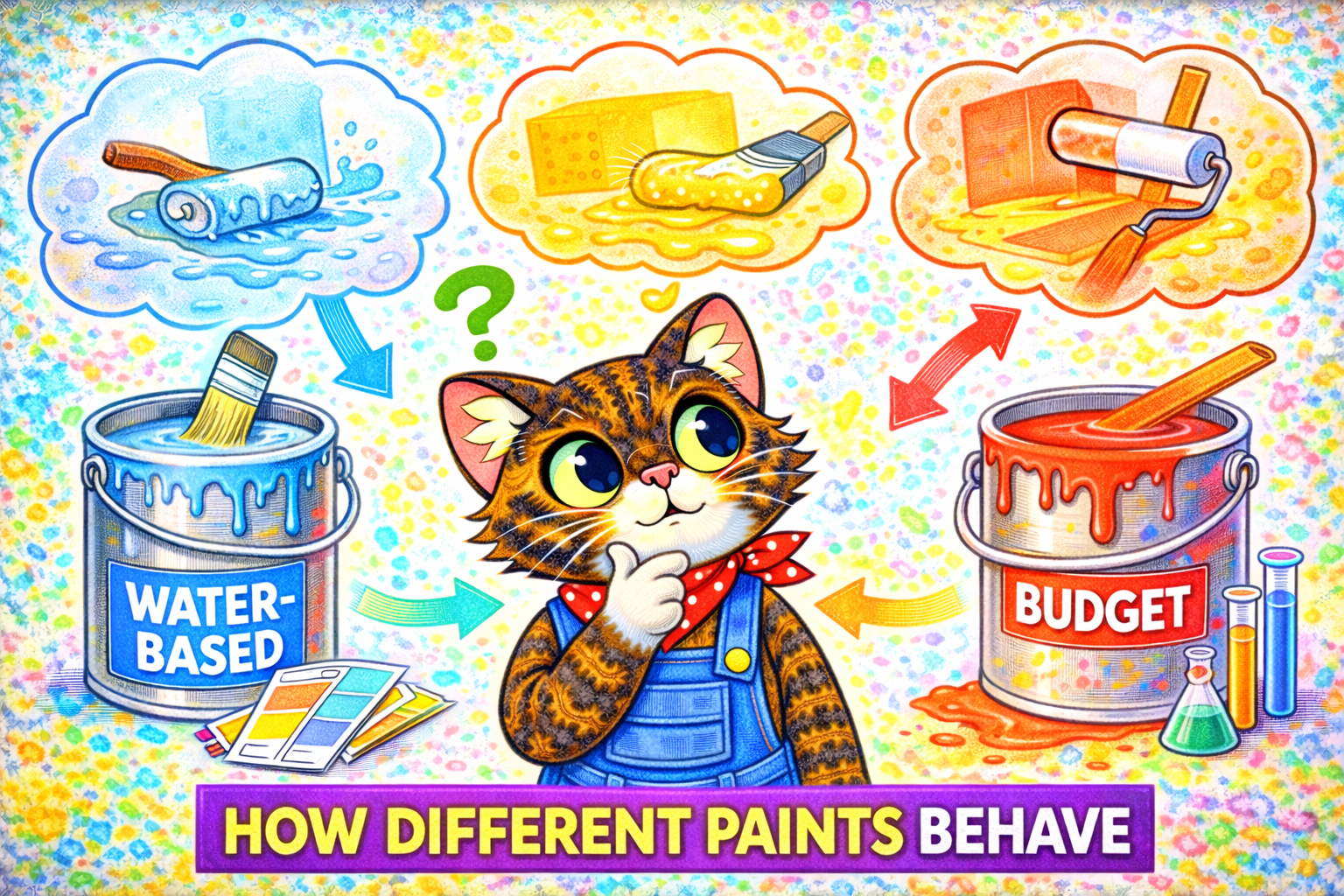
One of the most surprising things I learned as a beginner is that paint isn’t just “paint.” Different paints move, dry, stick, spread, and level in different ways — and those differences affect everything from how easy painting feels to how the final wall looks.
If you’ve ever thought, “Why does this paint feel so different from the last one I used?” — you weren’t imagining it.
Let’s break down how different paints behave and what that means for your project.
Paint Behavior Starts With the Formula
Every paint is made of a few core ingredients, but the ratio and type of those ingredients change how the paint behaves.
That’s why some paints feel:
- Thick and creamy
- Thin and runny
- Fast-drying
- Slow and forgiving
Paint behavior isn’t about skill level — it’s about chemistry.
How Water-Based (Latex) Paint Behaves
Most beginners use water-based (latex) paint, so this is a great place to start.
What it feels like
- Smooth and easy to roll
- Dries relatively quickly
- Easy to clean up with water
How it behaves
- Dries faster than oil-based paint
- Levels out as it dries (some more than others)
- Can show roller marks if it dries too fast
- Can feel “grabby” if overworked
What this means for beginners
Latex paint is forgiving, but it rewards steady, confident strokes. Over-rolling or brushing too much can actually make things worse.
How Oil-Based Paint Behaves
Oil-based paint behaves very differently — and that difference can be surprising.
What it feels like
- Thicker and smoother
- Slower to dry
- Stronger odor
How it behaves
- Flows and levels beautifully
- Takes much longer to dry and cure
- Leaves a very smooth finish
- Requires solvents for cleanup
What this means for beginners
Oil-based paint gives you more working time, but it also demands patience and proper ventilation. It’s often used for trim and specialty projects rather than full rooms.
How High-Quality Paint Behaves vs Budget Paint
This is where many beginners notice the biggest difference.
Higher-quality paint tends to:
- Cover better with fewer coats
- Level out more smoothly
- Give you more time before drying
- Hide brush and roller marks better
Budget paint often:
- Needs more coats
- Dries faster
- Shows application marks more easily
- Requires more careful technique
Neither is “wrong” — but they feel very different while you’re using them.
How Thick vs Thin Paint Behaves
Paint thickness plays a huge role in how it behaves.
Thicker paint:
- Hides imperfections better
- Covers more evenly
- Can feel harder to spread
- May leave texture if over-applied
Thinner paint:
- Spreads easily
- Can drip or run more
- May show what’s underneath
- Often needs extra coats
This is why some paints feel “heavy” and others feel “slippery” on the wall.
How Paint Sheen Changes Behavior
Sheen doesn’t just affect how shiny paint looks — it affects how it behaves.
Flat and matte paints:
- Hide wall imperfections well
- Are less washable
- Can feel chalkier
Satin and eggshell paints:
- Balance washability and appearance
- Flow more smoothly
- Show fewer marks than glossy paints
Glossy paints:
- Are very durable
- Show every brush stroke and flaw
- Require careful application
The shinier the paint, the more it reveals what’s underneath.
How Paint Reacts to the Surface
Paint behaves differently depending on what it’s going over.
- Smooth walls → paint spreads evenly
- Rough walls → paint absorbs faster
- Dirty or greasy walls → paint resists sticking
- Primed walls → paint behaves more predictably
This is why prep work matters so much — it controls how paint behaves before you even open the can.
Why Paint Sometimes Feels “Hard to Work With”
If paint feels frustrating, it’s usually because:
- It’s drying too fast
- The surface wasn’t prepped
- The paint isn’t suited to the project
- The tools don’t match the paint
That doesn’t mean you’re doing anything wrong — it means the paint and conditions aren’t working with you.
A Simple Beginner Mindset Shift
Instead of thinking:
“I’m bad at painting.”
Try thinking:
“This paint behaves differently — what does it need from me?”
Once you understand paint behavior, painting stops feeling mysterious and starts feeling manageable.
Final Thoughts
Different paints behave differently — and that’s not a flaw, it’s a feature. Each type is designed to do a specific job, in a specific way.
As a beginner, learning how paint behaves is one of the biggest confidence boosters you can get. When you know what to expect, you stop fighting the paint — and painting becomes a lot more enjoyable.
And honestly? That’s when it starts to feel fun instead of stressful.
Leave a Reply