
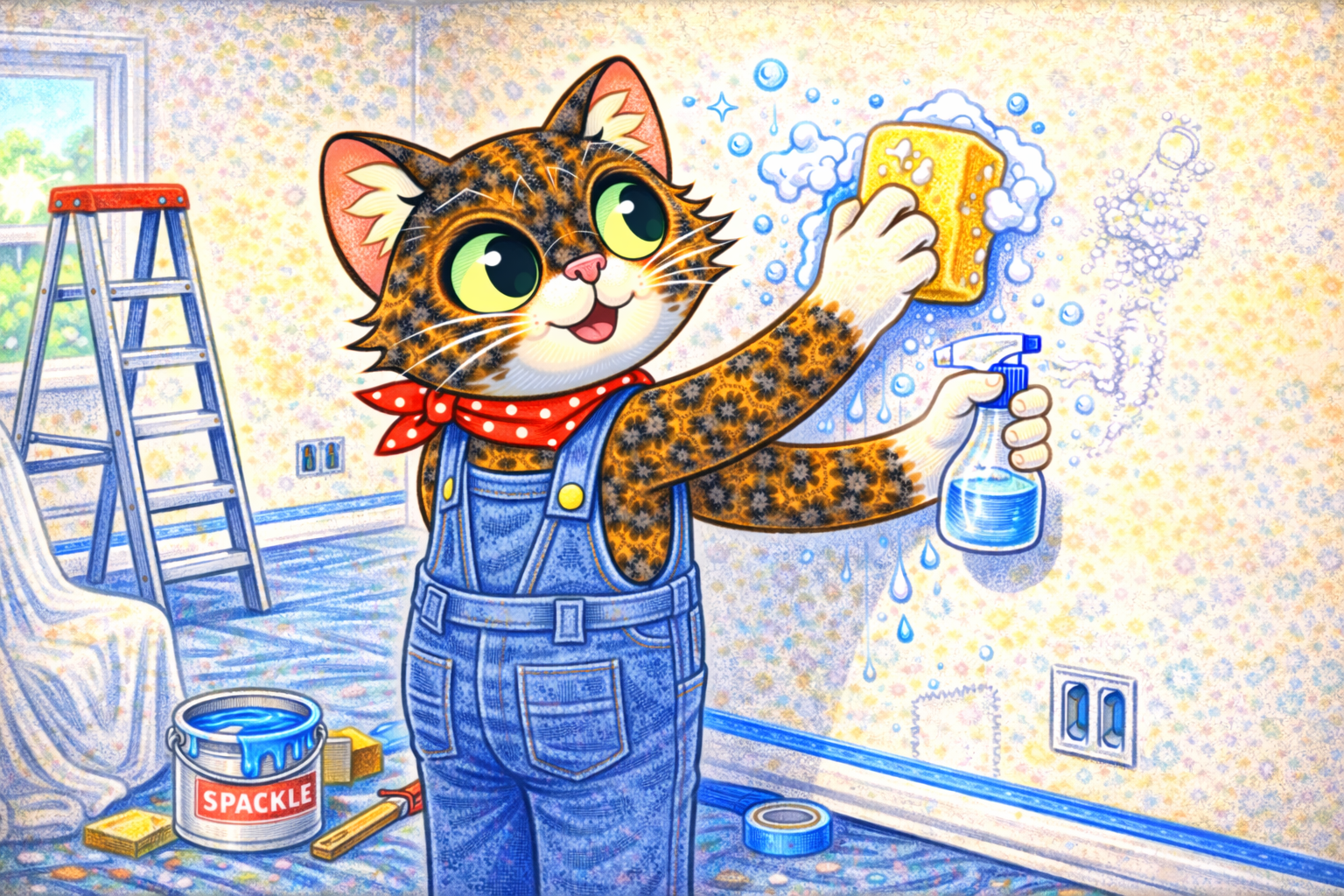
If you’ve ever painted a wall and thought, “Why doesn’t this look as good as I expected?” — there’s a good chance the problem wasn’t the paint. It was the prep.
I learned this the hard way, and most beginners do. Painting feels like the main event, but what you do before you open the paint can often matters more than the paint itself.
Let’s talk about why washing walls and proper prep are such a big deal — and how to do it without making it overwhelming.
Walls Are Dirtier Than They Look
Even if a wall looks clean, it usually isn’t.
Walls quietly collect:
- Dust
- Grease from cooking
- Smoke residue
- Hand oils from light switches and doorways
- Pet dander
- Cleaning product residue
Paint doesn’t like sticking to any of that.
What Happens When You Don’t Wash Walls
Skipping wall washing can lead to:
- Paint that won’t stick evenly
- Peeling or flaking later
- Shiny patches where paint didn’t bond
- Bubbles or weird texture
- Needing extra coats for coverage
When paint fails, it’s often because it’s trying to stick to grime instead of the wall.
Washing Walls Helps Paint Do Its Job
Clean walls give paint:
- Better adhesion
- More even coverage
- A smoother finish
- Longer-lasting results
Think of washing walls as clearing the landing pad so the paint can settle properly.
You Don’t Need Fancy Products to Wash Walls
This part surprises a lot of beginners.
In most cases, all you need is:
- Warm water
- A mild cleaner (dish soap works great)
- A sponge or soft cloth
For greasy areas (like kitchens), a degreasing cleaner can help — but stronger isn’t always better. You just want the surface clean, not stripped.
How Clean Is “Clean Enough”?
You’re not scrubbing for perfection — you’re removing buildup.
A good test:
- Run your hand over the wall after it dries
- If it feels smooth and not greasy or dusty, you’re good
No squeaky-clean obsession required.
Prep Is More Than Just Washing
Washing walls is step one, but good prep also includes:
Filling small holes or cracks
Spackle tiny nail holes and dents so they don’t show through fresh paint.
Light sanding
This helps smooth repairs and scuffs glossy areas so paint can grip better.
Dust removal
Always wipe or vacuum dust after sanding — paint sticks to dust just as poorly as grease.
Why Prep Makes Painting Easier (Not Harder)
This is the mindset shift most beginners miss.
Good prep:
- Makes paint spread more smoothly
- Reduces streaks and roller marks
- Helps you use fewer coats
- Makes the final result look more professional
Skipping prep saves time now but costs time later.
A Simple Beginner Prep Rule
If paint has ever failed on a surface before, prep matters even more.
Dirty walls, glossy finishes, kitchens, bathrooms, and high-touch areas all benefit from extra attention before painting.
What About Primer?
Clean walls make primer work better — and primer makes paint behave more predictably. They’re a team.
You don’t always need primer, but you always need clean walls.
Final Thoughts
Washing walls and proper prep aren’t the “boring part” of painting — they’re the secret ingredient that makes everything else easier.
When paint sticks well, spreads smoothly, and looks even, painting suddenly feels less frustrating and more rewarding. And that confidence boost? Totally worth a little prep work upfront.
Leave a Reply