
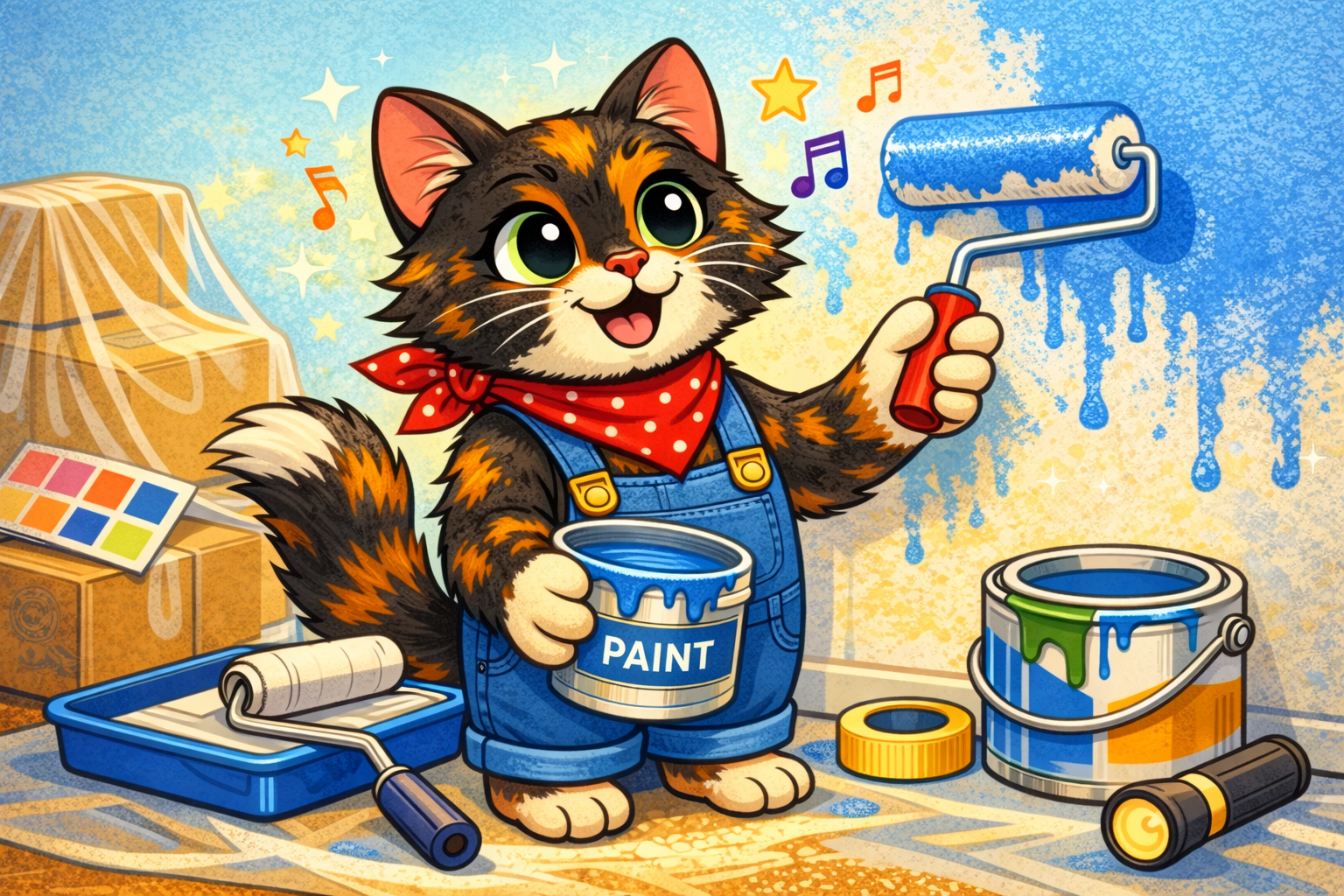
If you’ve never painted a room before, it can feel like a big deal. There are so many steps, tools, opinions, and “rules” that it’s easy to think you’ll mess it up.
Here’s the truth: you don’t need to be perfect to get great results. You just need a clear plan and realistic expectations.
Let’s go step by step, learning alongside each other.
Step 1: Decide What You’re Painting (and What You’re Not)
Before you buy anything, get clear on the scope.
Ask yourself:
- Are you painting walls only?
- Walls and ceiling?
- Walls and trim?
For your first room, it’s completely okay to keep it simple and paint just the walls.
Less scope = less stress.
Step 2: Choose Your Paint (Don’t Overthink It)
As a beginner, focus on:
- Interior, water-based (latex) paint
- A beginner-friendly brand or mid-range option
- A forgiving sheen like eggshell or satin
You don’t need the most expensive paint — just one that’s appropriate for the room.
If you’re unsure, paint store staff can help, and sample sizes are your friend.
Step 3: Gather Basic Tools (Only the Essentials)
You don’t need everything in the aisle.
Beginner basics:
- Paint roller + tray
- Roller cover (correct nap for your walls)
- One angled brush (for edges)
- One straight brush (optional, for trim or touch-ups)
- Drop cloth
- Painter’s tape (if you want it)
That’s enough to paint a room.
Step 4: Prep the Room (This Is the Secret Sauce)
Prep is where good paint jobs are born.
Clear and protect
- Move furniture or cover it
- Lay down drop cloths
- Remove outlet covers and switch plates
Clean the walls
- Use warm water and mild soap
- Focus on greasy or dusty areas
- Let walls dry fully
Fix small imperfections
- Fill nail holes or cracks
- Let repairs dry
- Lightly sand smooth
- Wipe away dust
Prep doesn’t have to be perfect — just intentional.
Step 5: Tape (If You’re Using It)
Painter’s tape is optional, not mandatory.
If you use it:
- Apply it to clean, dry surfaces
- Press edges down firmly
- Don’t stretch it
Many beginners like tape for peace of mind — that’s totally fine.
Step 6: Cut In First (The Edges)
Cutting in means painting:
- Along ceilings
- Around trim
- Around corners and edges
Use your angled brush and take your time.
Pro beginner tip:
You don’t need laser-straight lines — just consistent ones.
Step 7: Roll the Walls
Now the fun part.
How to roll:
- Load the roller evenly (not dripping)
- Roll in a “W” or “M” shape
- Fill in without pressing hard
- Keep a wet edge (don’t let sections dry before blending)
Work one wall at a time.
If it looks uneven at first — that’s normal. Paint evens out as it dries.
Step 8: Let It Dry (Really Dry)
This step is harder than it sounds.
- Follow the paint’s recommended drying time
- Don’t rush a second coat
- Avoid touching or “fixing” spots while wet
Most rooms need two coats. That’s not a failure — it’s normal.
Step 9: Apply the Second Coat
Your second coat will:
- Go faster
- Look smoother
- Feel more confidence-boosting
Repeat the same steps: cut in, then roll.
This is usually when the room really comes together.
Step 10: Remove Tape and Clean Up
If you used tape:
- Remove it slowly while the paint is slightly tacky
- Pull it back on itself at an angle
Clean brushes and rollers right away — future you will be grateful.
Step 11: Step Back and Admire Your Work
It won’t be perfect. And that’s okay.
Look for:
- Even color
- Smooth coverage
- A fresh, updated feel
Most small flaws are only noticeable to you — and often disappear once furniture is back in place.
Common First-Time Painting Mistakes (Totally Normal)
- Using too much paint on the roller
- Rushing drying time
- Skipping wall cleaning
- Overworking the paint
None of these mean you did a bad job. They mean you’re learning.
Final Thoughts
Painting your first room is less about skill and more about confidence. Once you do it once, the mystery disappears — and suddenly painting feels doable instead of scary.
Take your time, follow the steps, and remember: every good painter was once a beginner with a roller and a lot of questions.
FAQ
Quick answers to the most common beginner questions.
Most beginner projects take one to two days. This includes prep, painting, and drying time between coats.
Paint the trim first, then the walls. It’s easier to tape or cut in cleanly over finished trim than to protect freshly painted walls.
Most paints need at least two to four hours between coats. Always check the paint can for the manufacturer’s recommended dry time.
Usually yes, as long as the room is well-ventilated and the paint is fully dry to the touch. Opening windows or using a fan helps reduce lingering fumes.
Skipping prep. Rushing past cleaning, patching, or priming often leads to uneven results and extra work later.
Leave a Reply