
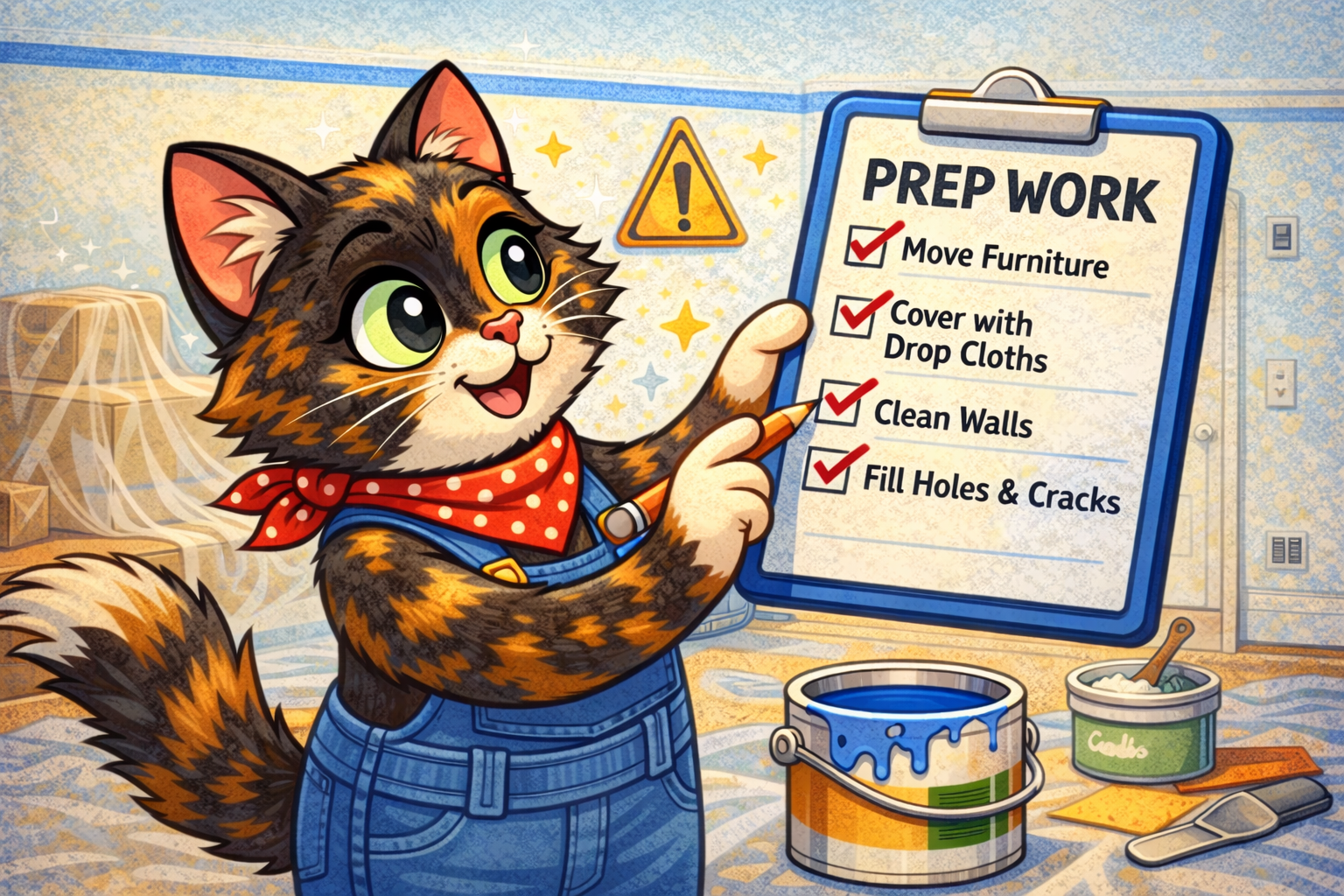
You don’t need to do everything perfectly — just cover the basics so your paint can do its job.
1. Clean the Walls
- Remove dust, grease, and grime
- Use warm water + mild dish soap
- Pay extra attention to kitchens, bathrooms, and high-touch areas
- Let walls dry completely before moving on
✔ If the wall feels smooth and not greasy, you’re good.
2. Check for Damage
- Look for nail holes, dents, or cracks
- Fill small holes with spackle
- Let repairs dry fully
✔ Tiny flaws stand out more after painting — fixing them now saves regret later.
3. Lightly Sand Where Needed
- Smooth patched areas
- Scuff glossy surfaces so paint can grip
- You’re not sanding everything — just problem spots
✔ If it feels slightly dull instead of shiny, that’s enough.
4. Remove Dust
- Wipe walls with a damp cloth or
- Vacuum dust from sanding
- Let the surface dry
✔ Paint sticks to walls, not dust.
5. Protect Your Space
- Lay down drop cloths
- Move or cover furniture
- Remove outlet covers and switch plates
✔ A few minutes now = way less cleanup later.
6. Tape (If You’re Using It)
- Apply painter’s tape to trim, edges, and fixtures
- Press edges down firmly to prevent bleed
- Don’t stretch the tape
✔ Tape works best on clean, dry surfaces.
7. Decide If You Need Primer
- Use primer if:
- You’re covering stains
- The color change is dramatic
- The surface is repaired or patched
- The wall was glossy or bare
✔ Primer helps paint behave more predictably.
8. Set Up Good Conditions
- Open windows or doors if possible
- Make sure the room isn’t too humid
- Avoid painting in extreme heat or cold
✔ Paint behaves best in calm, comfortable conditions.
The Beginner Shortcut
If this feels like a lot, focus on these three must-do steps:
- Clean the walls
- Fix obvious damage
- Protect floors and furniture
Everything else just improves results.
Final Reminder
Prep isn’t about being perfect — it’s about giving your paint a fair chance. Even a little prep goes a long way, and every step you take makes painting easier and more forgiving.
FAQ
Quick answers to the most common beginner questions.
Yes. Dust, grease, and residue can prevent paint from sticking properly and can lead to uneven coverage or peeling later.
Small holes and cracks should be filled and lightly sanded first. Painting over them usually makes them more noticeable instead of hiding them.
Skipping prep can cause poor paint adhesion, visible imperfections, flashing, or peeling. Prep helps your paint job last and look smoother.
Light sanding is helpful, especially on glossy or previously painted walls. It gives the new paint something to grip onto.
Not always, but it’s strongly recommended for stained walls, dark colors, or uneven surfaces. Primer helps create an even base and better results.
Leave a Reply