
One of the biggest beginner questions isn’t how to paint — it’s how long painting is going to take. And the internet doesn’t always help, because you’ll see answers like “a weekend project!” without much explanation.
So let’s slow this down and talk honestly about how long paint projects usually take, what affects the timeline, and what a realistic beginner schedule actually looks like.
First: Painting Takes Longer Than You Expect — and That’s Normal
Most beginners underestimate paint projects because:
- Prep takes longer than expected
- Drying time can’t be rushed
- Life interrupts projects
- Painting is more physical than it looks
None of that means you’re slow or doing it wrong. It just means painting is a process, not a race.
What Actually Affects How Long a Paint Project Takes
A few key factors influence timeline more than anything else:
Room size
A small bedroom takes far less time than a large living room.
Prep work
Cleaning, patching, sanding, and taping often take as long as painting itself.
Number of coats
Most rooms need two coats. That’s normal.
Drying time
Paint needs time between coats — usually several hours, sometimes longer.
Experience level
Beginners naturally move more slowly, and that’s okay.
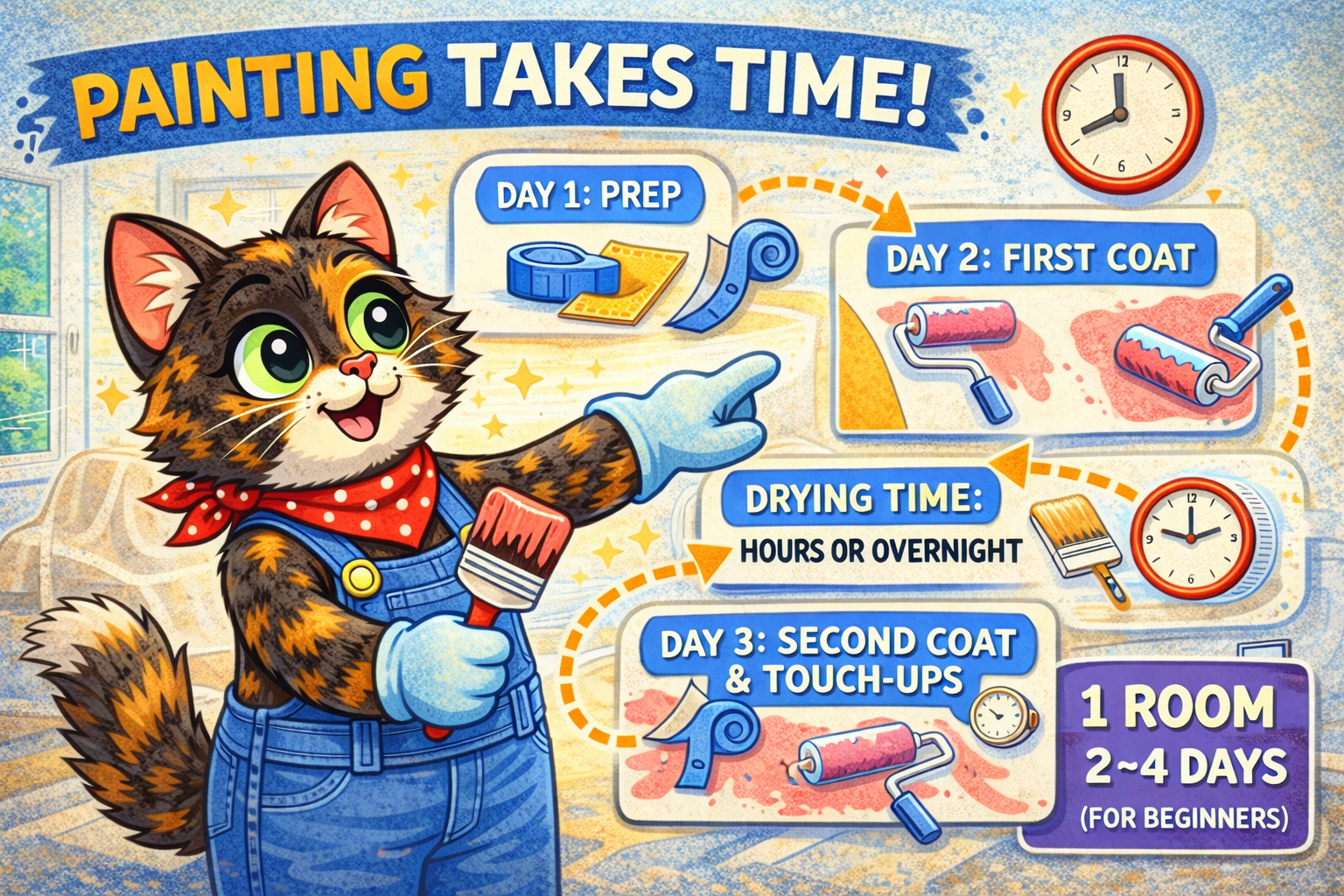
A Realistic Beginner Timeline: Painting One Room
Let’s look at a typical beginner-friendly timeline for painting one standard room (walls only).
Day 1: Prep Day (2–4 hours)
- Move or cover furniture
- Clean walls
- Patch small holes or cracks
- Light sanding
- Wipe down dust
- Tape if using tape
Prep might not feel exciting, but it sets you up for success.
Day 2: First Coat (2–3 hours)
- Cut in edges
- Roll walls
- Clean tools
The first coat often feels slow and uneven — that’s completely normal.
Day 2 or 3: Drying Time (Several hours to overnight)
- Let paint dry fully
- Don’t rush this step
- Avoid touching up wet paint
Drying time depends on paint type, humidity, and airflow.
Day 3: Second Coat (1.5–2.5 hours)
- Repeat cutting in
- Roll second coat
- Admire how much better it looks
The second coat almost always goes faster and looks smoother.
Optional Day 4: Touch-Ups & Cleanup (30–60 minutes)
- Fix small missed spots
- Remove tape
- Reinstall outlet covers
- Clean tools
This is when the room really feels “done.”
Total Time: What to Expect
For a beginner painting one room:
- Active work time: 5–9 hours
- Project span: 2–4 days
That’s spread out, manageable, and very normal.
Why “One-Weekend” Projects Can Be Misleading
Yes, some people paint a room in a weekend — but usually:
- They’ve painted before
- Prep is minimal
- Drying conditions are perfect
- They’re working long days
As a beginner, giving yourself extra time leads to better results and less stress.
Bigger Projects Take Longer (And That’s Okay)
Here’s a rough beginner estimate:
- Small room: 2–3 days
- Medium room: 3–4 days
- Multiple rooms: Several weekends
- Whole house: Weeks, not days
Breaking projects into chunks makes them far more approachable.
A Helpful Beginner Mindset Shift
Instead of asking:
“How fast can I finish this?”
Try asking:
“How can I pace this so it stays enjoyable?”
Painting isn’t just about the finish line — it’s about confidence, learning, and momentum.
Final Thoughts
Paint projects take time, especially when you’re learning — and that’s not a downside. Giving yourself a realistic timeline helps you avoid rushing, mistakes, and burnout.
Once you’ve painted a room or two, you’ll naturally speed up. Until then, slow and steady is exactly where you should be.
Leave a Reply