
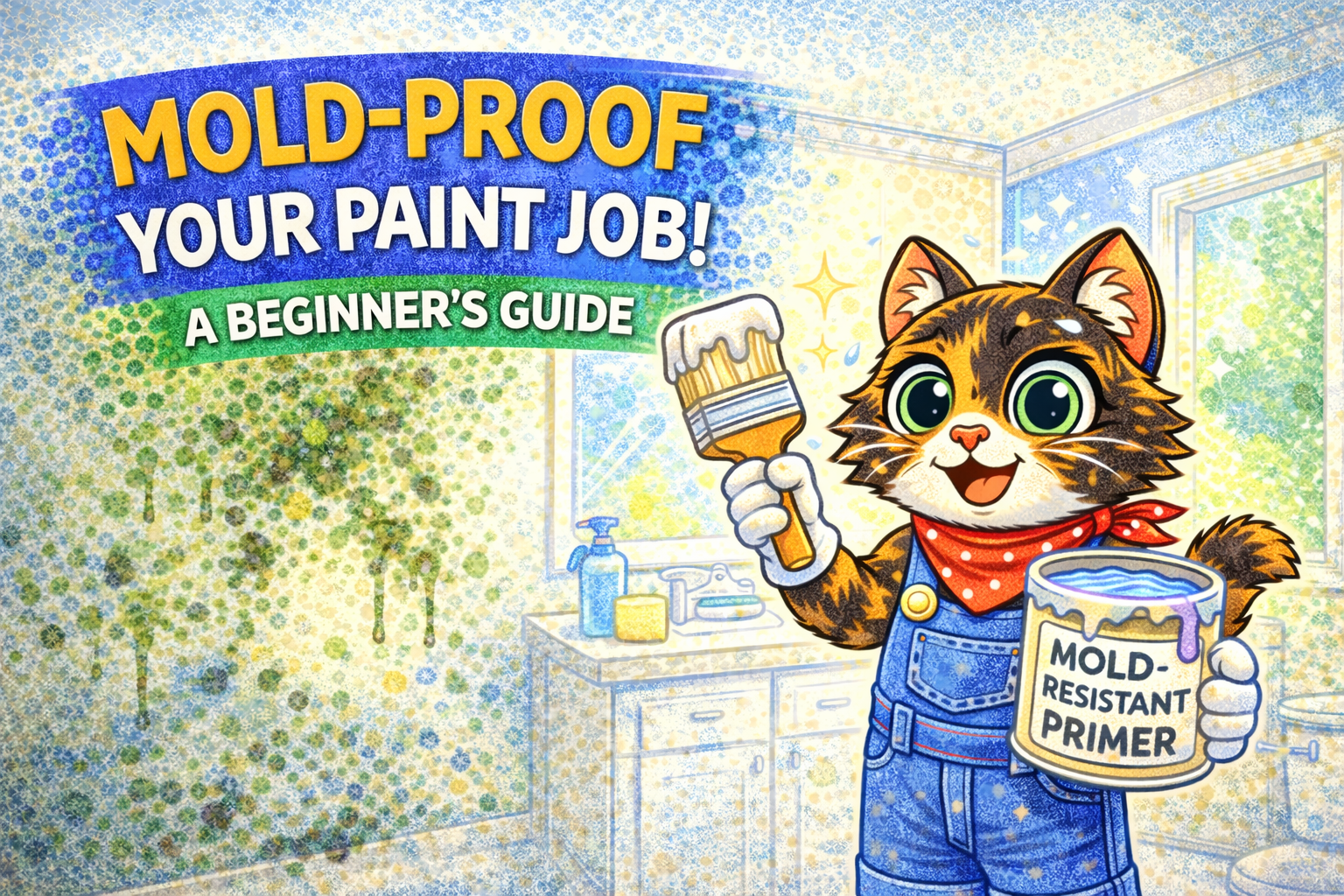
If you’ve ever painted a room only to see dark spots reappear later, you’re not alone. Mold and mildew can sneak back through paint if the surface underneath isn’t properly protected — and that’s where mold and mildew prevention primer comes in.
This kind of primer isn’t scary or complicated. It’s simply a tool that helps paint last longer in rooms that deal with moisture.
Let’s break it down in plain language.
First: Mold vs. Mildew (Quick and Simple)
You’ll often hear these words together, but they’re slightly different:
- Mildew is usually surface-level and looks like gray, white, or light black spots
- Mold can be darker, thicker, and more stubborn
Both thrive in moist, poorly ventilated areas, and both can come back if you paint without addressing them properly.
What Is Mold and Mildew Prevention Primer?
Mold and mildew prevention primer is a base coat designed to:
- Block existing stains
- Help kill or inhibit mold spores
- Prevent future growth under paint
It creates a protective barrier between your wall and your topcoat of paint.
Think of it as insurance — especially in high-moisture spaces.
When You Should Use Mold and Mildew Prevention Primer
You don’t need this primer everywhere. It’s most useful in rooms that struggle with moisture.
Common places it helps:
- Bathrooms
- Laundry rooms
- Basements
- Kitchens
- Poorly ventilated rooms
It’s especially helpful if:
- You’ve had visible mold or mildew before
- You’re repainting a problem area
- The room stays humid even with fans
When You Probably Don’t Need It
In dry, well-ventilated rooms like:
- Bedrooms
- Living rooms
- Offices
Regular primer (or no primer at all) is usually enough — assuming the walls are clean and in good condition.
Important: Primer Is Not a Cleanup Shortcut
This part matters.
Mold and mildew prevention primer does not replace cleaning.
Before priming:
- Clean the affected area thoroughly
- Remove visible mold or mildew
- Let the surface dry completely
Primer helps prevent future growth — it doesn’t magically fix active problems.
How This Primer Is Different From Regular Primer
Compared to standard primer, mold-resistant primer:
- Contains additives that discourage mold growth
- Often blocks stains better
- Is designed for damp environments
It still applies like regular primer — no special technique required.
Do You Still Need Mold-Resistant Paint?
Yes — primer and paint work best together.
The strongest protection comes from:
- Mold/mildew prevention primer underneath
- Mold-resistant paint on top
This combo gives you a layered defense against moisture problems.
Beginner Tips for Using Mold and Mildew Prevention Primer
- Ventilate well while applying
- Follow drying times closely
- Don’t rush to paint over it
- Use it only where needed
A little goes a long way — you don’t have to prime the entire house.
Common Beginner Mistakes to Avoid
❌ Priming over active mold without cleaning
❌ Using it in dry rooms where it’s unnecessary
❌ Skipping ventilation
❌ Assuming one coat fixes moisture issues forever
Primer helps — but moisture control still matters.
Final Thoughts
Mold and mildew prevention primer isn’t about being extra cautious — it’s about being prepared in the right spaces. For beginners, it’s one of the easiest ways to prevent frustrating paint problems from coming back later.
If a room has a history of moisture, this primer can save you time, money, and repainting down the road.
Leave a Reply