
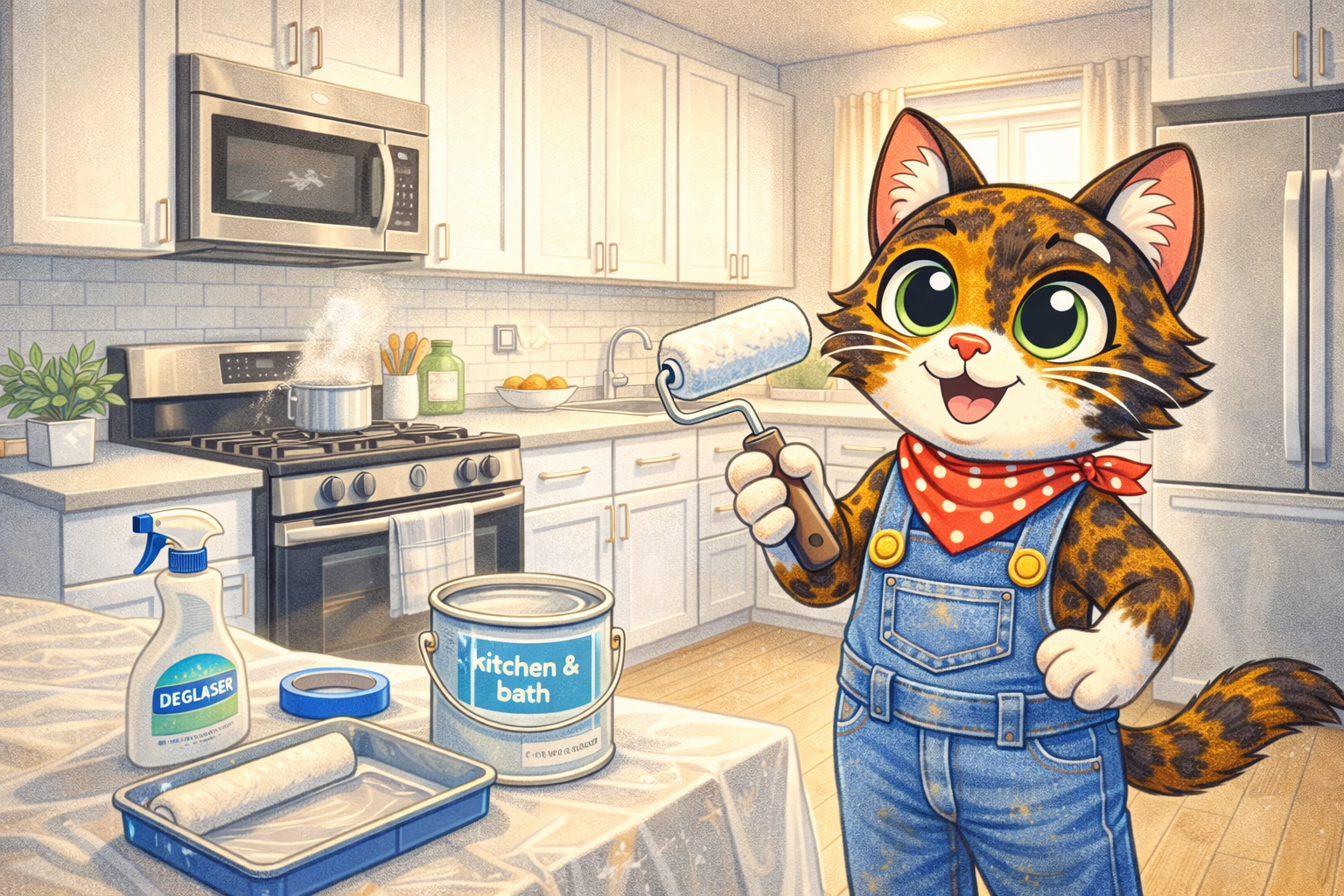
Kitchens are busy, messy, wonderful spaces — and that means the paint you choose has to work a little harder than paint in other rooms. Between cooking splashes, steam, fingerprints, and frequent cleaning, kitchen paint needs to be durable and good-looking.
If you’re a beginner, don’t worry. You don’t need to overthink this — you just need the right combination of paint type, finish, and color.
What Makes Kitchen Paint Different?
Kitchens deal with:
- Moisture from cooking
- Grease and food splatters
- Frequent wiping and cleaning
- Temperature changes
Because of that, kitchen paint needs to be:
- Washable
- Moisture-resistant
- Durable enough to scrub
This is one room where paint performance really matters.
Best Type of Paint for Kitchens
Latex (Water-Based) Paint Is the Best Choice
For kitchens, latex paint is almost always the right pick because it:
- Dries quickly
- Has low odor
- Is easy to clean
- Holds up well to humidity
Look for paints labeled:
- “Washable”
- “Scrubbable”
- “Kitchen & bath” (these often include mildew resistance)
Low- or zero-VOC formulas are also a bonus for indoor air quality.
Best Paint Finish for Kitchens
Finish is where beginners often struggle — but this part is important.
Best finishes for kitchen walls:
- Satin (top choice)
- Semi-gloss (especially near sinks and stoves)
Why these work:
- They resist moisture
- They’re easy to wipe clean
- They hold up to repeated cleaning
What to avoid:
- Flat or matte finishes on kitchen walls
They look nice, but they stain and scuff too easily in high-use spaces.
What About Kitchen Cabinets?
Cabinets are a separate decision.
For cabinets:
- Semi-gloss or satin finishes work best
- Specialized cabinet paint is worth considering
- Prep matters more than paint type
Wall paint and cabinet paint aren’t always interchangeable.
Best Kitchen Paint Colors for Beginners
Kitchen color choices affect how clean and open the space feels.
Beginner-friendly kitchen colors:
- Warm whites
- Soft grays
- Light greige
- Pale blue
- Muted green
These colors:
- Reflect light
- Hide minor messes
- Feel clean without feeling sterile
Light vs. Dark Colors in Kitchens
Both can work — but they behave differently.
Light colors:
- Make kitchens feel bigger
- Brighten small spaces
- Show less dust
Dark colors:
- Feel cozy and dramatic
- Work best in larger kitchens
- Look better with satin or semi-gloss finishes
If you’re unsure, lighter colors are usually easier for beginners.
Do Kitchens Need Primer?
Often, yes.
Primer helps if:
- Walls have grease or stains
- You’re changing from dark to light
- The surface is glossy
- You’ve patched holes or repairs
In kitchens, primer helps paint stick and last longer.
Beginner Tips for Painting Kitchens
- Clean walls thoroughly before painting
- Degrease areas near the stove
- Use painter’s tape carefully around cabinets
- Ventilate well while painting
- Plan for two coats
Prep is especially important in kitchens — skipping it shows quickly.
Common Beginner Kitchen Painting Mistakes
❌ Using flat paint
❌ Painting over grease without cleaning
❌ Choosing overly dark colors in small kitchens
❌ Skipping primer
❌ Rushing drying time
A little patience goes a long way here.
Final Thoughts
The best paint for kitchens balances durability with style. With a washable paint, the right finish, and thoughtful color choices, beginners can create a kitchen that looks great and holds up to real life.
Once your kitchen paint is done, you’ll appreciate it every single day — especially when cleanup is easy.
Leave a Reply