
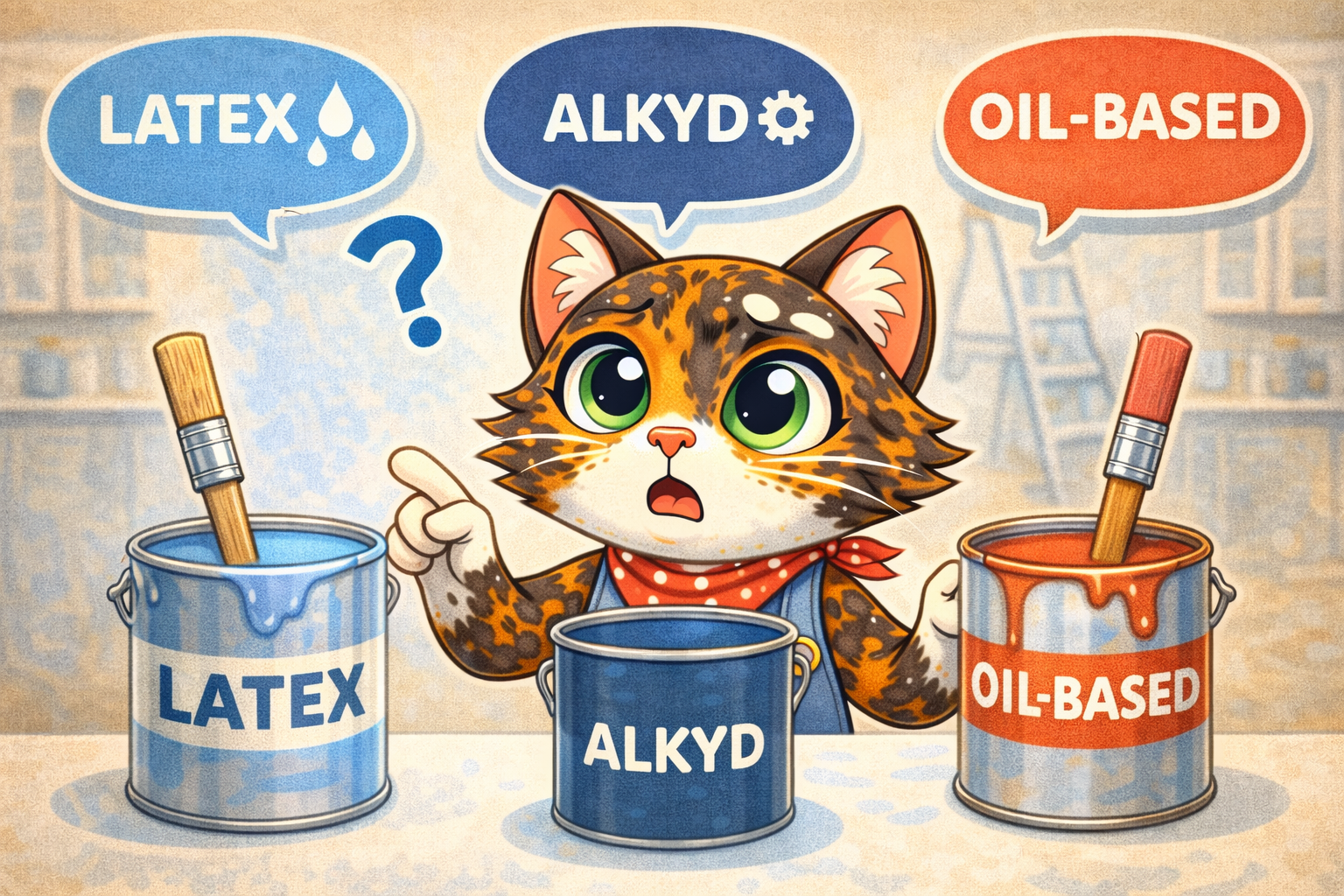
If you’ve ever heard the term alkyd paint and thought, “Okay… but what does that actually mean?” — you’re not alone. Alkyd paint is one of those paint terms that pops up on labels or in paint store conversations and leaves beginners feeling a little lost.
Let’s learn it together, in plain language.
So… What Is Alkyd Paint?
Alkyd paint is oil-based paint that’s been modified with synthetic resins (called alkyds). These resins help the paint dry harder, smoother, and more durable than many traditional oil paints.
In short:
Alkyd paint behaves like oil-based paint but is often easier to work with.
You’ll commonly see it used on:
- Trim
- Doors
- Cabinets
- Furniture
- High-touch surfaces
How Alkyd Paint Is Different From Other Paints
Here’s where alkyd paint sits in the paint family:
- Latex (water-based) paint: Easy cleanup, flexible, beginner-friendly
- Traditional oil-based paint: Very durable, slow drying, strong fumes
- Alkyd paint: Oil-like durability with improved drying and smoother leveling
Many modern alkyd paints are now waterborne alkyds, meaning they:
- Clean up with soap and water
- Have lower odor
- Still dry hard like oil paint
This makes them much more approachable for DIYers.
Why People Choose Alkyd Paint
Alkyd paint is popular for a few key reasons:
✔ Extremely Smooth Finish
Alkyd paint self-levels really well, which means fewer brush marks.
✔ Very Durable
Once cured, it resists scuffs, scratches, and wear better than most latex paints.
✔ Great for High-Touch Areas
Doors, cabinets, and trim benefit from that extra hardness.
✔ Less Yellowing (Modern Formulas)
Newer alkyd paints are designed to resist the yellowing that older oil paints were known for.
Downsides to Know About (Because Nothing’s Perfect)
Alkyd paint does come with a few trade-offs:
- Longer dry and cure times than latex
- Can feel tacky for longer
- Still needs good ventilation
- Usually more expensive
For beginners, patience is the biggest adjustment.
When Alkyd Paint Makes Sense for Beginners
Alkyd paint is a great choice if:
- You’re painting cabinets or doors
- You want a smooth, professional-looking finish
- You don’t want visible brush marks
- Durability matters more than speed
It’s probably not the best choice for:
- Large wall areas
- Quick weekend projects
- Poorly ventilated spaces
Tips for Using Alkyd Paint Successfully
If you decide to use alkyd paint, a few beginner-friendly tips help a lot:
- Use high-quality brushes or rollers
- Don’t overwork the paint — let it level
- Follow recoat times exactly
- Allow full cure time before heavy use
Rushing alkyd paint is the easiest way to get sticky or uneven results.
Final Thoughts
Alkyd paint is a durable, smooth-finishing option that bridges the gap between oil-based and latex paint. It’s especially useful for trim, cabinets, and doors where wear and tear matter.
It might not be the simplest paint on the shelf — but once you understand what it does, it becomes a really powerful tool in your painting toolbox.
Alkyd vs Latex vs Oil-Based Paint: Beginner Comparison Chart
| Feature | Latex (Water-Based) Paint | Alkyd Paint | Oil-Based Paint |
|---|---|---|---|
| Cleanup | Soap & water | Soap & water (most modern formulas) | Paint thinner or mineral spirits |
| Dry Time | Fast | Moderate | Slow |
| Cure Time | Shorter | Longer | Longest |
| Odor | Low | Low–moderate | Strong |
| Finish Quality | Good, may show brush marks | Very smooth, self-leveling | Extremely smooth |
| Durability | Moderate | High | Very high |
| Flexibility | Flexible (less cracking) | Harder finish | Very hard, less flexible |
| Yellowing Over Time | No | Minimal (modern formulas) | Yes |
| Best For | Walls, ceilings, general rooms | Cabinets, doors, trim | Trim, doors, furniture (advanced use) |
| Beginner-Friendly? | ⭐⭐⭐⭐⭐ | ⭐⭐⭐⭐ | ⭐⭐ |
| Ventilation Needed | Minimal | Recommended | Required |
| Typical Cost | $ | $$ | $$–$$$ |
Quick Beginner Takeaway
- Choose latex paint for walls, ceilings, and most beginner projects
- Choose alkyd paint for cabinets, doors, and trim when you want durability without oil-paint headaches
- Choose oil-based paint only if you specifically need maximum hardness and don’t mind the smell and cleanup
Leave a Reply