
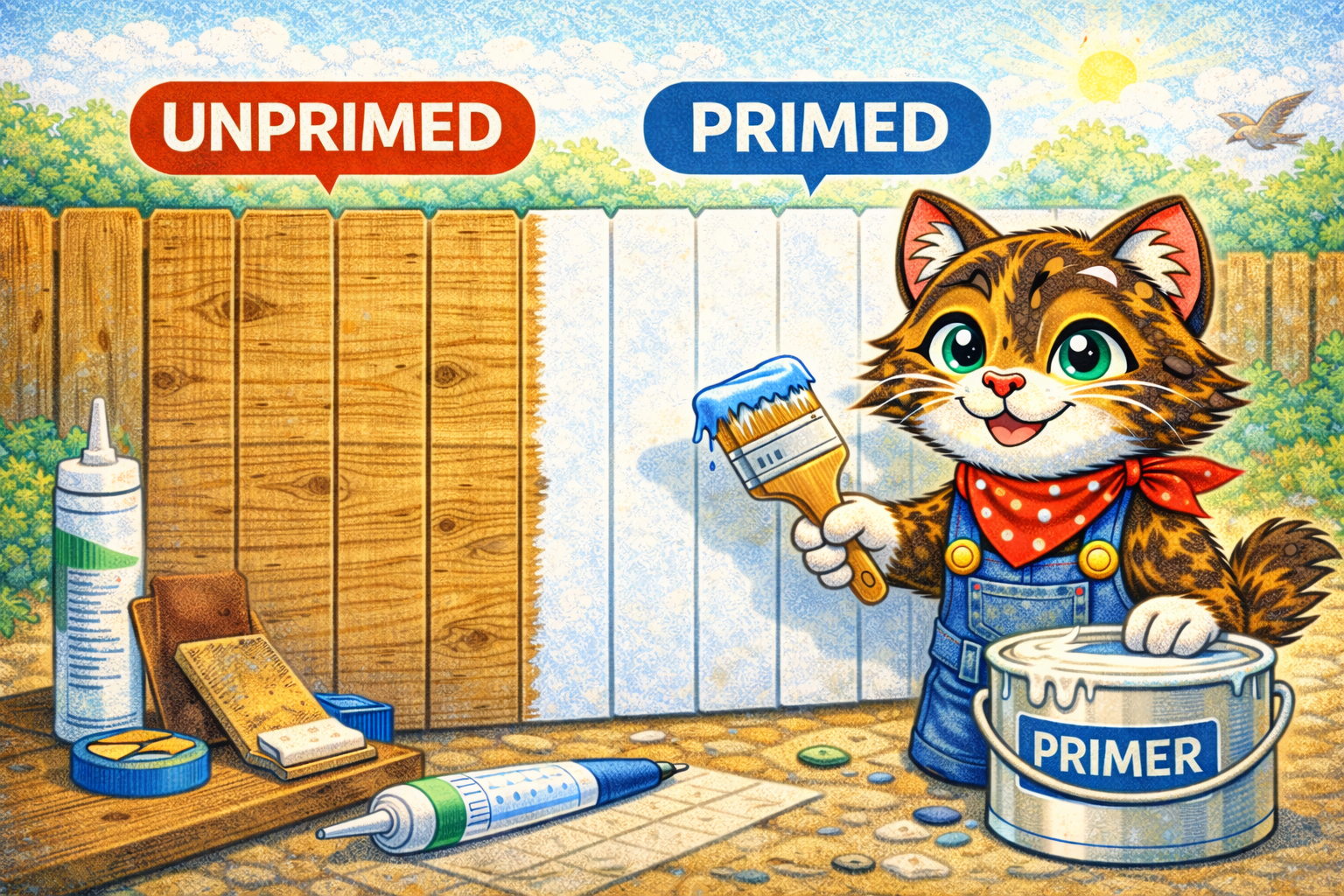
Let’s talk about the step a lot of beginners are tempted to skip:
Primer.
I get it. You already bought the paint. You’re ready to roll. Primer feels like an “extra” step.
But when it comes to exterior painting, primer isn’t just extra — sometimes it’s the reason your paint job lasts years instead of months.
Let’s break this down in a simple, no-overwhelm way.
What Is Exterior Primer?
Primer is a base coat that goes on before your exterior paint.
It’s designed to:
- Help paint stick better
- Seal porous surfaces
- Block stains
- Create an even base color
- Improve durability
Think of primer as the “grip layer” between your house and your paint.
Exterior surfaces deal with moisture, sun, expansion, contraction, and dirt — so adhesion really matters.
What Makes Exterior Primer Different from Interior Primer?
Exterior primer is built tougher.
It’s formulated to:
- Resist moisture
- Handle temperature swings
- Prevent mildew growth
- Bond to weathered surfaces
You should always use a primer specifically labeled for exterior use if you’re working outside.
When Exterior Primer Is Non-Negotiable
These are the situations where primer is not optional.
1. Bare Wood
If you’ve scraped down to raw wood — you need primer.
Bare wood is porous. Without primer, paint soaks in unevenly and may peel early.
Primer seals the wood and prevents tannin bleed (those yellow/brown stains that can show through paint).
Non-negotiable.
2. New Siding (Especially Wood or Fiber Cement)
New surfaces often need priming unless they come pre-primed from the factory.
Check the label. If it’s not already primed, you should do it.
New materials absorb paint differently, and primer ensures even coverage and long-term adhesion.
3. Stain Blocking (Water, Rust, or Tannin Stains)
If you see:
- Water stains
- Rust marks
- Knots in wood
- Yellow/brown discoloration
You need a stain-blocking primer.
Regular paint will not reliably cover these long term. They often bleed right back through.
4. Major Color Changes
Painting dark brown siding bright white?
Primer helps:
- Reduce the number of paint coats
- Prevent old color from ghosting through
- Create a consistent base
You might get away without primer — but you’ll likely use more paint and get uneven results.
Primer saves frustration here.
5. Chalky or Weathered Surfaces
Run your hand across old siding.
Does it leave powdery residue?
That’s chalking.
Primer helps bind and seal chalky surfaces so your new paint adheres properly.
Skipping primer in this case often leads to peeling.
When You Might Not Need Primer
Primer may not be necessary if:
- You’re repainting a surface in good condition
- The existing paint is intact
- You’re using a high-quality exterior paint with strong adhesion
- You’re staying within a similar color family
But here’s the key:
If you’re unsure — spot prime problem areas at minimum.
You don’t always need full-coverage primer. Sometimes targeted priming is enough.
Types of Exterior Primer (Beginner-Friendly Breakdown)
Acrylic (Water-Based) Primer
- Easy cleanup
- Flexible
- Great for most siding types
- Good all-around beginner choice
Oil-Based Primer
- Excellent stain blocking
- Seals wood knots well
- Slower drying
- Stronger fumes
If you’re new, acrylic exterior primer is usually the safest starting point unless you’re specifically dealing with heavy stains.
Common Beginner Primer Mistakes
Let’s prevent these:
- ❌ Using interior primer outside
- ❌ Skipping primer on bare wood
- ❌ Not allowing primer to fully dry
- ❌ Applying paint too soon
- ❌ Forgetting to sand lightly after primer if surface feels rough
Primer needs proper drying time to do its job.
Does Paint + Primer in One Replace Exterior Primer?
Short answer: Sometimes. Not always.
“Paint and primer in one” means the paint has stronger adhesion and coverage — but it does not replace primer in non-negotiable situations like:
- Bare wood
- Stain blocking
- Major repairs
- Heavy color transitions
Think of it as enhanced paint — not magic primer replacement.
The Beginner Takeaway
Primer isn’t about perfection. It’s about protection.
If you:
- Have bare surfaces
- See stains
- Made repairs
- Or are unsure
… primer is your safety net.
Exterior painting is exposed to weather every single day. The stronger your foundation, the longer your hard work lasts.
And honestly? Spending one extra day priming is much easier than repainting in two years because of peeling.
Leave a Reply