
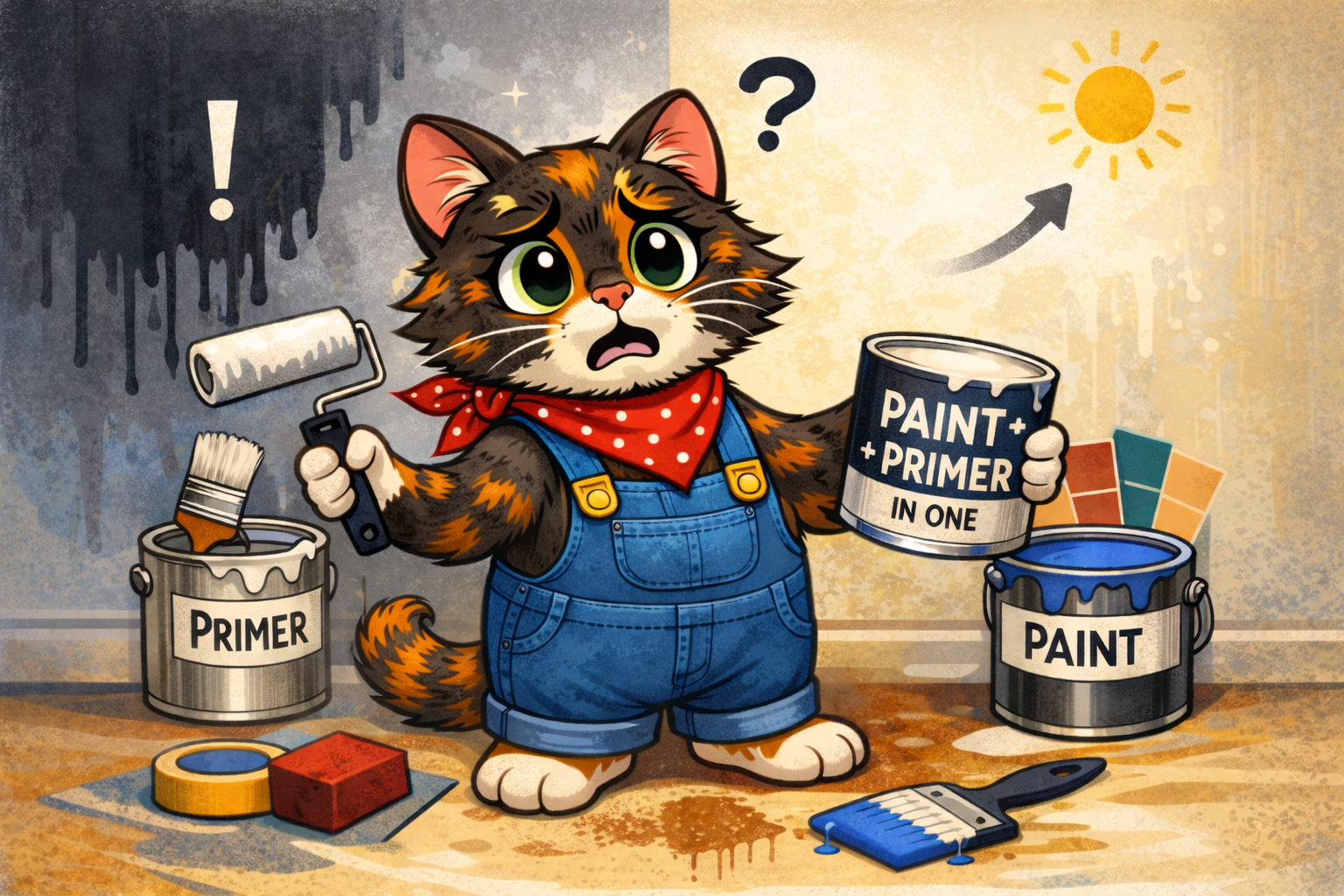
Let’s talk about one of the most confusing labels in the paint aisle:
“Paint + Primer in One.”
It sounds magical.
It sounds efficient.
It sounds like you can skip a whole step.
And sometimes… you can.
But sometimes? You absolutely shouldn’t.
If you’ve ever stood in the store wondering, “Do I really need separate primer?” — this guide is for you. Let’s walk through it together in a no-drama, beginner-friendly way.
First: What Does “Paint + Primer” Actually Mean?
This is the most important thing to understand:
Paint + primer in one is not the same as applying primer first and then paint.
It’s basically:
- A thicker, higher-build paint
- With better adhesion and coverage than standard paint
It can cover better than basic paint.
But it does not replace primer in every situation.
Think of it like this:
- Regular paint = standard coverage
- Paint + primer = stronger coverage
- Separate primer + paint = surface preparation + color
Primer’s job isn’t just covering color. It’s about adhesion and sealing.
When Paint + Primer Is Usually Enough
There are definitely times when it works beautifully.
1. Repainting a Wall the Same Color (or Similar)
If you’re:
- Painting beige over beige
- Light gray over light gray
- White over off-white
And the surface is clean and in good shape?
Paint + primer is usually completely fine.
2. Walls Are Already Painted and in Good Condition
If the surface:
- Isn’t glossy
- Isn’t damaged
- Isn’t stained
- Isn’t patched heavily
You’re typically safe using paint + primer alone.
This is the most common scenario for beginner projects.
3. Minor Color Changes
Going from:
- Light to slightly darker
- Medium tone to medium tone
You’ll likely just need two coats of paint + primer.
4. Touch-Ups on Previously Painted Surfaces
If the original surface was properly primed before and you’re just refreshing it, paint + primer is usually more than enough.
When Paint + Primer Is NOT Enough
This is where beginners often get tripped up.
Primer isn’t about marketing — it’s about chemistry.
Here’s when you really should use separate primer:
1. Painting Over Bare Drywall
New drywall is extremely porous.
If you skip primer:
- The paint soaks in unevenly
- You get flashing (shiny/dull patches)
- You use way more paint
Always prime bare drywall first.
2. Covering Dark Colors With Light Paint
Going from:
- Navy → white
- Red → beige
- Dark green → light gray
Paint + primer alone often struggles here.
You’ll end up doing 3–4 coats instead of:
- 1 coat primer
- 2 coats paint
Primer saves time and frustration in this case.
3. Painting Over Stains
Water stains, smoke stains, or grease?
Paint + primer will not block them.
You need:
- A stain-blocking primer
Otherwise, the stain will bleed through your new paint.
4. Glossy or Slick Surfaces
Painting over:
- Gloss trim
- Cabinets
- Tile
- Laminate
- Previously glossy paint
You need adhesion primer.
Paint + primer doesn’t grip slick surfaces the same way.
5. Patches and Repairs
If you’ve:
- Spackled
- Patched
- Sanded
Those spots are more porous than the rest of the wall.
Without primer, they’ll “flash” — meaning they’ll look dull or shiny compared to the rest.
A quick spot-prime fixes this.
A Simple Rule of Thumb for Beginners
Ask yourself:
Am I changing color slightly on a previously painted wall in good condition?
→ Paint + primer is usually fine.
Am I painting something raw, stained, glossy, or dramatically different in color?
→ Use real primer first.
When in doubt, primer is safer.
But Isn’t Primer Just “Extra Paint”?
Nope.
Primer:
- Seals porous surfaces
- Blocks stains
- Improves adhesion
- Creates an even base
Paint is designed for:
- Color
- Durability
- Washability
They have different jobs.
Paint + primer products are great convenience tools — but they can’t replace true surface prep in challenging situations.
Will Skipping Primer Ruin Your Project?
Not always.
But it can cause:
- Peeling
- Uneven finish
- Extra coats
- Visible patches
- Stains bleeding through
And that usually means more time and money in the long run.
The Honest Beginner Take
If you’re doing:
- A simple refresh
- Similar color repaint
- Clean, already-painted walls
Paint + primer is a totally reasonable choice.
If you’re doing:
- New drywall
- Big color shifts
- Cabinets
- Stained walls
- Repairs
Separate primer is the smarter move.
The Encouraging Truth
Paint + primer isn’t a scam.
It’s just misunderstood.
Once you understand what primer actually does, you stop guessing — and start choosing intentionally.
And that’s when painting starts to feel less overwhelming…
and way more manageable.
Leave a Reply