
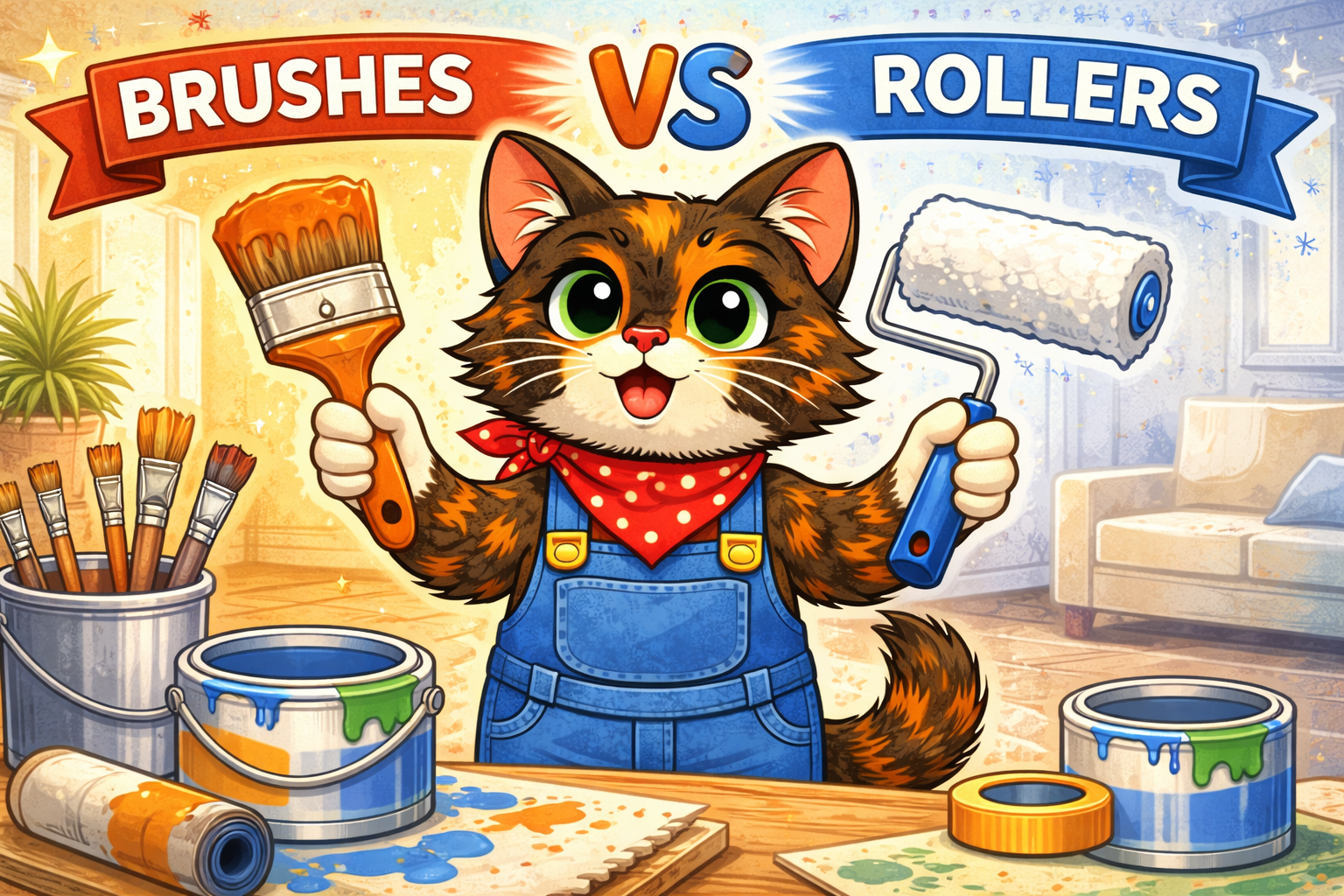
When I first started painting, I thought you just grabbed a brush and went to town. Then I saw people using rollers, trays, angled brushes, tiny brushes — and suddenly painting felt way more complicated than it needed to be.
The good news? It’s actually pretty simple once you know what each tool is best for. Let’s walk through it together.
The Big Picture
Think of it like this:
Rollers = fast coverage for big areas
Brushes = detail work and tight spots
Most painting projects use a little of both.
When to Use a Paint Roller
Paint rollers are perfect for large, flat surfaces where you want smooth, even coverage.
Best for:
- Walls
- Ceilings
- Large doors
- Big furniture pieces
Why rollers are great:
- Cover lots of space quickly
- Apply paint evenly
- Save time and energy
Beginner tip:
Use a short nap roller for smooth walls and a medium nap roller for textured surfaces.
Rollers make your project move fast — which feels great when you’re painting a whole room.
When to Use a Paint Brush
Brushes shine when you need control and precision.
Best for:
- Corners and edges
- Trim and baseboards
- Around windows and doors
- Small areas and touch-ups
Why brushes are great:
- Let you paint carefully and neatly
- Reach tight spaces rollers can’t
- Create clean lines
Beginner tip:
An angled brush is amazing for cutting in along ceilings and trim — it’s way easier than a straight brush.
How Most Painters Use Both
Here’s the usual beginner-friendly process:
- Use a brush to paint corners, edges, and trim (this is called “cutting in”)
- Use a roller to fill in the big wall areas
This combo gives you clean edges and smooth coverage — the best of both worlds.
Can You Use Just One?
Technically, yes — but it’s harder.
- Only using a brush takes forever on big walls
- Only using a roller makes edges messy
Using both makes painting easier and your results look more professional (even as a beginner!).
Final Thoughts
Paint rollers and brushes aren’t competing — they’re a team.
Rollers handle the big stuff fast and smoothly, while brushes take care of the details and tight spots. Once you get comfortable switching between the two, painting becomes way less stressful and way more fun.
And don’t worry if it’s not perfect at first — every project helps you learn a little more.
Leave a Reply