
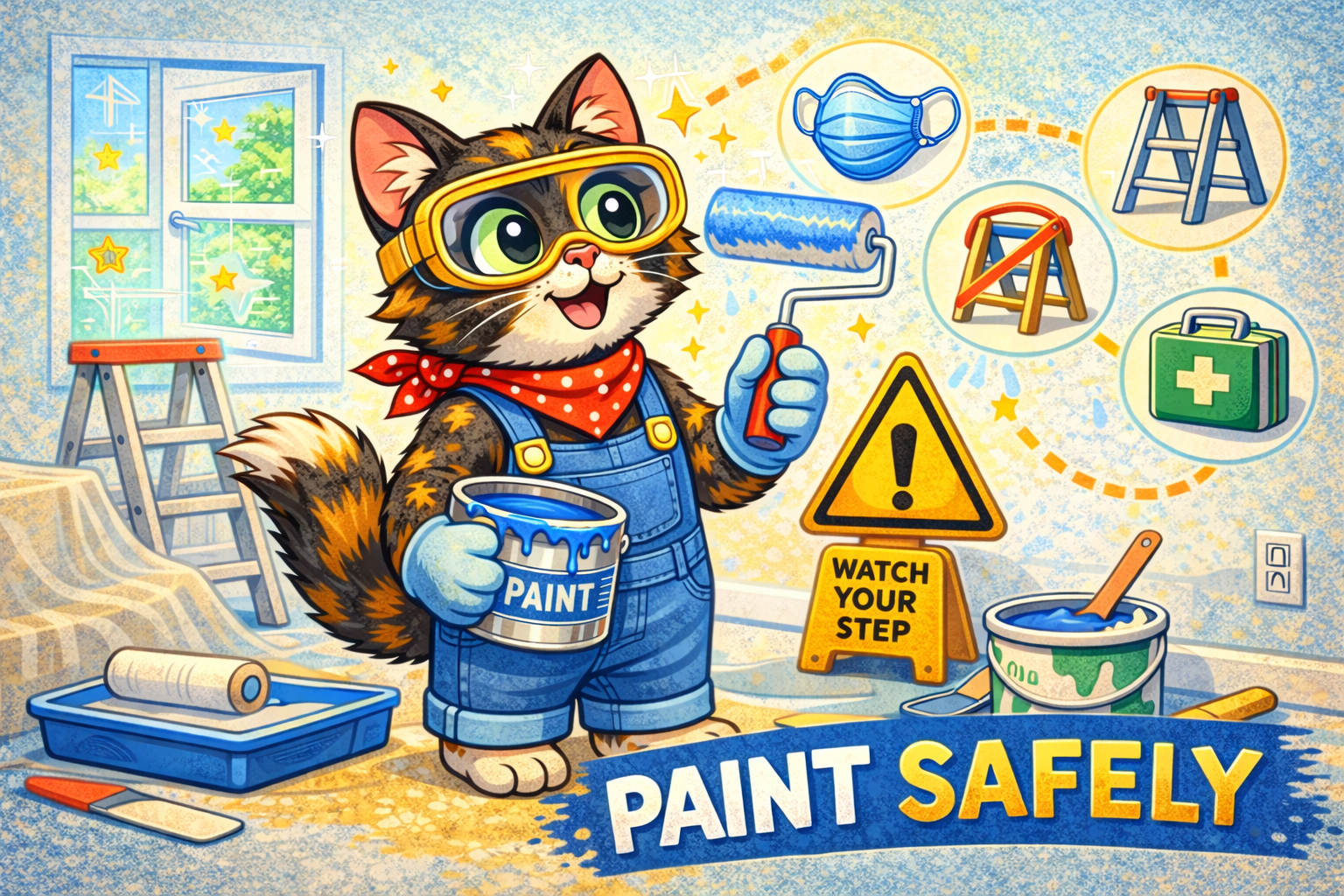
Painting is one of the most beginner-friendly DIY projects out there — but it’s still a project that involves chemicals, tools, ladders, and a lot of movement. The good news? Most painting safety comes down to awareness, not fear.
You don’t need special training or professional gear to paint safely. You just need to know what to watch for and how to set yourself up for success.
Let’s learn this together.
Start With Fresh Air (Always)
Paint fumes aren’t something to panic about, but they do matter.
Simple ventilation tips:
- Open windows and doors if possible
- Use fans to move air out of the room
- Take breaks if a room starts to feel stuffy
Even low-VOC paints benefit from airflow, and fresh air helps prevent headaches and dizziness.
Read the Paint Can (It’s Not Just Fine Print)
Paint cans include important safety info like:
- Ventilation recommendations
- Drying times
- Cleanup instructions
- Whether gloves or masks are suggested
You don’t need to memorize it — just skim before you start. It helps you avoid surprises.
Protect Your Skin and Eyes
Paint is meant for walls, not people.
Easy protection:
- Wear old clothes you don’t care about
- Use gloves if you have sensitive skin
- Avoid rubbing your eyes while painting
If paint splashes:
- Rinse skin with soap and water
- Flush eyes with clean water immediately
Most interior paints wash off easily when fresh — don’t wait.
Be Smart With Ladders and Step Stools
Falls are one of the most common DIY injuries — and they’re easy to prevent.
Ladder safety basics:
- Use a sturdy step ladder, not a chair
- Place it on flat, solid ground
- Don’t overreach — climb down and move it
- Keep both feet planted before painting
If something feels awkward or unstable, stop and adjust.
Keep Your Workspace Clear
Painting involves a lot of movement, and clutter makes accidents more likely.
Before you start:
- Move furniture out of walkways
- Secure drop cloth edges
- Keep tools off the floor when possible
Tripping while holding paint is not a fun lesson.
Take Breaks (Yes, Really)
Fatigue leads to mistakes.
Signs it’s time for a break:
- Sloppy brushwork
- Feeling lightheaded
- Rushing to “just finish this section”
Short breaks help you stay steady, focused, and safer — and your paint job usually looks better afterward.
Use the Right Tools for the Job
Using the wrong tool can be frustrating and unsafe.
Examples:
- Use extension poles instead of stretching
- Use proper sanding blocks instead of bare hands
- Use paint trays instead of carrying open cans
Good tools reduce strain and spills.
Be Careful With Old Paint
If you’re working in an older home:
- Avoid dry sanding old paint without knowing what it is
- Don’t scrape aggressively without protection
- Clean dust thoroughly
If you suspect lead paint, stop and research safe handling before continuing.
Clean Up Safely
When you’re done painting:
- Seal paint cans tightly
- Dispose of rags properly (especially oily ones)
- Wash hands thoroughly
- Store tools where kids and pets can’t reach them
Safe cleanup is part of the project — not an afterthought.
Trust Your Instincts
If something feels off — strong fumes, dizziness, unstable footing — pause. Painting can always wait. Your safety comes first.
Final Thoughts
Painting should feel empowering, not risky. With a little planning, fresh air, and common sense, DIY painting is very safe and very manageable — even for beginners.
Once you know what to watch for, safety becomes second nature, and you can focus on the fun part: transforming your space.
Leave a Reply