
Disclosure: Some links on this page are affiliate links, which means I may earn a small commission if you choose to make a purchase — at no extra cost to you. I only recommend products I believe are helpful for beginners.
Painter’s tape seems simple… until you actually try to use it.
When I first started painting, I thought painter’s tape was optional. Then I ended up with crooked lines, paint on my trim, and a lot of cleanup I didn’t plan for. That’s when I realized painter’s tape isn’t just tape — it’s a tool, and knowing how to use it properly makes a huge difference.
Let’s learn this together, step by step.
What Painter’s Tape Is (And Why It Exists)
Painter’s tape is a special low-stick tape designed to:
- Protect areas you don’t want painted
- Create clean, straight lines
- Remove easily without damaging surfaces
It’s especially helpful for beginners because it takes pressure off having a “perfect” steady hand.
How to Choose the Right Painter’s Tape
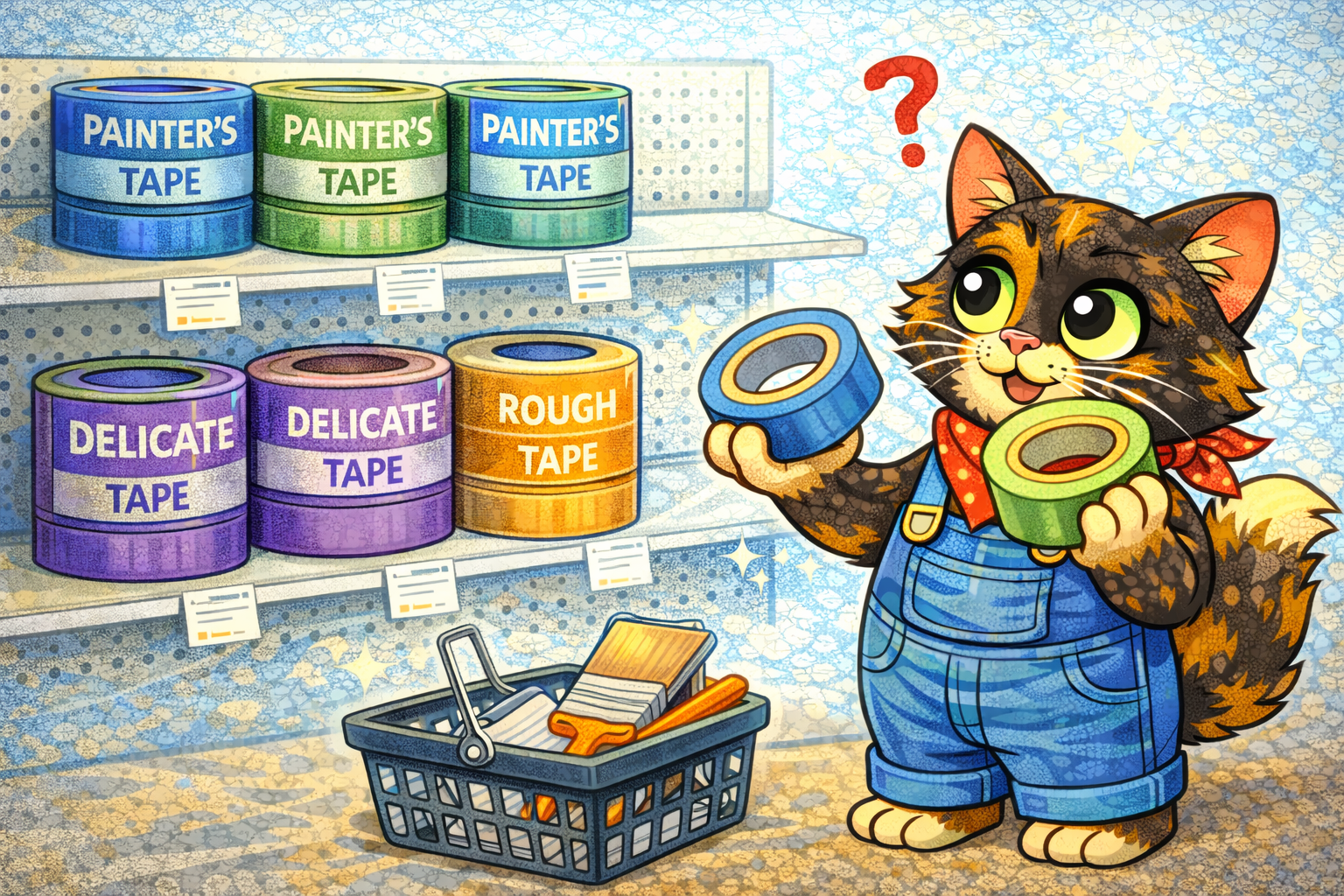
Not all painter’s tape is the same, and that confused me at first.
Here’s the simple breakdown:
Standard Painter’s Tape (Blue)
Best for:
- Most walls
- Trim
- Doors
- General indoor painting
This is the go-to option for beginners.
Suggestion: Duck Brand Clean Release Painter’s Tape
Delicate Surface Tape (Yellow, Purple or Pink)
Best for:
- Freshly painted walls
- Wallpaper
- Delicate surfaces
It sticks less strongly, so it won’t pull paint off when removed.
Suggestion: FrogTape Delicate Surface Painter’s Tape
Multi-Surface or Exterior Tape (Green)
Best for:
- Rough surfaces
- Exterior projects
- Brick or textured areas
It sticks more aggressively and holds up better outdoors.
Suggestion: Scotch Rough Surface Extra Strength Painter’s Tape
Where Painter’s Tape Really Helps
Painter’s tape is most useful around:
- Trim and baseboards
- Windows and door frames
- Ceilings
- Cabinets
- Accent walls
If you’re painting near something you don’t want paint on — tape is your friend.
How to Apply Painter’s Tape the Right Way
This part matters more than most people realize.
Step 1: Start with a Clean Surface
Dust or grease can prevent tape from sticking properly. A quick wipe-down helps a lot.
Step 2: Apply Tape Slowly and Straight
Press the tape down firmly as you go. Don’t stretch it — that can cause it to lift later.
Step 3: Seal the Edge
This is a great beginner trick:
Run your finger, a putty knife, or a credit card along the edge of the tape.
It helps prevent paint from bleeding underneath.
How to Paint Near the Tape
Less paint is better here.
- Don’t overload your brush or roller
- Paint away from the tape, not into it
- Use light, controlled strokes near edges
This reduces the chance of paint seeping under the tape.
When (and How) to Remove Painter’s Tape
Timing matters.
Best practice:
- Remove tape while paint is still slightly wet
- Pull it back slowly at a 45-degree angle
If paint is fully dry and stuck to the tape, score along the edge with a utility knife before removing.
Common Painter’s Tape Mistakes (We’ve All Made Them)
- Leaving tape on too long
- Using the wrong tape for the surface
- Painting too heavily against the tape
- Skipping surface cleaning
Don’t worry — learning this is part of the process.
A Simple Way to Remember
- Choose the right tape for the surface
- Apply it carefully
- Seal the edge
- Paint lightly
- Remove it at the right time
That’s it.
Final Thoughts
Painter’s tape isn’t about perfection — it’s about making painting easier and less stressful.
Once you learn how to choose the right tape and use it properly, you’ll get cleaner lines, better results, and way less cleanup. And honestly, that little moment when you peel the tape off to reveal a crisp line? Totally worth it
Leave a Reply