
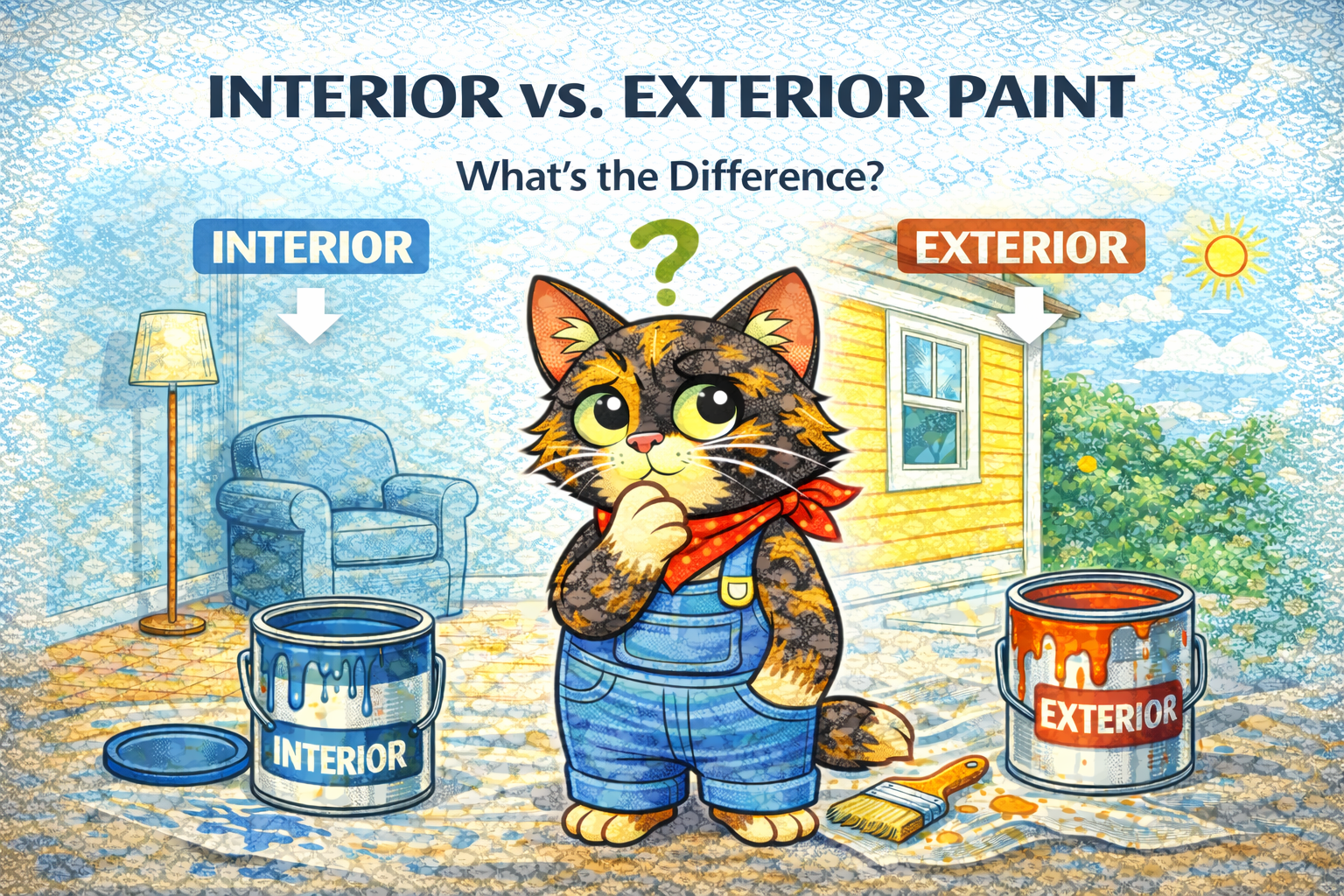
When I started my journey of paint discovery, I assumed paint was paint. If it was the right color, it should work anywhere… right?
Turns out, interior and exterior paints are made for very different jobs. Using the wrong one can lead to peeling, fading, and frustration later on. Let’s walk through the differences together — nice and simple.
(Bonus: you’ll find a handy reference chart & a tl;dr at the bottom of the article).
The Big Difference in One Sentence
- Interior paint is made for comfort and cleanability.
- Exterior paint is made to survive the outdoors.
Everything else builds from that.
What Interior Paint Is Designed to Do
Interior paint is made for spaces where people live every day.
It focuses on easy cleanup, low odor, washability, and a smooth appearance.
Since indoor walls don’t deal with rain, sun, or freezing temperatures, interior paint doesn’t need to be as tough — but it needs to be comfortable and safe to live with.
Key Features of Interior Paint
Interior paint usually:
- Has lower VOCs (better for indoor air)
- Dries faster
- Comes in a wide range of finishes (flat to high-gloss)
- Is easier to clean
It’s designed to handle fingerprints, scuffs, and everyday life — not weather.
What Exterior Paint Is Designed to Do
Exterior paint has a much harder job.
It needs to stand up to sun and UV rays, rain and moisture, wind, dirt, and temperature changes.
To do that, exterior paint uses stronger ingredients.
Key Features of Exterior Paint
Exterior paint usually:
- Is more flexible (to expand and contract)
- Resists fading and cracking
- Has mildew and mold resistance
- Takes longer to dry
It’s built for durability, not comfort.
Why You Shouldn’t Mix Them Up
This part is important for beginners.
Using Interior Paint Outside
Interior paint:
- Breaks down quickly outdoors
- Peels and fades fast
- Can grow mildew
It’s just not made for weather exposure.
Using Exterior Paint Inside
This one surprises people.
Exterior paint:
- Can have higher VOCs
- Takes longer to cure
- Isn’t ideal for indoor air quality
Some people do use exterior paint indoors for high-traffic areas, but it’s usually not recommended for beginners.
How to Choose the Right One
Here’s an easy way to decide:
✔ Painting walls, ceilings, trim inside → Interior paint
✔ Painting siding, fences, doors outside → Exterior paint
✔ When in doubt → match the paint to the environment, not the surface
Paint labels clearly say interior, exterior, or interior/exterior — those labels matter.
What About “Interior/Exterior” Paint?
You might see paint labeled interior/exterior.
These are:
- More durable than interior-only paint
- Lower VOC than exterior-only paint
- A compromise option
They can work for:
- Covered porches
- Garages
- Utility spaces
But for main living spaces or full outdoor exposure, dedicated paints still work best.
Final Thoughts
Interior and exterior paints may look similar in the can, but they’re designed for very different environments.
Using the right one:
- Makes your paint last longer
- Improves appearance
- Saves you from repainting too soon
Once you know the difference, choosing paint gets a lot easier — and your projects turn out better.
And hey, learning this stuff as you go is exactly how every painter starts.
Interior vs Exterior Paint Comparison Chart
| Feature | Interior Paint | Exterior Paint |
|---|---|---|
| Designed For | Indoor walls and trim | Outdoor surfaces exposed to weather |
| Main Purpose | Comfort, appearance, easy cleaning | Durability and weather resistance |
| VOC Levels | Lower (better for indoor air quality) | Higher (not ideal for indoor use) |
| Dry Time | Dries and cures faster | Dries slower, cures longer |
| Flexibility | Less flexible | More flexible to handle temperature changes |
| Weather Resistance | ❌ Not weatherproof | ✅ Resists rain, sun, and humidity |
| Mildew Resistance | Minimal | Built-in mildew and mold resistance |
| Washability | Designed for cleaning and scrubbing | Designed to resist dirt and grime |
| Finish Options | Wide range (flat to gloss) | Limited range, usually satin or semi-gloss |
| Best Uses | Bedrooms, living rooms, kitchens, trim | Siding, fences, exterior doors |
| Beginner-Friendly | ✅ Very beginner-friendly | ⚠️ Requires good ventilation |
Quick Beginner Takeaway (TL;DR)
- Use interior paint indoors for better air quality and easy cleanup.
- Use exterior paint outdoors where weather resistance matters.
- Don’t swap them unless the label specifically says interior/exterior.
Leave a Reply