
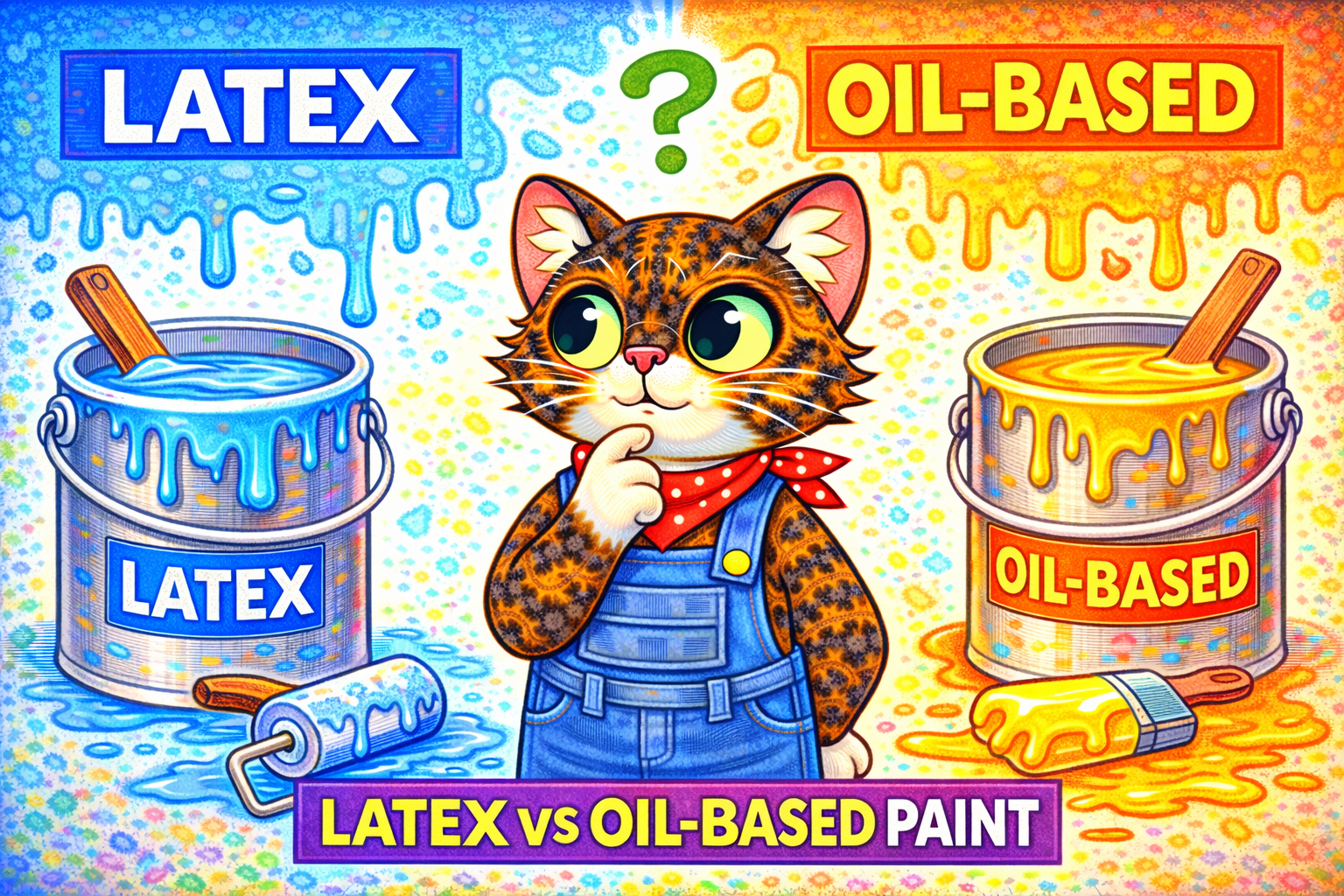
When I first started painting my own walls, I quickly ran into a confusing question:
“Should I use latex paint or oil-based paint?”
I didn’t know the difference, and honestly, the more I read, the more overwhelming it felt. There were so many pros, cons, and opinions floating around.
After a bit of trial, error, and research, I finally figured out the basics. Here’s what I learned—and what I wish someone had told me as a beginner.
What Are These Paints, Anyway?
Latex Paint
- Water-based (don’t worry, no actual latex rubber in most modern paints)
- Uses water as the solvent
- Dries faster than oil-based paint
- Easier cleanup with just soap and water
Think of latex paint as the friendly, easygoing option. It’s forgiving for beginners, dries fast, and you can experiment without worrying too much.
Oil-Based Paint
- Solvent-based (usually mineral spirits or turpentine)
- Takes longer to dry
- Creates a harder, smoother finish
- Cleanup requires chemicals, not just water
Oil-based paint is the strong, durable option. It’s great for high-traffic areas, furniture, or trim that gets a lot of wear—but it can be tricky if you’re new to painting.
Comparing the Two: The Big Differences I Noticed
| Feature | Latex (Water-Based) | Oil-Based (Solvent-Based) |
| Dry Time | Fast (30 min–2 hours touch dry) | Slow (6–8 hours touch dry) |
| Cure Time | ~2–4 weeks | 7–14 days (sometimes longer) |
| Cleanup | Soap & water | Mineral spirits or paint thinner |
| Smell | Minimal | Strong odor |
| Durability | Good for walls, ceilings, most furniture | Excellent for doors, cabinets, trim, high-use surfaces |
| Flexibility | Slightly flexible, resists cracking | Very hard, less flexible, can crack over time |
Why Drying & Curing Matter
One thing I didn’t understand at first: drying and curing are different.
- Latex paint dries fast—so your walls look done quickly—but it still takes a few weeks to fully cure.
- Oil-based paint dries slowly, but once it’s cured, it’s extremely tough and long-lasting.
This was a game-changer for me when I painted doors and cabinets. I kept thinking the paint was ready after a few hours… and then it dented when I touched it. Whoops.
Pros and Cons I Learned (From My Own Mistakes)
Why I Love Latex Paint
- Super easy to clean up
- Quick drying means fewer mistakes if you need a second coat
- Less odor—my whole apartment didn’t smell for days
- Perfect for walls, ceilings, and most beginner projects
But: It’s not as durable on doors or cabinets that get touched a lot.
Why I Love Oil-Based Paint
- Smooth, professional-looking finish
- Super durable—great for trim, doors, and furniture
- Doesn’t show brush strokes as easily
But:
- Smells strong (ventilation is a must)
- Takes forever to dry and cure
- Cleanup is a chore
When I Use Which Now
After painting a bunch of projects, here’s my simple rule of thumb:
- Walls and ceilings: Latex 99% of the time
- Doors, trim, cabinets: Oil-based or high-quality water-based alkyd (a hybrid)
- Outdoor furniture: Oil-based for durability, latex for easy touch-ups
My Biggest Beginner Tip
Try both if you can! I actually learned the most by doing a small test: painting a board with each type and seeing how it handled.
Also, read the label. Some modern water-based paints mimic oil-based durability without the mess, which is perfect for beginners who don’t want to deal with harsh chemicals.
The Takeaway
Latex paint and oil-based paint both have their place. The trick is understanding the difference—and being patient with drying and curing times.
Latex is your easy-going, fast-drying friend
Oil-based is your tough, long-lasting pro
Once you get this down, picking the right paint becomes much less scary—and your projects look way better.
Leave a Reply