
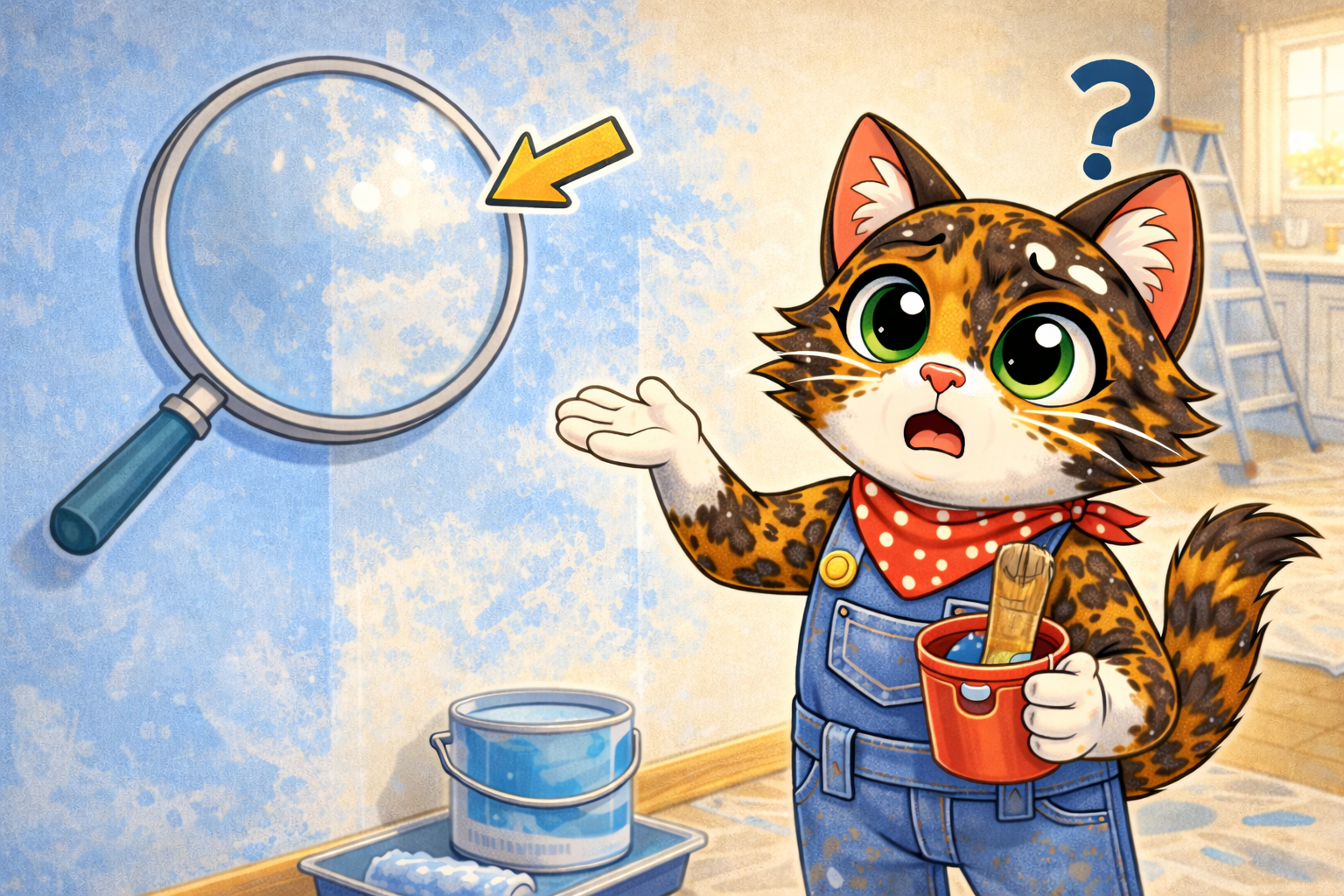
If you’ve ever finished painting a wall, stepped back proudly… and then noticed shiny patches, dull spots, or uneven areas once it dried, you’re not imagining things. That’s paint flashing, and it’s a super common issue — especially for beginners.
The good news? Paint flashing is fixable, and once you understand why it happens, it’s also preventable.
Let’s break it down in plain language.
What Paint Flashing Actually Is
Paint flashing happens when parts of a wall reflect light differently after the paint dries. Instead of a smooth, uniform finish, you see areas that look:
- Shinier
- Duller
- Slightly darker or lighter
This usually shows up when light hits the wall from an angle — sunlight or overhead lights make it especially noticeable.
Why Paint Flashing Happens
Paint flashing isn’t usually caused by “bad paint.” It’s almost always about how the paint interacted with the surface underneath.
Here are the most common reasons:
1. Uneven Surface Absorption
Some parts of the wall soak up more paint than others. Drywall patches, spackle, bare spots, or repairs absorb paint differently than finished drywall.
2. Skipping Primer
Primer helps create a consistent surface. Without it, paint absorbs unevenly and flashes once dry.
3. Inconsistent Roller Pressure
Pressing harder in some spots and lighter in others changes how much paint ends up on the wall.
4. Overworking the Paint
Going back over areas that are already starting to dry can disturb the finish and cause sheen differences.
5. Mixing Sheens or Paint Batches
Even small differences in sheen or batch can cause visible flashing.
How to Fix Paint Flashing (Right Now)
If the wall is already painted and flashing, don’t panic — you don’t have to start over.
Step 1: Let the Paint Fully Dry
Give it at least 24–48 hours. Some flashing looks worse before it looks better.
Step 2: Prime Problem Areas
Spot-prime patched or repaired areas with a drywall or stain-blocking primer.
Step 3: Repaint the Wall Evenly
- Use consistent roller pressure
- Work in sections
- Keep a wet edge
- Don’t over-roll drying paint
Often, one smooth, even coat after priming solves the issue completely.
How to Prevent Paint Flashing in the Future
This is where things get much easier.
✔ Always Prime Repairs
Any spackle, patch, or bare drywall should be primed before painting.
✔ Prime the Whole Wall When Needed
If the wall has a mix of old paint, repairs, or stains, full-wall priming is your best friend.
✔ Use the Right Roller
Choose the correct nap length and don’t overload or underload the roller.
✔ Maintain Consistent Technique
Same pressure, same pattern, same pace across the wall.
✔ Avoid Touch-Ups With Different Paint
Touch-ups with leftover paint can flash if the paint has aged or settled.
Beginner Reassurance (Because This One Can Be Frustrating)
Paint flashing is not a sign you did something wrong — it’s part of the learning curve. Even experienced painters deal with it when surfaces aren’t prepped evenly.
Once you know what causes it, flashing goes from confusing and annoying to very fixable.
Final Thoughts
Paint flashing happens when paint dries unevenly due to surface differences, skipped primer, or inconsistent application. The fix is usually simple: prime properly and repaint with a consistent technique.
Every project teaches you something — and this one teaches the importance of prep and patience.
FAQ
Quick answers to the most common beginner questions.
Paint flashing usually does not go away on its own once the paint has fully dried. If the wall still looks patchy after drying, it typically needs to be corrected with another coat applied evenly.
Patchiness happens when paint dries at different rates or absorbs unevenly into the wall. This is often caused by inconsistent roller pressure, skipped primer, or areas of the wall soaking up more paint than others.
Yes. Even high-quality paint can flash if it’s applied unevenly or over surfaces with mixed textures or porosity. Technique and surface prep matter just as much as paint quality.
In most cases, yes. Repainting the full wall with consistent coverage gives the most even finish and prevents noticeable touch-up marks.
Not necessarily. Paint flashing is very common for beginners and can happen even when you follow instructions. It’s a fixable issue and part of the learning process.
Leave a Reply