
Disclosure: Some links on this page are affiliate links, which means I may earn a small commission if you choose to make a purchase — at no extra cost to you. I only recommend products I believe are helpful for beginners.
When I first started painting, I thought paint rollers were all basically the same. I paid attention to size and nap… but the roller material? I didn’t even realize that mattered.
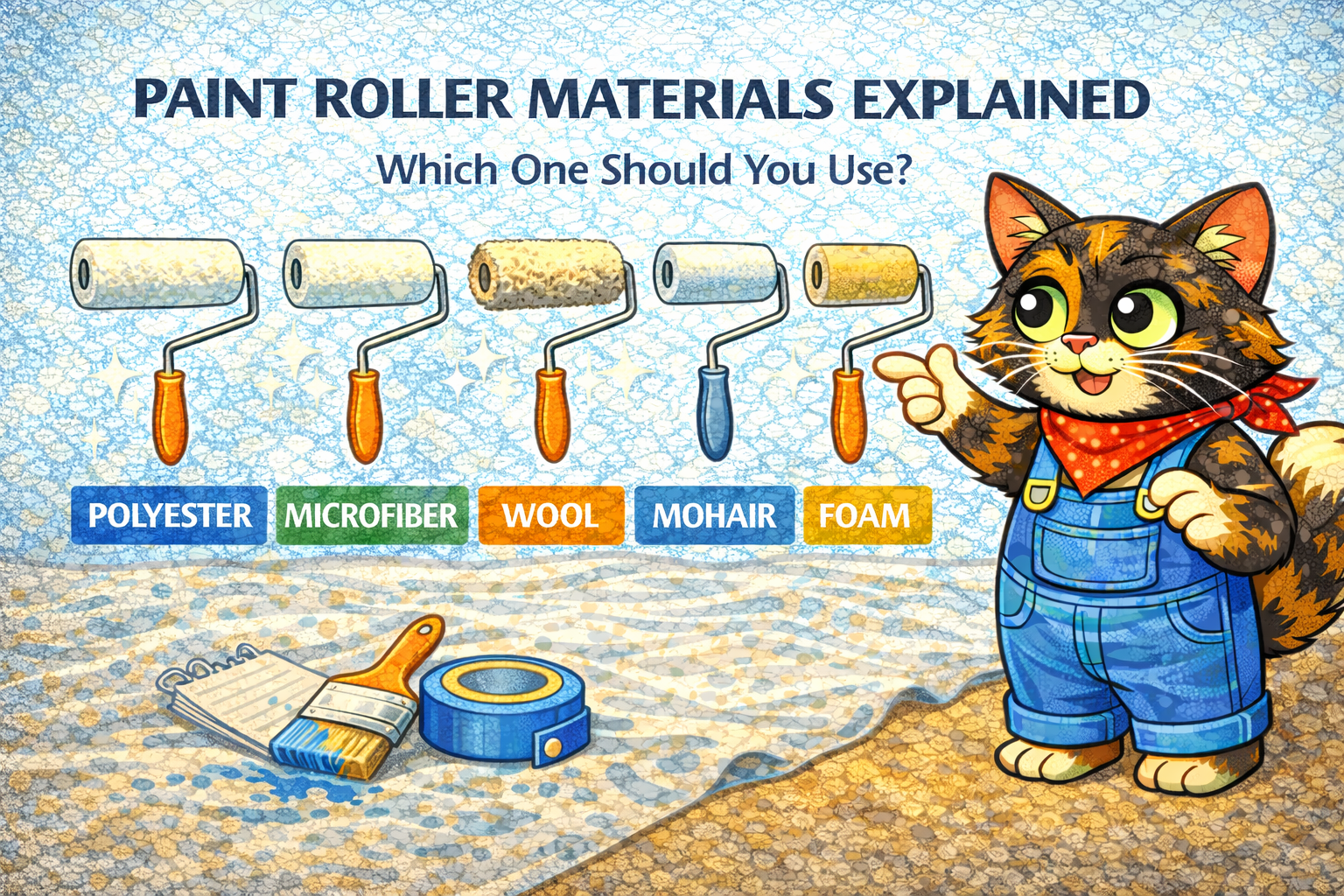
It turns out, what a paint roller is made of affects how much paint it holds, how smooth your finish looks, and how easy painting feels. Let’s walk through the most common roller materials together and when each one works best.
Why Roller Material Matters
Paint roller material affects:
- How much paint the roller absorbs
- How evenly paint goes on the wall
- How much texture you end up with
- How often you need to reload paint
Choosing the right material can mean fewer streaks and less frustration — especially for beginners.
Polyester Rollers
Polyester rollers are one of the most common and affordable options.
Best for:
- Smooth or lightly textured walls
- Drywall
- Latex (water-based) paint
Why they work well:
- Hold paint evenly
- Create a fairly smooth finish
- Easy to find and budget-friendly
Polyester is a solid everyday choice for basic interior painting projects.
Suggestion: Purdy Marathon Roller Cover, 3/8″ Nap
Microfiber Rollers
Microfiber rollers are popular for smoother, more professional-looking finishes.
Best for:
- Smooth walls
- Ceilings
- Large flat surfaces
Why they work well:
- Hold more paint than polyester
- Reduce splatter
- Apply paint evenly
If you want smoother results with less mess, microfiber is a great upgrade.
Suggestion: Wooster Pro/Doo-Z Roller Cover, 3/8″ Nap 3-Pack
Wool Rollers
Wool rollers are thicker and more absorbent.
Best for:
- Rough or textured surfaces
- Stucco or brick
- Exterior projects
Why they work well:
- Hold a lot of paint
- Push paint into textured surfaces
They can leave more texture behind, which is fine — or even helpful — on rough surfaces.
Suggestion: Wooster Lambswool 100 Roller Cover, 1/2″ Nap
Mohair Rollers
Mohair rollers are made from natural fibers and are often used with oil-based paint.
Best for:
- Oil-based paint
- Doors
- Cabinets
- Smooth surfaces
Why they work well:
- Create very smooth finishes
- Work well with thinner paints
These are less common for beginners but great for detailed projects.
Suggestion: Purdy Parrot Roller Cover, 1/4″ Nap
Foam Rollers
Foam rollers look simple but are very specific tools.
Best for:
- Doors
- Cabinets
- Trim
- Small projects
Why they work well:
- Leave minimal texture
- Create a smooth, polished look
They don’t hold much paint, so they’re best for small areas, not whole rooms.
Suggestion: Mister Rui Foam Paint Roller 8-Pack Set (comes with 5 roller covers, roller frame, tray & liner)
A Simple Way to Choose
Here’s a quick beginner shortcut:
- Smooth walls → Microfiber or polyester
- Light texture → Polyester
- Rough or exterior surfaces → Wool
- Oil-based paint → Mohair
- Cabinets or doors → Foam or mohair
You don’t need every roller — just the one that matches your surface and paint type.
Final Thoughts
Paint rollers aren’t one-size-fits-all, and that’s okay. Once you understand what different roller materials are designed to do, choosing one becomes much easier.
The right roller:
- Makes painting faster
- Improves coverage
- Creates better results
And honestly? It makes painting feel a lot more beginner-friendly.
Paint Roller Material Comparison Chart
| Roller Material | Best For | Paint Type | Finish Result | Why Use It |
|---|---|---|---|---|
| Polyester | Smooth & lightly textured walls | Latex (water-based) | Smooth to lightly textured | Affordable, easy to use, good all-around choice |
| Microfiber | Smooth walls, ceilings | Latex (water-based) | Very smooth | Holds more paint, less splatter, even coverage |
| Wool | Rough & textured surfaces | Latex or oil-based | Heavier texture | Pushes paint into cracks and texture |
| Mohair | Doors, cabinets, smooth surfaces | Oil-based paint | Very smooth | Excellent for thin paints and fine finishes |
| Foam | Cabinets, doors, trim | Latex or oil-based | Ultra-smooth | Minimal texture, great for small areas |
Leave a Reply