
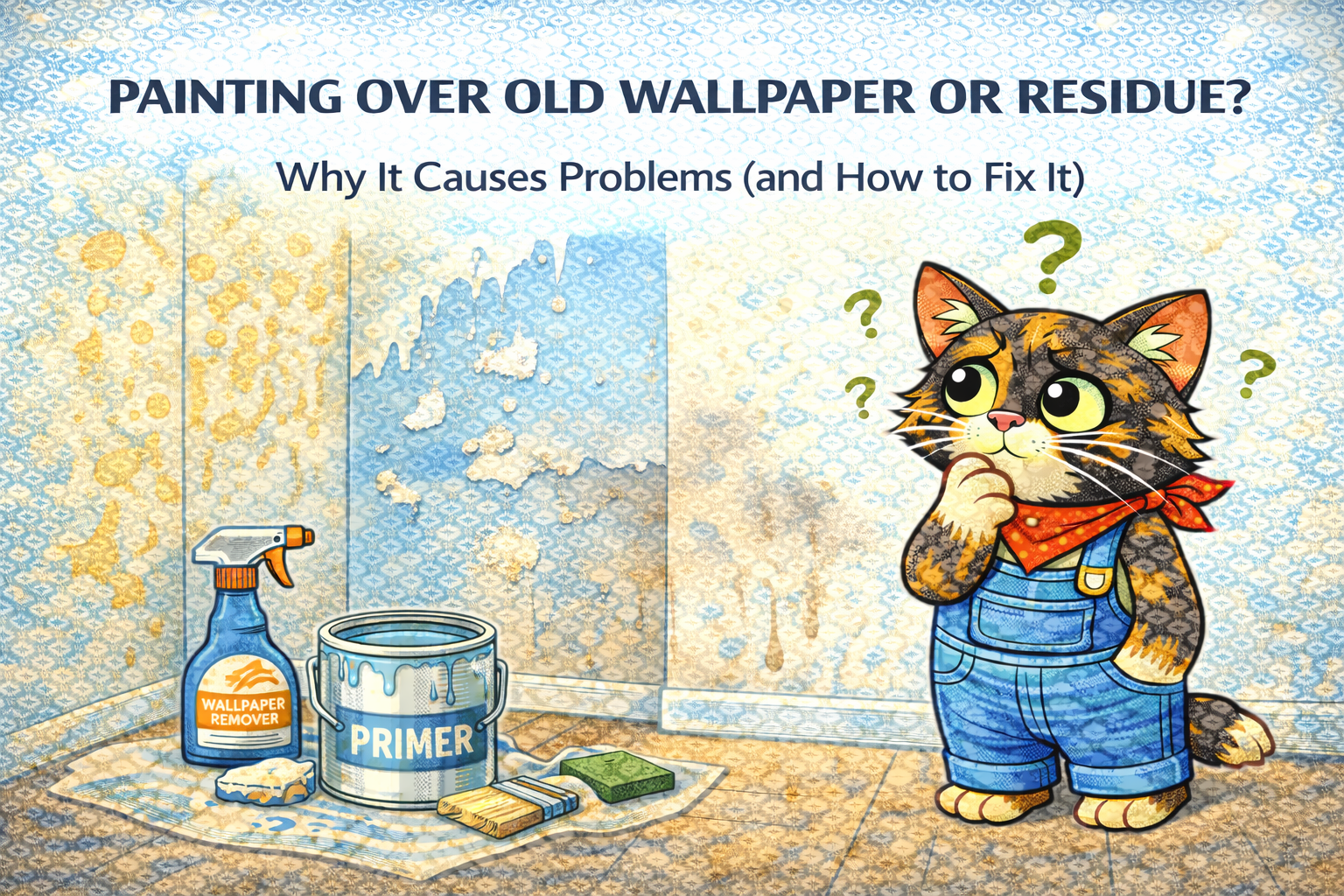
Painting over old wallpaper or leftover residue feels tempting — especially when the walls look smooth enough. I’ve definitely stared at a wall and thought, “It’ll be fine… the paint will cover it.”
Sometimes it does — briefly. And then come the bubbles, peeling paint, weird textures, or stains showing through.
Let’s walk through why painting over wallpaper or residue causes issues, what to do if it’s already happening, and how to avoid the problem altogether next time.
The Problem: Why Old Wallpaper and Residue Cause Paint to Fail
Wallpaper leaves more behind than you might expect.
Even when wallpaper is removed, there’s often:
- Adhesive residue
- Paper backing fibers
- Uneven patches
- Moisture trapped in the wall
Paint doesn’t bond well to these surfaces. Instead of sticking to the wall, it sticks to the residue — and that residue eventually lets go.
This can lead to:
- Bubbling or blistering paint
- Peeling sheets of paint
- Visible texture or seams
- Stains bleeding through
The paint might look okay at first, but problems usually show up once it dries or cures.
How to Tell If Wallpaper Residue Is the Issue
Some common signs include:
- Paint bubbling shortly after application
- Soft or spongy areas under the paint
- Peeling paint in large patches
- Uneven sheen or texture
- Yellow or brown stains bleeding through
If paint failure follows old wallpaper lines or seams, residue is almost always the culprit.
The Solution: How to Fix It Now
What you do next depends on whether you’ve already painted.
If You Haven’t Painted Yet (Best Case Scenario)
This is the easiest situation to fix.
What to do:
- Remove as much wallpaper and backing as possible
- Wash the walls with warm water and mild detergent to remove adhesive
- Rinse with clean water
- Let the walls dry completely
- Lightly sand to smooth the surface
- Apply a primer designed to seal problem surfaces
Skipping primer here almost guarantees future issues.
If You’ve Already Painted and It’s Failing
Don’t worry — it’s fixable.
Steps to take:
- Scrape away bubbling or peeling paint
- Remove remaining wallpaper backing or residue
- Clean the exposed surface thoroughly
- Let it dry fully
- Apply a stain-blocking or oil-based primer
- Repaint after the primer dries
Primer seals the residue so paint can properly bond this time.
Why Primer Is Essential in This Situation
Old wallpaper residue is unpredictable — and primer acts as a barrier between the wall and your paint.
Primer helps by:
- Locking down remaining adhesive
- Preventing stains from bleeding through
- Creating a uniform surface for paint
In many cases, oil-based or shellac-based primers work best for wallpaper residue.
Prevention: How to Avoid This Problem in the Future
A little extra prep makes all the difference.
Smart habits to adopt:
- Never paint directly over wallpaper or residue
- Always wash walls after wallpaper removal
- Allow plenty of drying time
- Use primer whenever wallpaper was present — even if the wall looks clean
- Smooth the surface before painting
Taking the time to prep once is much easier than fixing peeling paint later.
Final Thoughts
Painting over old wallpaper or residue often looks fine at first — which is why it’s such a common beginner mistake. But when paint can’t properly bond, problems are almost guaranteed.
The good news?
With thorough cleaning, proper drying, and the right primer, you can get smooth, long-lasting results — even on walls with a messy past.
And if you’ve already run into trouble? You’re not alone — and now you know exactly how to fix it.
Leave a Reply