
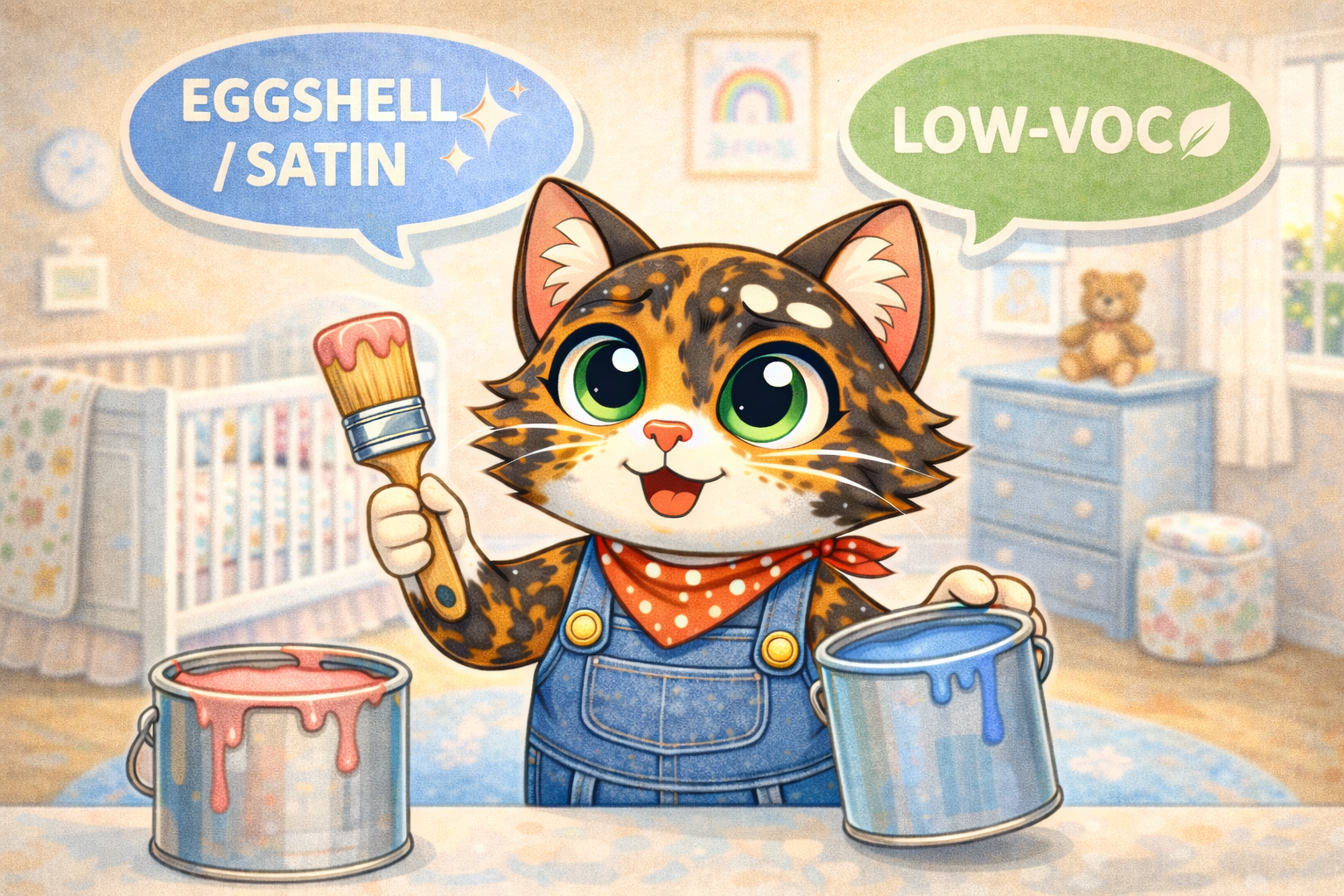
If you’re painting a nursery or kid’s room, you’re probably asking:
- Is this paint safe?
- Will it hold up to sticky hands?
- What finish should I choose?
- How do I pick a color that won’t feel overwhelming?
Great questions. Let’s break it down in a simple, no-stress way.
First Priority: Low or Zero VOC Paint
For nurseries and children’s rooms, low-VOC or zero-VOC paint is the safest starting point.
Why it matters:
- Less odor
- Fewer airborne chemicals
- Better indoor air quality
- More comfortable for babies and kids
Most major paint brands now offer low-VOC formulas, so you don’t have to sacrifice quality to prioritize safety.
Beginner tip: Even with low-VOC paint, ventilate well and allow proper dry and cure time before the room is fully used.
Best Paint Type for Kid’s Rooms
For most nursery and kid spaces, high-quality latex (water-based) paint is ideal.
It’s:
- Easy to clean
- Low odor
- Flexible (less cracking)
- Beginner-friendly
You don’t need oil-based or alkyd paints for standard bedroom walls.
What’s the Best Finish?
Finish matters a lot in kid spaces because walls will get touched.
Here’s a quick breakdown:
Flat / Matte
- Hides imperfections well
- Harder to clean
- Not ideal for high-touch walls
Eggshell
- Slightly washable
- Soft appearance
- Great middle-ground choice
Satin (Best Overall for Kids’ Rooms)
- Durable
- Easy to wipe clean
- Holds up to fingerprints and light scrubbing
For nurseries specifically, many people choose eggshell or satin for that balance of softness and cleanability.
Best Paint for Trim in Kid Spaces
Trim, doors, and baseboards take more abuse.
A semi-gloss finish works well because:
- It’s durable
- Easy to wipe down
- Resists scuffs
Color Tips for Nurseries
Color affects mood more than we sometimes realize.
Soft, Calm Tones
- Warm whites
- Muted greens
- Soft blues
- Pale peach or blush
- Light grays with warmth
These create a soothing environment without feeling boring.
Color Tips for Kids’ Rooms
As kids grow, you might want more personality — but you don’t need to go neon.
Try:
- Accent walls instead of full bold rooms
- Mid-tone colors instead of super dark
- Earthy greens and blues
- Warm clay tones
- Dusty lavender or sage
These feel playful but still calm.
A Smart Beginner Strategy
If you’re unsure about bold color:
- Paint most walls neutral
- Add color through:
- One accent wall
- Furniture
- Art
- Bedding
It’s much easier to repaint an accent wall later than an entire room.
Extra Tips for Painting Kid Spaces
✔ Let paint fully cure before moving furniture back
✔ Wait at least several days before heavy contact
✔ Choose washable finishes
✔ Keep leftover paint labeled for touch-ups
✔ Avoid very dark colors in small rooms (unless intentional)
What to Avoid
- High-sheen paint on large wall areas (too shiny)
- Ultra-flat finishes (hard to clean)
- Skipping primer on patched areas
- Painting the night before baby arrives
Give yourself breathing room in your timeline.
Final Thoughts
The best paint for nurseries and kid’s rooms is typically low-VOC latex in eggshell or satin finish, paired with calm, flexible color choices. You want something that feels soft, safe, and durable enough for real life.
And remember — walls can always be repainted as your child grows. You’re not locking in a forever decision.
Leave a Reply