
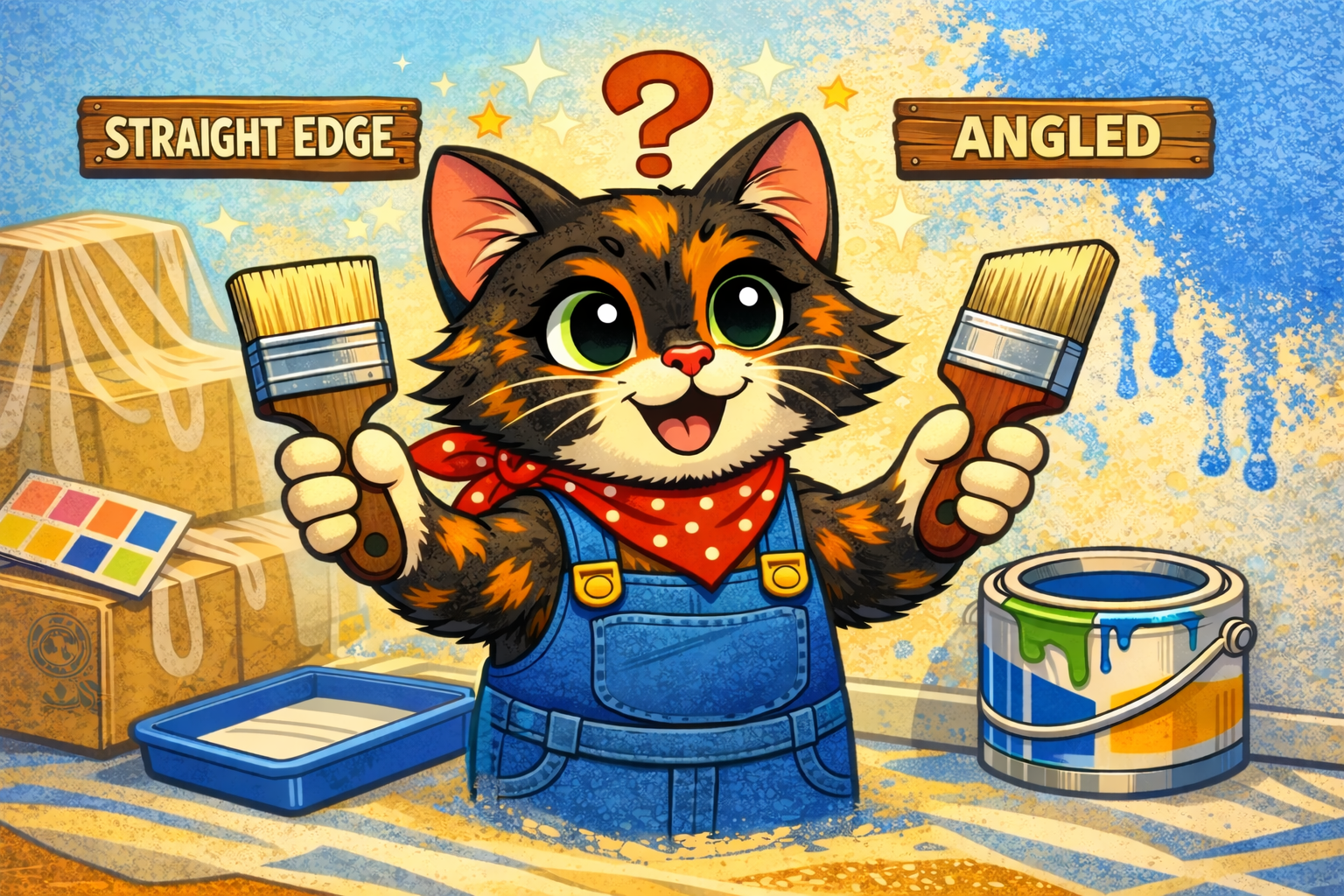
If you’re new to painting, paint brushes can feel surprisingly confusing. You grab one that looks right… and then halfway through the project you wonder if you picked the wrong one.
Straight brushes and angled brushes are two of the most common options — and the good news is, neither is “better” overall. They’re just good at different things. Let’s break it down together.
What Is a Straight Brush?
A straight brush (sometimes called a flat brush) has bristles cut straight across at the tip.
Why beginners often start with straight brushes
- They’re simple and predictable
- Easy to control
- Great for spreading paint evenly
Straight brushes are excellent when you want clean, even coverage without thinking too hard about technique.
When a Straight Brush Works Best
Straight brushes shine when you’re:
- Painting large, flat areas
- Applying smooth coats
- Painting trim with straight edges
- Doing basic wall touch-ups
They’re especially helpful for beginners because they forgive small mistakes and don’t require fancy wrist angles.
What Is an Angled Brush?
An angled brush has bristles cut diagonally instead of straight across.
This angled shape gives you more control — especially when painting near edges.
Why angled brushes exist
- The angle helps reach tight spots
- You can “cut in” more precisely
- It mimics the motion of your wrist
Angled brushes are all about precision.
When an Angled Brush Works Best
Angled brushes are ideal for:
- Cutting in along ceilings and baseboards
- Painting corners
- Working around doors, windows, and trim
- Detail work where accuracy matters
They’re especially useful when you want a clean line without taping everything off.
Which Brush Is Easier for Beginners?
This is the part most people want to know.
Straight brushes are usually easier to learn with first.
They feel more natural and are less likely to leave uneven edges if your hand isn’t steady yet.
Angled brushes aren’t harder — they just take a little practice to fully appreciate.
Many beginners start with straight brushes and slowly fall in love with angled brushes once they get comfortable.
Do You Need Both?
Honestly? Yes — eventually.
But you don’t need to buy everything at once.
A great beginner combo looks like this:
- One medium straight brush for general painting
- One angled brush for edges and detail work
That combo covers almost every basic painting task.
Common Beginner Mistakes (and How to Avoid Them)
- Using a straight brush for tight corners → Switch to angled
- Using an angled brush for big flat areas → Use straight for smoother coverage
- Pressing too hard → Let the brush do the work
- Using the wrong size → Match brush width to the task
The brush shape matters — but technique matters just as much.
A Simple Rule of Thumb
If you’re standing in the paint aisle unsure what to grab, remember this:
- Flat surfaces and broad strokes? → Straight brush
- Edges, corners, and clean lines? → Angled brush
You’re not choosing one forever — you’re just choosing what helps most right now.
Final Thoughts
Straight brushes and angled brushes aren’t competitors — they’re teammates. Each one makes certain parts of painting easier, cleaner, and less stressful.
As a beginner, it’s completely normal to experiment. The more you paint, the more you’ll feel when one brush just makes sense for the task.
And that moment — when the brush starts working with you instead of against you — is when painting gets really fun.
Leave a Reply