
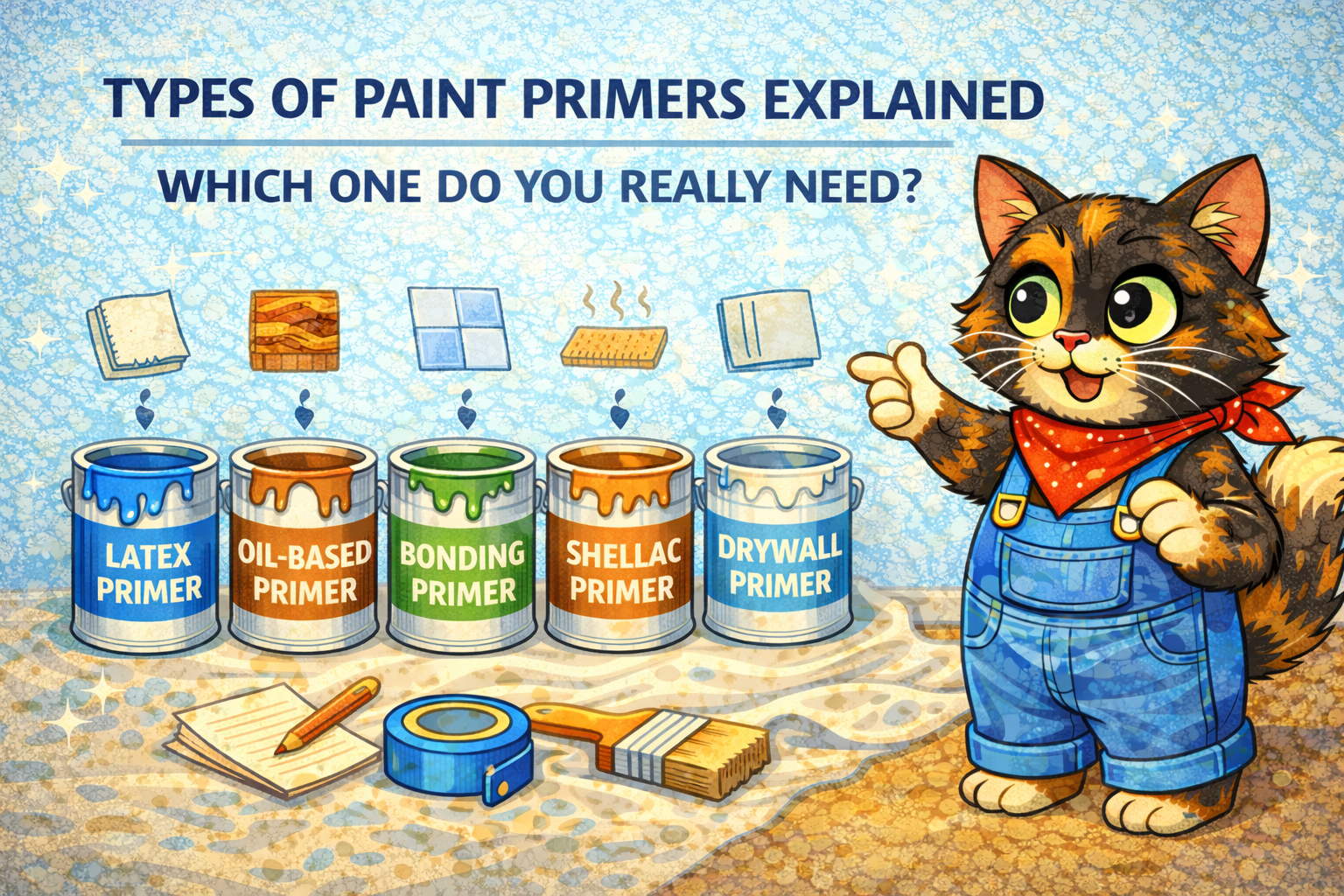
When I first learned about primer, I thought it was just “white paint you put on first.” Then I went to the store and saw shelves full of different primers — and immediately felt overwhelmed.
Latex, oil-based, bonding, stain-blocking… why are there so many?
The good news is: each type of primer has a job, and you usually only need one based on what you’re painting. Let’s walk through them together in a simple, beginner-friendly way.
First: What Primer Actually Does
Primer helps paint:
- Stick better
- Cover better
- Look more even
- Last longer
It also seals surfaces, blocks stains, and creates a smooth base for paint. Think of primer as the “prep coat” that makes everything else easier.
Latex (Water-Based) Primer
This is the most common and beginner-friendly primer.
Best for:
- Drywall
- Previously painted walls
- Soft woods
- Interior projects
Why it’s useful:
- Dries fast
- Low odor
- Easy cleanup with soap and water
If you’re painting a room and the walls are in decent shape, latex primer is usually a great choice.
Oil-Based Primer
Oil-based primer is stronger and better at blocking tough problems.
Best for:
- Wood with knots
- Water stains
- Smoke stains
- Heavy discoloration
Why it’s useful:
- Seals stains so they don’t bleed through paint
- Creates a strong, durable base
It takes longer to dry and smells stronger, but it’s very effective when you need extra coverage.
Bonding Primer
Some surfaces are too smooth for regular primer to stick to.
Best for:
- Glossy paint
- Tile
- Glass
- Metal
- Plastic
Why it’s useful:
- Designed to grip slick surfaces
- Helps paint adhere where it normally wouldn’t
Bonding primer is a lifesaver when you don’t want to sand everything down.
Shellac-Based Primer
This is the heavy-duty option.
Best for:
- Smoke damage
- Water damage
- Pet stains and odors
Why it’s useful:
- Dries very fast
- Blocks stains and smells extremely well
Most beginners won’t need this often, but it’s great for serious problem areas.
Primer for New Drywall
New drywall needs special attention.
Best for:
- Brand-new drywall
- Patched or repaired walls
Why it’s useful:
- Seals porous surfaces
- Prevents uneven paint absorption
Some drywall primers are labeled specifically for this purpose.
What About “Paint + Primer in One”?
You’ve probably seen paint cans that say “paint and primer in one.”
These work best for:
- Repainting similar colors
- Walls already in good condition
- Quick refresh projects
They’re not ideal for:
- Covering stains
- Painting bare surfaces
- Big color changes
Think of paint + primer as a convenience option — not a replacement for real primer in every situation.
A Simple Way to Choose Primer
Here’s an easy beginner shortcut:
- Walls in good shape → Latex primer
- Stains or wood → Oil-based primer
- Shiny or slick surfaces → Bonding primer
- Strong stains or odors → Shellac-based primer
- New drywall → Drywall primer
You don’t need to overthink it — match the primer to the problem.
Final Thoughts
Primer doesn’t have to be confusing or intimidating. Once you know what each type is designed to do, choosing the right one becomes pretty straightforward.
Using the right primer:
- Saves time
- Improves coverage
- Makes paint last longer
And honestly? It makes painting feel a lot less stressful — especially when you’re still learning.
Paint Primer Comparison Chart (Beginner-Friendly)
| Primer Type | Best For | What It Does Best | When to Use It |
|---|---|---|---|
| Latex (Water-Based) Primer | Drywall, previously painted walls, interior projects | Helps paint stick, evens out surfaces | Repainting rooms, walls in good condition |
| Oil-Based Primer | Wood, stains, heavy discoloration | Blocks stains and seals surfaces | Covering water stains, wood knots, smoke damage |
| Bonding Primer | Glossy or slick surfaces | Grips surfaces paint normally won’t | Painting tile, glass, metal, shiny paint |
| Shellac-Based Primer | Strong stains and odors | Blocks stains and smells fast | Smoke damage, pet odors, severe stains |
| Drywall Primer | New drywall or patched areas | Seals porous surfaces | Brand-new walls or repaired spots |
| Paint + Primer in One | Similar colors, good surfaces | Convenience and light coverage | Quick refresh projects, not major changes |
Leave a Reply