
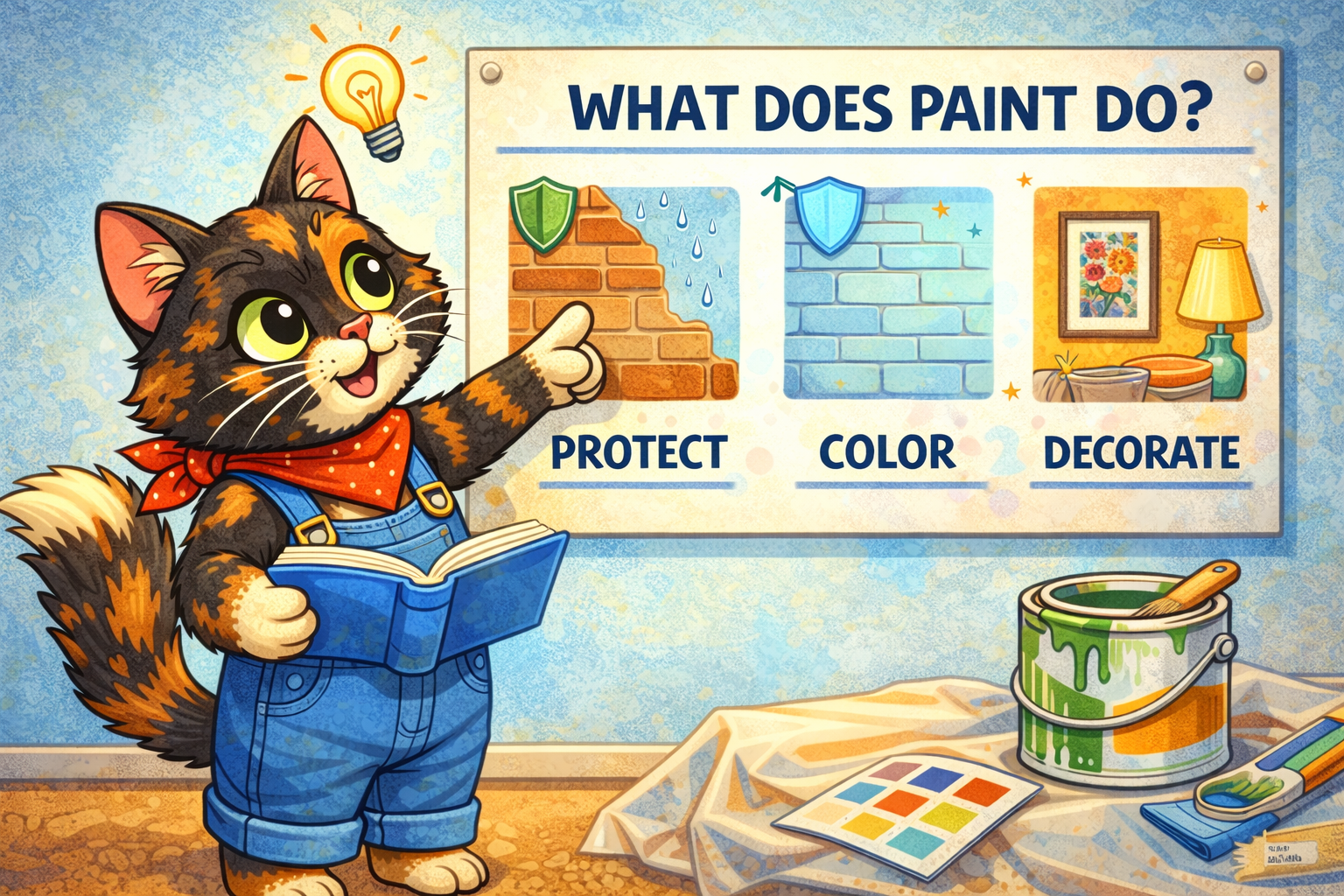
At first glance, paint seems pretty simple. You roll it on a wall, it changes color, and… that’s it, right?
Not quite. Paint actually does a lot more than just make things look nicer. Once you know what it’s doing behind the scenes, many painting decisions suddenly make a lot more sense.
Let’s break it down in plain, everyday language.
Paint Adds Color (The Obvious Part)
Yes—paint changes how something looks. That’s the part everyone notices.
Color can:
- Make a room feel bigger or smaller
- Make a space feel warmer or cooler
- Set a mood (calm, cozy, energetic, clean)
- Hide ugly stains, marks, or mismatched surfaces
But color is just the most visible job paint has.
Paint Protects the Surface Underneath
This is the part many beginners don’t realize.
Paint acts like a protective skin for whatever you put it on.
Once it dries and cures, paint helps:
- Block moisture from soaking into wood or drywall
- Slow down rust on metal
- Reduce damage from everyday wear and tear
- Protect surfaces from sunlight and fading
Without paint, many materials would wear out much faster.
Paint Seals Porous Materials
Some surfaces are thirsty. Drywall, wood, and concrete all have tiny pores that absorb moisture and dirt.
Paint helps by:
- Sealing those pores
- Making surfaces easier to clean
- Preventing stains from soaking in
That’s why unpainted drywall looks rough and chalky, while painted walls feel smoother and more finished.
Paint Creates a Washable Barrier
Ever wiped a dirty handprint off a wall?
That’s paint doing its job.
Paint forms a thin film that:
- Keeps dirt on the surface instead of inside the wall
- Allows you to wipe, scrub, or clean (depending on the paint type)
- Makes everyday life less stressful in busy homes
Different finishes handle cleaning better, but even basic paint helps more than bare surfaces.
Paint Helps Materials Last Longer
Paint doesn’t just make things look new—it helps them stay usable longer.
For example:
- Painted wood lasts longer outdoors
- Painted metal resists corrosion better
- Painted walls resist cracking and crumbling
In a way, paint is maintenance. Skipping it can cost more later.
Paint Can Improve Safety and Comfort
This one surprises people.
Some paints are designed to:
- Reflect heat or light
- Reduce mold and mildew growth
- Improve visibility with brighter colors
- Make surfaces easier to see and avoid
Even regular paint can make a space feel safer and more comfortable just by improving lighting and cleanliness.
So… What Does Paint Actually Do?
In simple terms, paint:
- Adds color
- Protects surfaces
- Seals porous materials
- Makes cleaning easier
- Helps things last longer
It’s part decoration, part protection, and part maintenance—all rolled into one.
Once you see paint this way, it stops being “just color on a wall” and starts feeling like an important finishing step that actually matters.
And that’s why choosing the right paint—and using it correctly—is worth learning about, even as a beginner.
Leave a Reply