
When I first started painting my own walls, I thought paint was… well, just colored water in a can. Stir it up, roll it on, done, right?
Turns out, paint is a little more complicated than that—but not in a scary chemistry way. Once I learned what’s actually inside, a lot of things about paint suddenly made sense: why some paints cover better than others, why cheap paint can be frustrating, and why that glossy wall shows every little imperfection.
Here’s what I learned.
Paint Has Four Main Ingredients
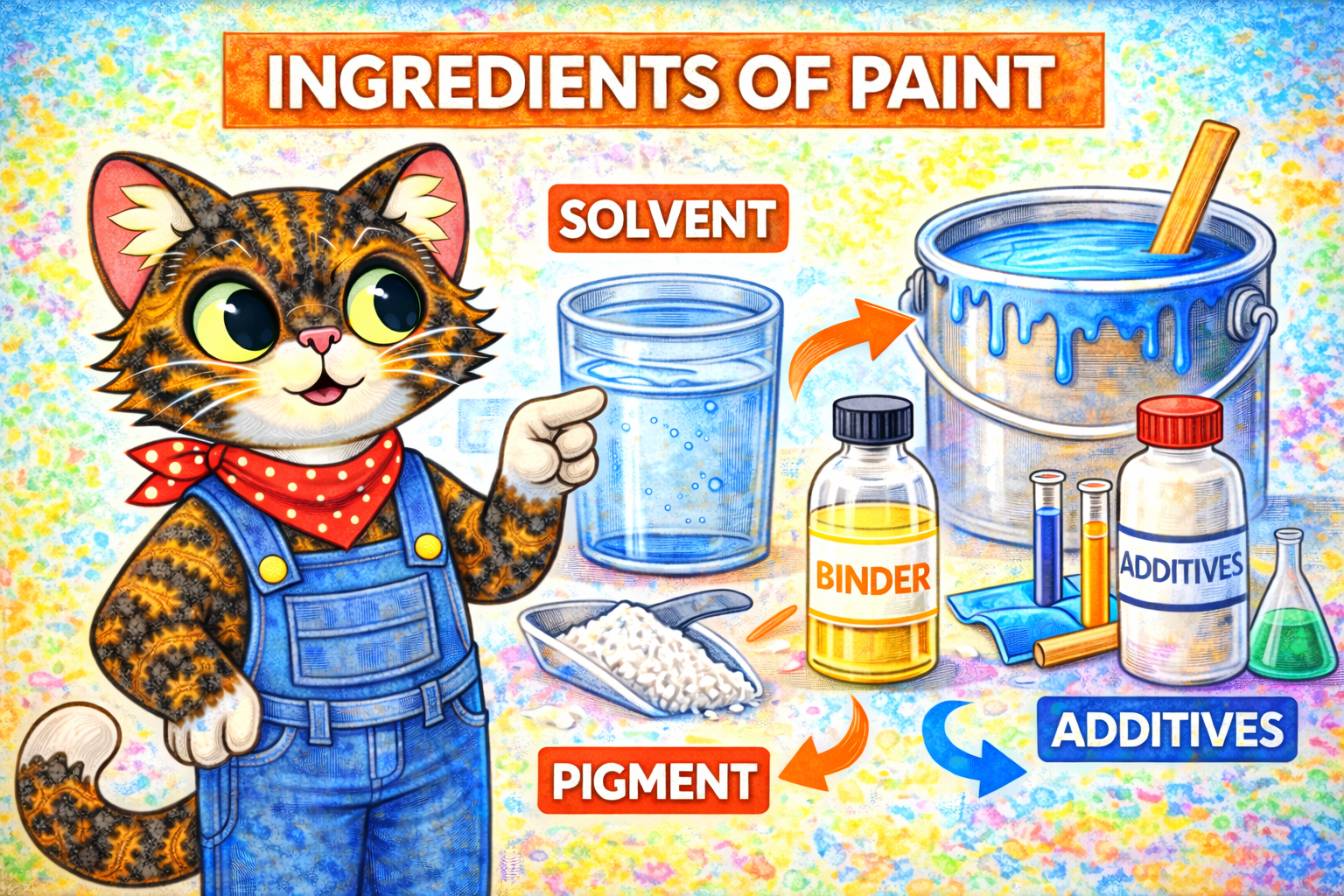
Most paints, whether it’s the can on your wall or a little sample at the store, are made up of four main ingredients:
- Pigment – the color
- Binder – the glue
- Solvent – the liquid carrier
- Additives – the helpers
Let’s break them down in plain English.
1. Pigment – The Color
Pigment is what gives paint its color.
- White paint uses a pigment called titanium dioxide.
- Red, blue, green—different pigments blended together.
Pigment also affects coverage. That’s why white paint can hide your old wall better than bright yellow.
Think of pigment as the “ink” of paint. It’s what you see, but it needs something to hold it in place.
2. Binder – The Glue
The binder is what makes the paint stick and form a smooth, durable film once it dries.
- In most modern paints, the binder is some kind of acrylic or latex polymer (don’t worry, it’s safe for walls!).
- The binder holds the pigment in place and makes the paint washable and long-lasting.
A paint with a weak binder might peel, scuff, or need more coats. So, binder is really the unsung hero of good paint.
3. Solvent – The Liquid Carrier
The solvent keeps the paint liquid so you can brush or roll it onto your wall.
- Water is the main solvent in latex (water-based) paint.
- Oil-based paint uses chemicals like mineral spirits.
As the paint dries, the solvent evaporates and leaves the pigment and binder behind.
So, when your paint smells while drying, that’s the solvent doing its job.
Think of it like a delivery truck: solvent brings the pigment and binder to your wall, then drives away when it’s done.
4. Additives – The Tiny Helpers
Additives are used in tiny amounts but make a big difference.
They can:
- Prevent mold or mildew
- Make the paint flow smoothly
- Reduce bubbles or streaks
- Control drying speed
- Keep paint fresh on the shelf
If pigment is the ink, binder is the glue, and solvent is the delivery truck… additives are the smart little assistants that make sure everything works perfectly.
Why Knowing This Matters
Once you understand these ingredients, a lot of common paint mysteries start to make sense:
- Why does cheap paint need more coats? Usually less pigment and a weaker binder.
- Why does exterior paint last longer than interior paint? Stronger binder and outdoor-focused additives.
- Why does paint smell? That’s the solvent evaporating.
- Why does some paint hide imperfections better? More pigment and better flow from additives.
The Big Takeaway
Paint might seem simple, but it’s actually a clever mix of color, glue, liquid, and helpers.
Pigment + binder + solvent + additives = paint magic.
When paint works well, all four ingredients are balanced perfectly. When it fails—peeling, streaking, or requiring multiple coats—it’s usually one ingredient not doing its job.
Knowing this helps you pick the right paint for the job, understand why some paints cost more, and avoid a lot of frustration.
Leave a Reply