
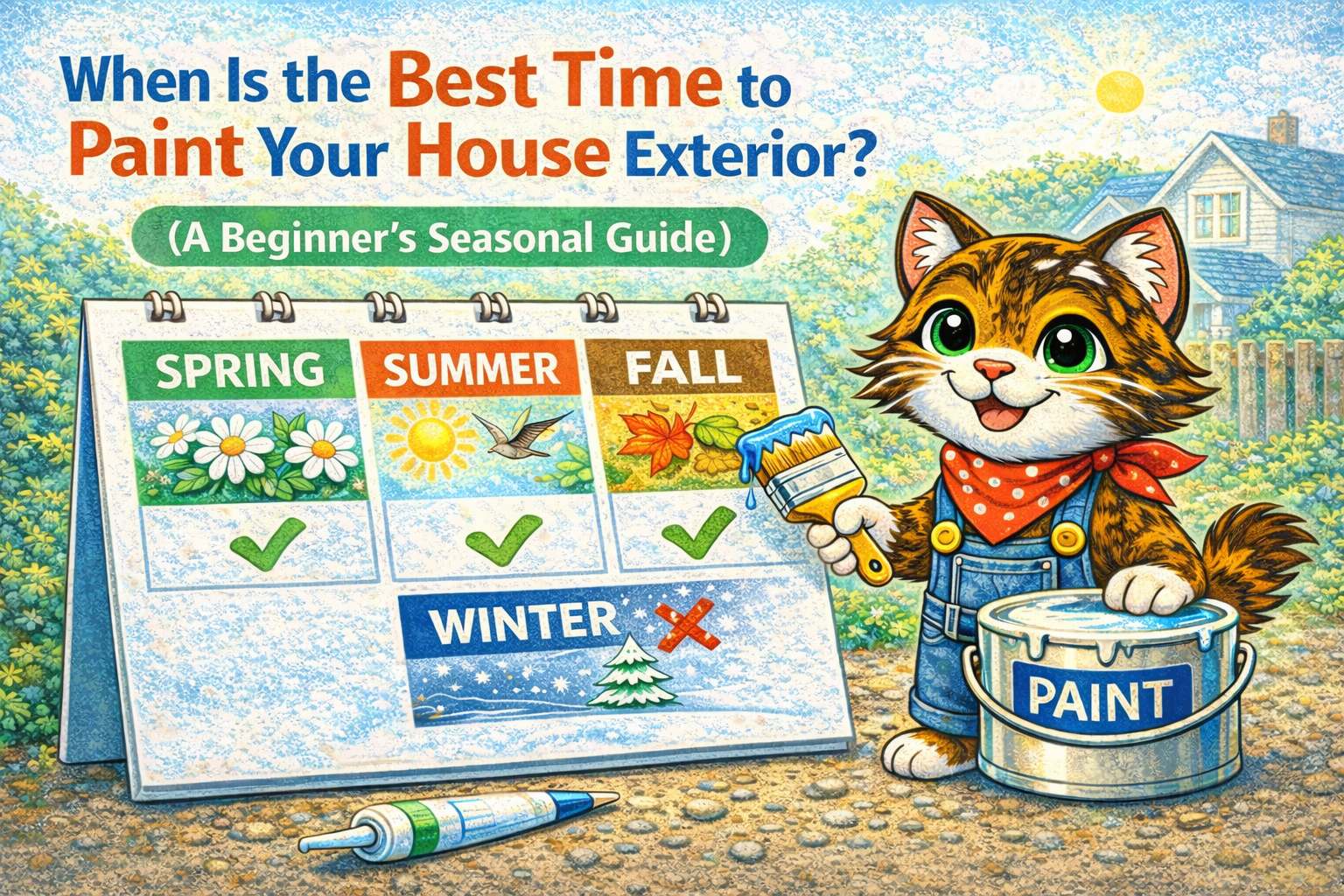
If you’ve ever stood outside with a paint roller in your hand and thought,
“Is this even the right time to be doing this?” — you are not alone.
When it comes to exterior painting, timing isn’t just a preference. It directly affects how well your paint adheres, dries, and lasts.
Let’s walk through this together so you can confidently pick the right season (and avoid peeling, bubbling regret later).
Why Season Matters for Exterior Painting
Exterior paint doesn’t just sit there looking pretty. It cures.
And curing depends on:
- Temperature
- Humidity
- Sun exposure
- Rain
- Overnight lows
Paint needs stable, mild conditions to properly bond to your siding. Too hot, too cold, too damp — and you’re setting yourself up for early failure.
Spring: A Great Option (With a Few Caveats)
Spring is often one of the best times to paint — especially late spring.
Why it works:
- Moderate temperatures
- Lower humidity (depending on region)
- Surfaces not overheated from summer sun
What to watch for:
- Frequent rain
- Large temperature swings between day and night
If overnight temps drop below 50°F, many exterior paints won’t cure properly.
Late spring tends to be safer than early spring.
Summer: Good — But Not During Peak Heat
Summer sounds ideal. And it can be — if you’re strategic.
Why summer works:
- Longer daylight hours
- Dry weather
- Consistent temperatures
The problem? Extreme heat.
If it’s:
- Over 85–90°F
- In direct, blazing sun
- Or super humid
Paint can dry too quickly on the surface before properly bonding underneath.
That leads to:
- Brush marks
- Lap marks
- Adhesion issues
Early summer or painting in the morning is usually much better than midday in July.
Fall: Often the Sweet Spot
Many professionals love early fall.
Why fall is great:
- Mild daytime temperatures
- Cooler (but not cold) evenings
- Lower humidity in many areas
It’s stable. And paint loves stable.
The key is starting early enough in the season to avoid cold nights. Once temps consistently dip below 50°F, most exterior painting should pause.
Winter: Usually a No
For most climates, winter is not ideal.
Cold temperatures slow curing dramatically. And if paint freezes before curing? It can fail.
There are specialty low-temp paints that allow application down to 35–40°F, but for beginners, winter adds unnecessary risk.
If you’re new, stick to spring, summer, or early fall.
The Ideal Temperature Range for Exterior Paint
Most exterior paints perform best when:
- Air temperature is between 50°F–85°F
- Surface temperature is similar
- Humidity is moderate
- No rain is expected for 24–48 hours
Always check the label on your specific paint can — it matters.
Don’t Forget Surface Temperature
Here’s something beginners often miss:
Even if the air temperature is perfect… the siding might not be.
Dark siding in direct sun can get much hotter than the air around it.
That’s why:
- Morning painting is often best
- Working in shaded sections helps
- Following the shade around the house can make a huge difference
What About After Rain?
Patience matters.
Even if it hasn’t rained in 24 hours, surfaces can still hold moisture — especially wood.
Give siding time to fully dry before painting. Moisture trapped under paint leads to blistering.
The Beginner-Friendly Rule of Thumb
If you’re unsure, aim for:
✔ Late spring
✔ Early summer
✔ Early fall
With:
✔ Mild temperatures
✔ Low humidity
✔ Stable weather forecast
✔ No extreme sun
When in doubt, stable and mild wins every time.
Encouraging Takeaway
You don’t need perfect conditions. You just need good conditions.
Exterior painting is a big job — and timing it well makes the entire process smoother, less stressful, and more durable long term.
Think of season selection as part of your prep.
Because honestly? The best paint in the world can’t fight bad timing.
Leave a Reply